Ogunrinde Adenike, Munro Kim, Davidson Alexandra, Ubaid Midhat, Snedden Wayne A
Department of Biology, Queen's University, Kingston, ON, Canada.
Protein Function Discovery Laboratory, Department of Biomedical and Medical Sciences, Queen's University, Kingston, ON, Canada.
Front Plant Sci. 2017 Dec 22;8:2175. doi: 10.3389/fpls.2017.02175. eCollection 2017.
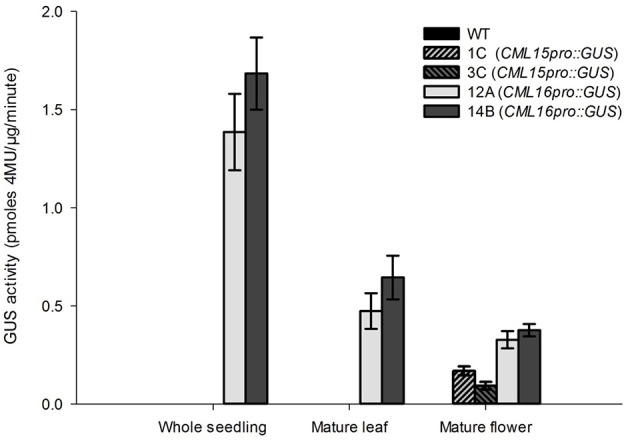
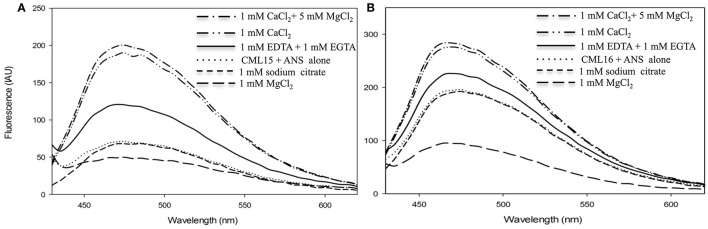
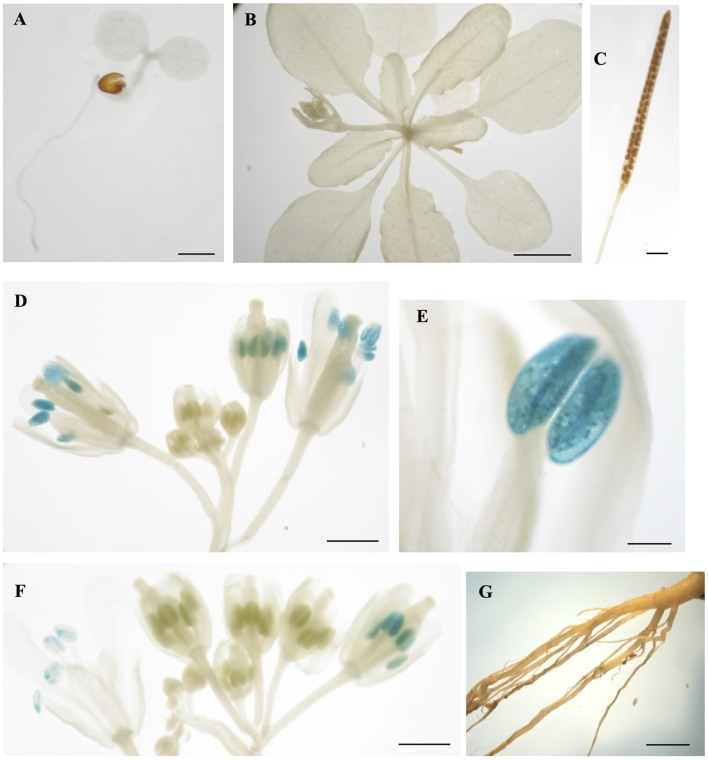
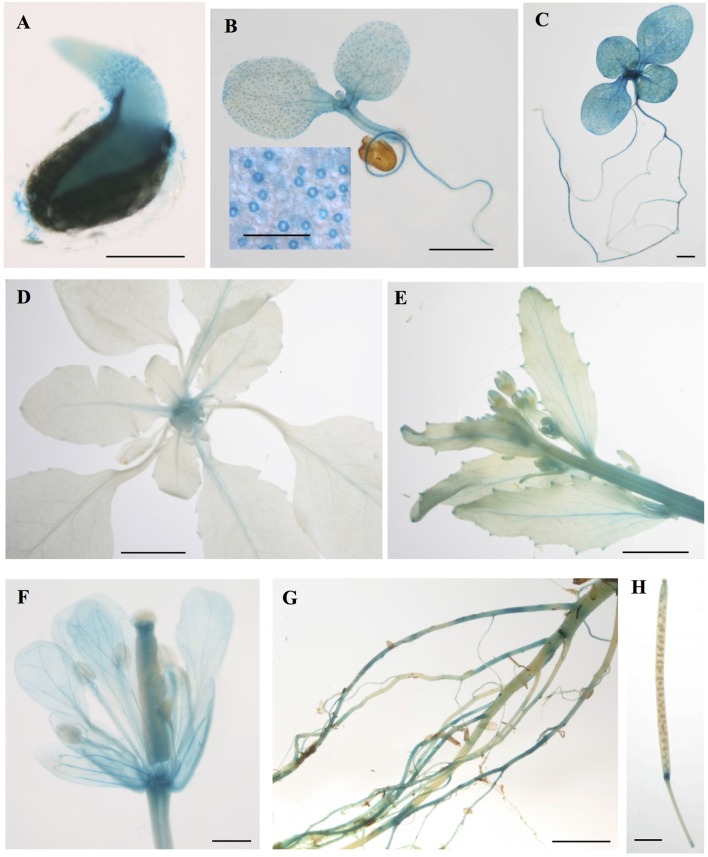
Calcium ions are used as ubiquitous, key second messengers in cells across eukaryotic taxa. In plants, calcium signal transduction is involved in a wide range of cellular processes from abiotic and biotic stress responses to development and growth. Calcium signals are detected by calcium sensor proteins, of which calmodulin (CaM), is the most evolutionarily conserved and well-studied. These sensors regulate downstream targets to propagate the information in signaling pathways. Plants possess a large family of calcium sensors related to CaM, termed CaM-like (CMLs), that are not found in animals and remain largely unstudied at the structural and functional level. Here, we investigated the biochemical properties and gene promoter activity of two closely related members of the CML family, CML15 and CML16. Biochemical characterization of recombinant CML15 and CML16 indicated that they possess properties consistent with their predicted roles as calcium sensors. In the absence of calcium, CML15 and CML16 display greater intrinsic hydrophobicity than CaM. Both CMLs displayed calcium-dependent and magnesium-independent conformational changes that expose hydrophobic residues, but the degree of hydrophobic exposure was markedly less than that observed for CaM. Isothermal titration calorimetry indicated two and three calcium-binding sites for CML15 and CML16, respectively, with affinities expected to be within a physiological range. Both CML15 and CML16 bound calcium with high affinity in the presence of excess magnesium. Promoter-reporter analysis demonstrated that the promoter is active across a range of tissues and developmental stages, whereas the promoter activity is very restricted and was observed only in floral tissues, specifically anthers and pollen. Collectively, our data indicate that these CMLs behave biochemically like calcium sensors but with properties distinct from CaM and likely have non-overlapping roles in floral development. We discuss our findings in the broader context of calcium sensors and signaling in .
钙离子作为真核生物各分类群细胞中普遍存在的关键第二信使发挥作用。在植物中,钙信号转导参与了从非生物和生物胁迫反应到发育与生长等广泛的细胞过程。钙信号由钙传感蛋白检测,其中钙调蛋白(CaM)是进化上最保守且研究最深入的。这些传感器调节下游靶点以在信号通路中传递信息。植物拥有一大类与CaM相关的钙传感器,称为类钙调蛋白(CMLs),它们在动物中不存在,并且在结构和功能水平上基本未被研究。在这里,我们研究了CML家族两个密切相关成员CML15和CML16的生化特性和基因启动子活性。重组CML15和CML16的生化特性表明,它们具有与其作为钙传感器的预测作用一致的特性。在没有钙的情况下,CML15和CML16表现出比CaM更大的内在疏水性。两种CML都显示出钙依赖性和镁非依赖性的构象变化,这些变化会暴露疏水残基,但疏水暴露程度明显低于CaM。等温滴定量热法表明CML15和CML16分别有两个和三个钙结合位点,其亲和力预计在生理范围内。在过量镁存在的情况下,CML15和CML16都以高亲和力结合钙。启动子报告分析表明,启动子在一系列组织和发育阶段具有活性,而启动子活性非常有限,仅在花组织中观察到,特别是花药和花粉。总体而言,我们的数据表明这些CML在生化行为上类似于钙传感器,但具有与CaM不同的特性,并且可能在花发育中具有不重叠的作用。我们在钙传感器和信号传导的更广泛背景下讨论了我们的发现。