Xue Ran, Duan Zhonghui, Liu Haixia, Chen Li, Yu Hongwei, Ren Meixin, Zhu Yueke, Jin Chenggang, Han Tao, Gao Zhiliang, Meng Qinghua
Department of Critical Care Medicine of Liver Disease, Beijing You-An Hospital, Capital Medical University, Beijing, China.
Georgia Prevention Institute, Medical College of Georgia, Augusta University, Augusta, GA, USA.
Oncotarget. 2017 Nov 14;8(65):108970-108980. doi: 10.18632/oncotarget.22447. eCollection 2017 Dec 12.
It is challenging to predict the outcome of patients with hepatitis B virus related acute-on-chronic liver failure (HBV-ACLF) through existing prognostic models. Our aim was to establish a novel dynamic model to improve the predictive efficiency of 30-day mortality in HBV-ACLF patients.
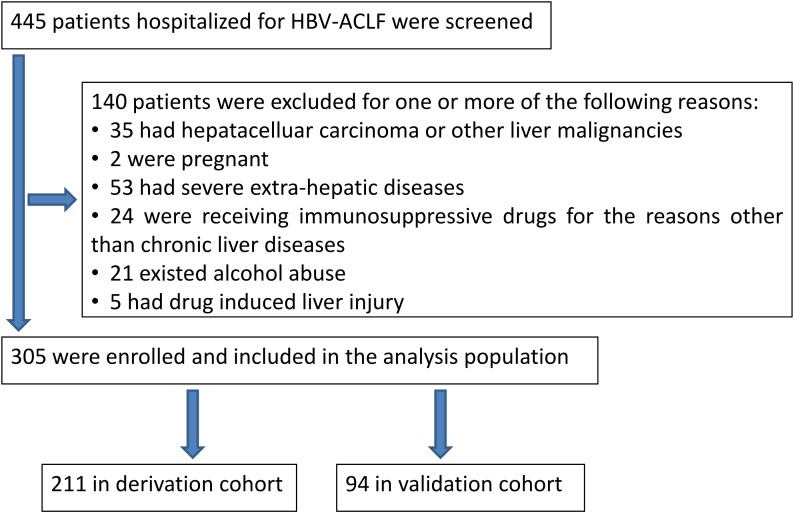
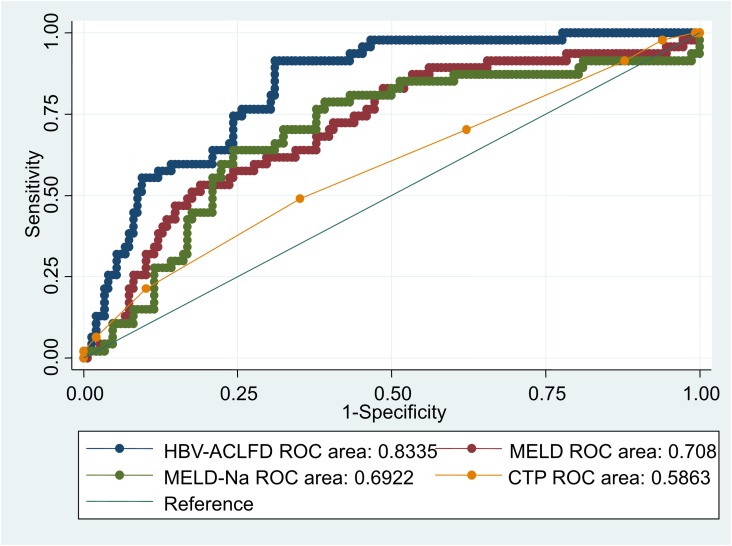
305 patients who were diagnosed as HBV-ACLF (derivation cohort, n=211; validation cohort, n=94) were included in this study. The HBV-ACLF dynamic (HBV-ACLFD) model was constructed based on the daily levels of predictive variables in 7 days after diagnosis combined with baseline risk factors by multivariate logistic regression analysis. The HBV-ACLFD model was compared with the Child-Turcotte-Pugh (CTP) score, end-stage liver disease (MELD) score, and MELD within corporation of serum sodium (MELD-Na) score by the area under the receiver-operating characteristic curves (AUROC).
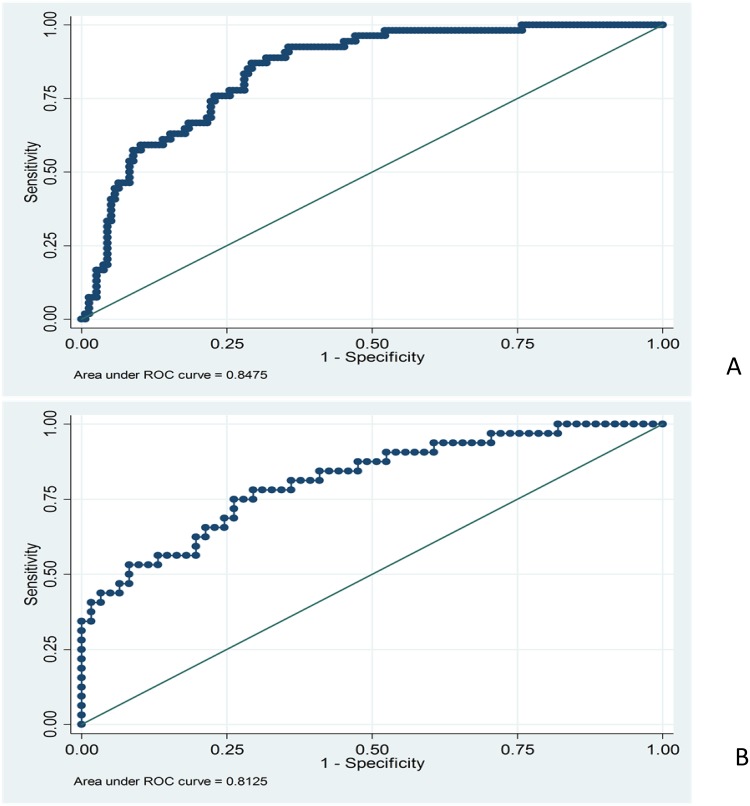
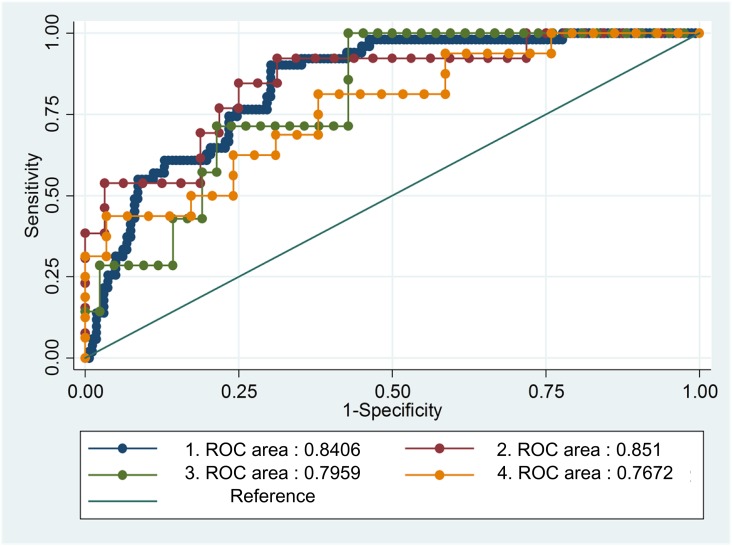
The HBV-ACLFD model demonstrated excellent discrimination with AUROC of 0.848 in the derivation cohort and of 0.813 in the validation cohort (p=0.620). The performance of the HBV-ACLFD model appeared to be superior to MELD score, MELD-Na score and CTP score (P<0.0001).
The HBV-ACLFD model can accurately predict 30-day mortality in patients with HBV-ACLF, which is helpful to select appropriate clinical procedures, so as to relieve the social and economic burden.
通过现有的预后模型预测乙型肝炎病毒相关慢加急性肝衰竭(HBV-ACLF)患者的预后具有挑战性。我们的目的是建立一种新的动态模型,以提高HBV-ACLF患者30天死亡率的预测效率。
本研究纳入305例诊断为HBV-ACLF的患者(推导队列,n = 211;验证队列,n = 94)。通过多因素逻辑回归分析,基于诊断后7天内预测变量的每日水平并结合基线危险因素构建HBV-ACLF动态(HBV-ACLFD)模型。通过受试者工作特征曲线下面积(AUROC)将HBV-ACLFD模型与Child-Turcotte-Pugh(CTP)评分、终末期肝病(MELD)评分以及血清钠校正的MELD(MELD-Na)评分进行比较。
HBV-ACLFD模型在推导队列中的AUROC为0.848,在验证队列中的AUROC为0.813,显示出良好的区分度(p = 0.620)。HBV-ACLFD模型的性能似乎优于MELD评分、MELD-Na评分和CTP评分(P<0.0001)。
HBV-ACLFD模型可以准确预测HBV-ACLF患者的30天死亡率,有助于选择合适的临床治疗方案,从而减轻社会和经济负担。