Wang Yibin, Huang Haijun, Sun Renhua, Chen Bingyu, Han Fang, Li Qian, Ni Yin, Li Xi, Liu Jingquan, Mou Xiaozhou, Tu Yuexing
Department of Cardiology, Chunan First People's Hospital, Hangzhou 311700, China.
Department of Infectious Diseases, Zhejiang Provincial People's Hospital, People's Hospital of Hangzhou Medical College, Hangzhou 310014, China.
Oncotarget. 2017 Nov 23;8(65):109238-109246. doi: 10.18632/oncotarget.22652. eCollection 2017 Dec 12.
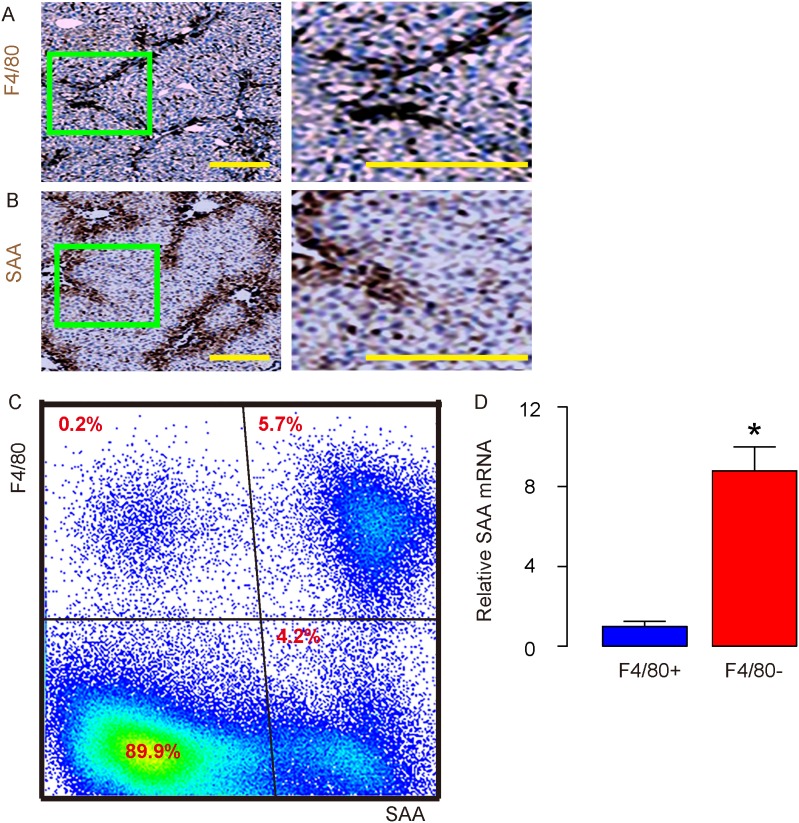
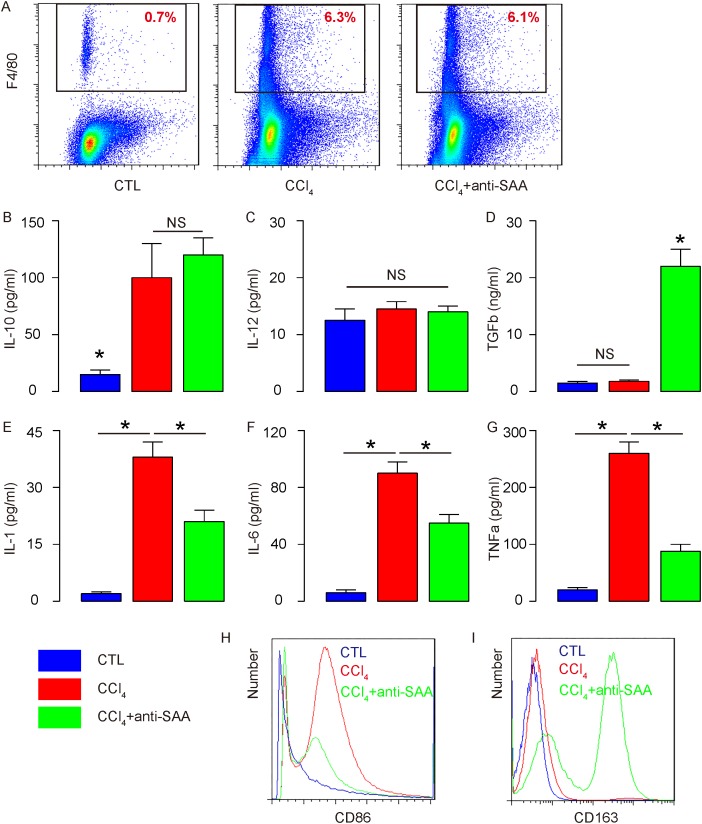
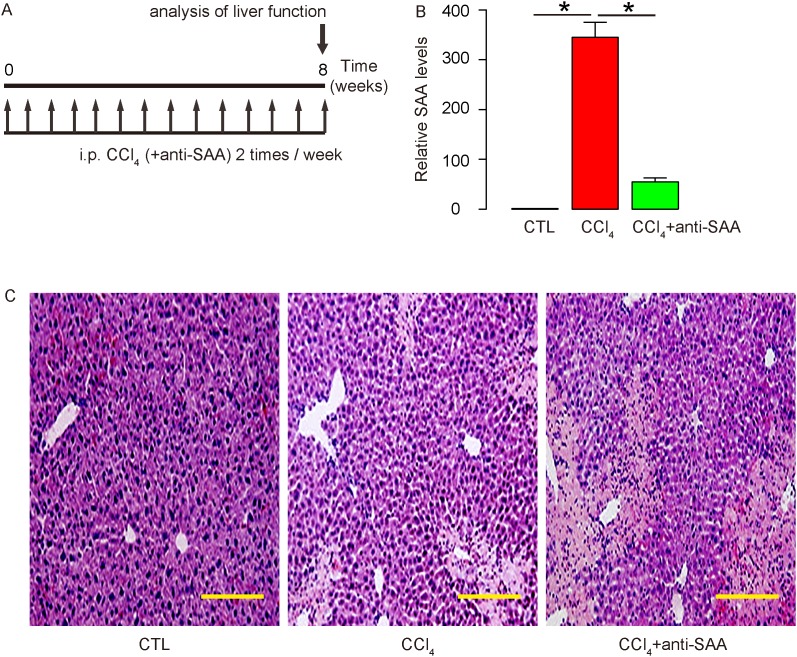
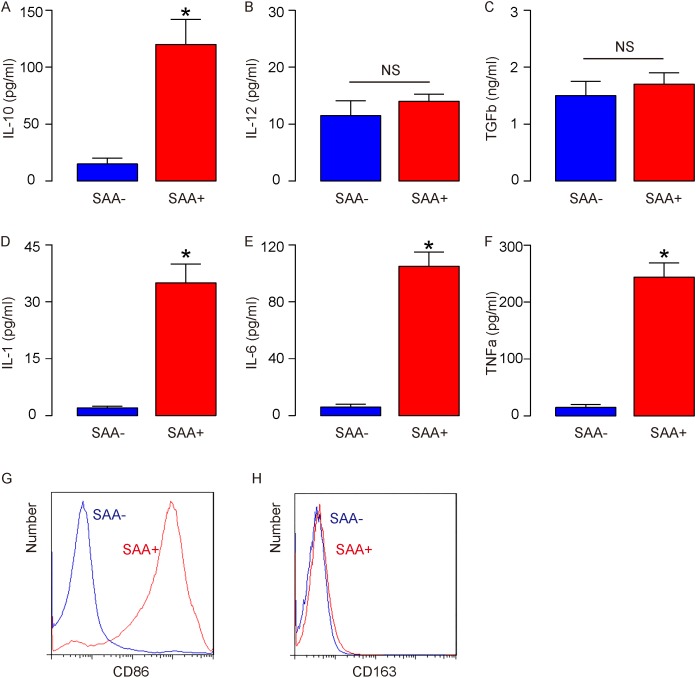
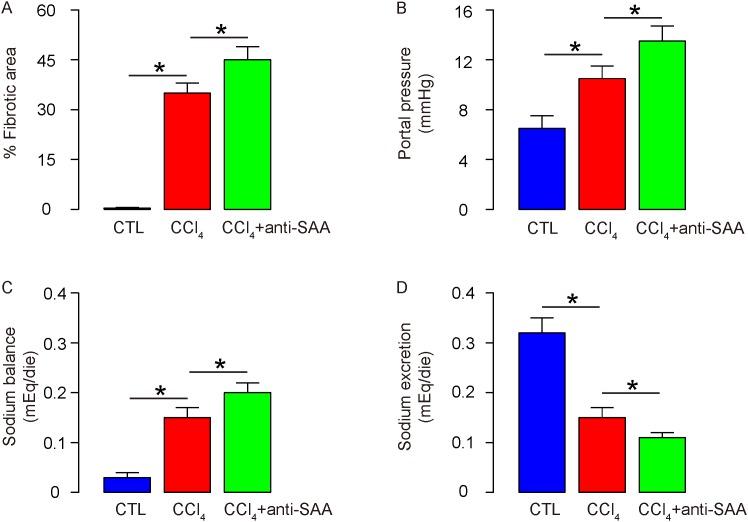
Hepatitis causes hepatic cell injury, regeneration and different levels of fibrogenesis, and severe liver fibrogenesis progresses into cirrhosis with liver dysfunction. Serum amyloid A (SAA) is an acute phase protein that is predominantly secreted by hepatocytes during early injury or infection. Nevertheless, the relationship of SAA and development of cirrhosis as well as the underlying molecular mechanisms is largely unknown. Here, we found that macrophages are the major SAA-binding cells in the injured liver. , macrophages treated with SAA exhibited high production of IL-10 but low production of IL-12, as features for M2 macrophages. Moreover, these polarized M2 macrophages by SAA also produced IL-1, IL-6 and TNFa, characteristics for an M2b subtype, rather than an alternative M2a or fibrogenic M2c subtype. In a mouse model of carbon tetrachloride (CCl)-induced hepatic fibrogenesis/cirrhosis, anti-SAA sera were used to block the effects of SAA, resulting in increases in the severity of hepatic fibrosis, suggesting an overall anti-fibrogenic effect of SAA. Isolated macrophages from mouse liver showed that anti-SAA appeared to alter the polarization of macrophages from M2b to M2c, suggesting that SAA may induce M2b-like macrophage polarization during liver inflammation, which prevents the liver from fibrogenesis.
肝炎会导致肝细胞损伤、再生以及不同程度的纤维化,严重的肝脏纤维化会发展为伴有肝功能障碍的肝硬化。血清淀粉样蛋白A(SAA)是一种急性期蛋白,在早期损伤或感染期间主要由肝细胞分泌。然而,SAA与肝硬化发展之间的关系以及潜在的分子机制在很大程度上尚不清楚。在此,我们发现巨噬细胞是受损肝脏中主要的SAA结合细胞。用SAA处理的巨噬细胞表现出高IL-10产生但低IL-12产生,这是M2巨噬细胞的特征。此外,这些由SAA极化的M2巨噬细胞还产生IL-1、IL-6和TNFα,这是M2b亚型而非替代性M2a或促纤维化M2c亚型的特征。在四氯化碳(CCl)诱导的肝纤维化/肝硬化小鼠模型中,使用抗SAA血清来阻断SAA的作用,导致肝纤维化严重程度增加,提示SAA具有总体抗纤维化作用。从小鼠肝脏分离出的巨噬细胞表明,抗SAA似乎会使巨噬细胞的极化从M2b转变为M2c,这表明SAA可能在肝脏炎症期间诱导类似M2b的巨噬细胞极化,从而防止肝脏发生纤维化。