Division of Radiotherapy and Imaging, The Institute of Cancer Research, London, United Kingdom.
Department of Neurosurgery, Medical University of Silesia, Regional Hospital, Sosnowiec, Poland.
Int J Cancer. 2018 Jun 1;142(11):2363-2374. doi: 10.1002/ijc.31246. Epub 2018 Jan 19.
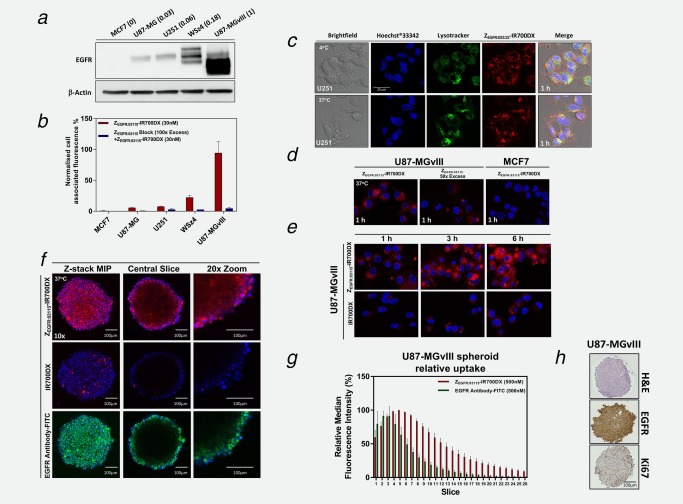
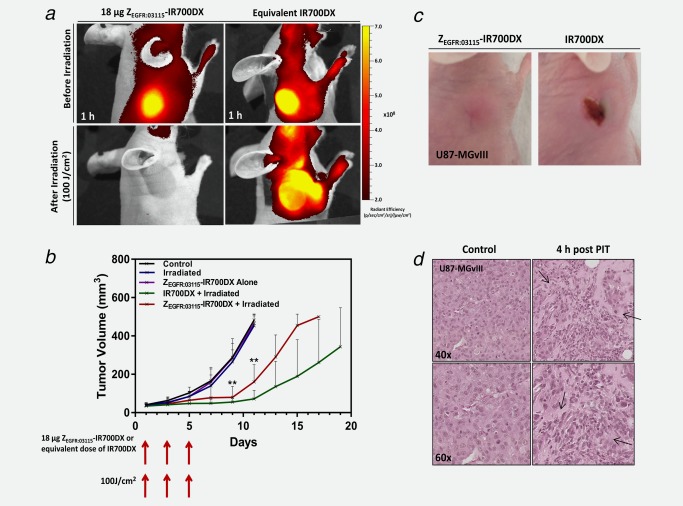
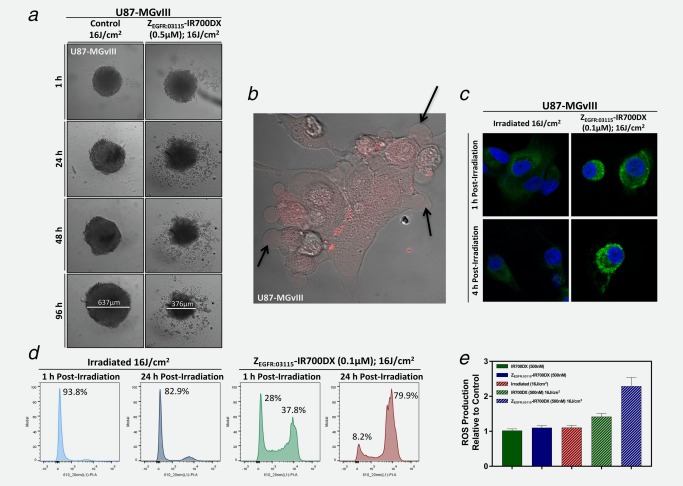
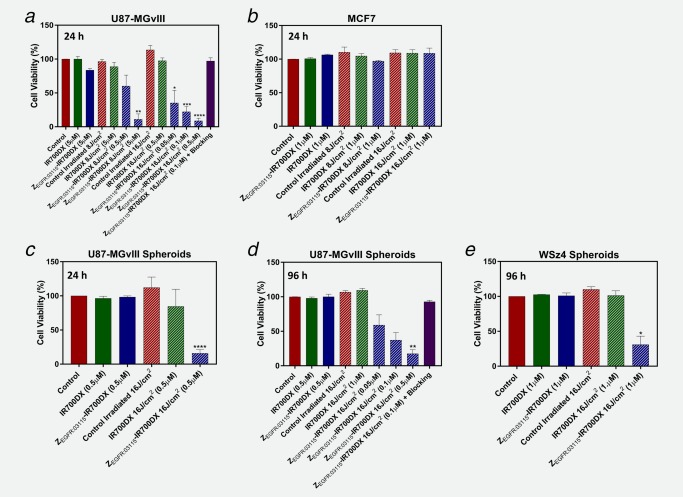
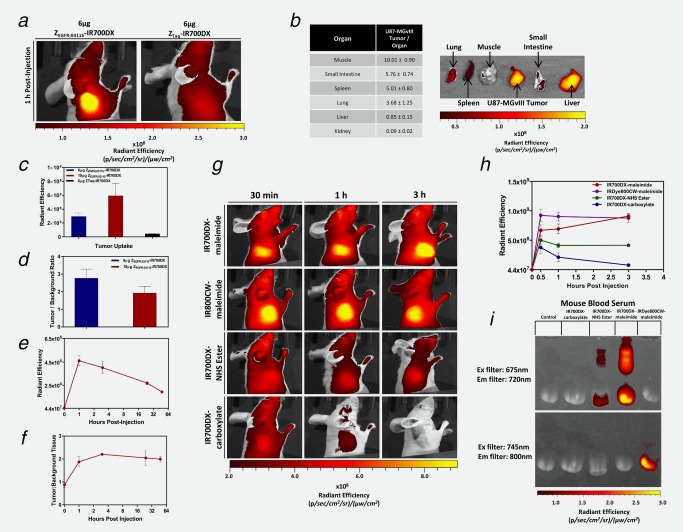
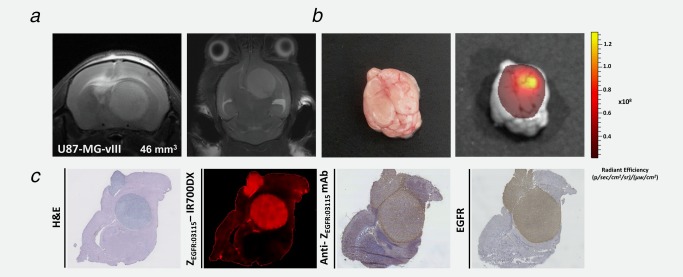
Glioblastomas (GBMs) are high-grade brain tumors, differentially driven by alterations (amplification, deletion or missense mutations) in the epidermal growth factor receptor (EGFR), that carry a poor prognosis of just 12-15 months following standard therapy. A combination of interventions targeting tumor-specific cell surface regulators along with convergent downstream signaling pathways may enhance treatment efficacy. Against this background, we investigated a novel photoimmunotherapy approach combining the cytotoxicity of photodynamic therapy with the specificity of immunotherapy. An EGFR-specific affibody (Z ) was conjugated to the phthalocyanine dye, IR700DX, which when excited with near-infrared light produces a cytotoxic response. Z -IR700DX EGFR-specific binding was confirmed by flow cytometry and confocal microscopy. The conjugate showed effective targeting of EGFR positive GBM cells in the brain. The therapeutic potential of the conjugate was assessed both in vitro, in GBM cell lines and spheroids by the CellTiter-Glo® assay, and in vivo using subcutaneous U87-MGvIII xenografts. In addition, mice were imaged pre- and post-PIT using the IVIS/Spectrum/CT to monitor treatment response. Binding of the conjugate correlated to the level of EGFR expression in GBM cell lines. The cell proliferation assay revealed a receptor-dependent response between the tested cell lines. Inhibition of EGFRvIII+ve tumor growth was observed following administration of the immunoconjugate and irradiation. Importantly, this response was not seen in control tumors. In conclusion, the Z -IR700DX showed specific uptake in vitro and enabled imaging of EGFR expression in the orthotopic brain tumor model. Moreover, the proof-of-concept in vivo PIT study demonstrated therapeutic efficacy of the conjugate in subcutaneous glioma xenografts.
胶质母细胞瘤(GBMs)是高级别的脑肿瘤,其受表皮生长因子受体(EGFR)改变(扩增、缺失或错义突变)驱动,在标准治疗后预后极差,仅有 12-15 个月。针对肿瘤特异性细胞表面调节剂的联合干预措施以及趋同的下游信号通路可能会提高治疗效果。在此背景下,我们研究了一种新的光免疫治疗方法,将光动力疗法的细胞毒性与免疫疗法的特异性相结合。将 EGFR 特异性亲和体(Z )与酞菁染料 IR700DX 偶联,当用近红外光激发时,会产生细胞毒性反应。通过流式细胞术和共聚焦显微镜证实了 Z -IR700DX EGFR 特异性结合。该偶联物在脑内显示出对 EGFR 阳性 GBM 细胞的有效靶向。通过细胞活力测定(CellTiter-Glo®assay)在体外、GBM 细胞系和球体中,以及在皮下 U87-MGvIII 异种移植中进行体内评估了该偶联物的治疗潜力。此外,使用 IVIS/Spectrum/CT 在 PIT 前和 PIT 后对小鼠进行成像,以监测治疗反应。偶联物的结合与 GBM 细胞系中 EGFR 表达水平相关。细胞增殖测定显示,在测试的细胞系之间存在受体依赖性反应。在用免疫偶联物和照射处理后观察到 EGFRvIII+ve 肿瘤生长受到抑制。重要的是,在对照肿瘤中未观察到这种反应。总之,Z -IR700DX 在体外显示出特异性摄取,并能够在原位脑肿瘤模型中对 EGFR 表达进行成像。此外,体内 PIT 研究的概念验证表明了该偶联物在皮下神经胶质瘤异种移植中的治疗效果。