van Straten Demian, Mashayekhi Vida, de Bruijn Henriette S, Oliveira Sabrina, Robinson Dominic J
Cell Biology, Department of Biology, Science Faculty, Utrecht University, Utrecht 3584 CH, The Netherlands.
Center for Optical Diagnostics and Therapy, Department of Otolaryngology-Head and Neck Surgery, Erasmus Medical Center, Postbox 204, Rotterdam 3000 CA, The Netherlands.
Cancers (Basel). 2017 Feb 18;9(2):19. doi: 10.3390/cancers9020019.
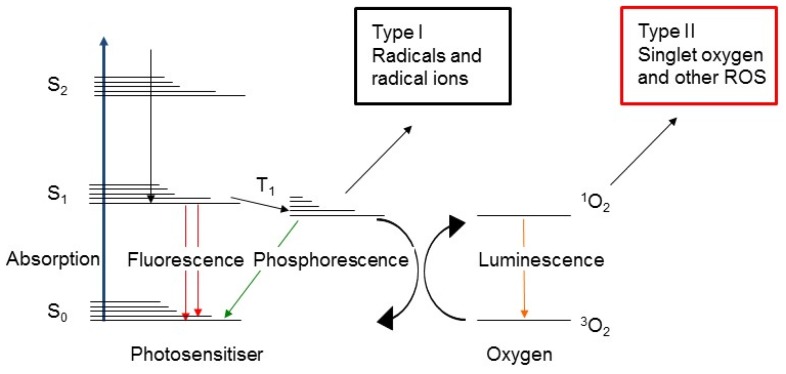
Photodynamic therapy (PDT) is a clinically approved cancer therapy, based on a photochemical reaction between a light activatable molecule or photosensitizer, light, and molecular oxygen. When these three harmless components are present together, reactive oxygen species are formed. These can directly damage cells and/or vasculature, and induce inflammatory and immune responses. PDT is a two-stage procedure, which starts with photosensitizer administration followed by a locally directed light exposure, with the aim of confined tumor destruction. Since its regulatory approval, over 30 years ago, PDT has been the subject of numerous studies and has proven to be an effective form of cancer therapy. This review provides an overview of the clinical trials conducted over the last 10 years, illustrating how PDT is applied in the clinic today. Furthermore, examples from ongoing clinical trials and the most recent preclinical studies are presented, to show the directions, in which PDT is headed, in the near and distant future. Despite the clinical success reported, PDT is still currently underutilized in the clinic. We also discuss the factors that hamper the exploration of this effective therapy and what should be changed to render it a more effective and more widely available option for patients.
光动力疗法(PDT)是一种临床认可的癌症治疗方法,基于可光激活分子或光敏剂、光和分子氧之间的光化学反应。当这三种无害成分同时存在时,会形成活性氧。这些活性氧可直接损伤细胞和/或脉管系统,并引发炎症和免疫反应。光动力疗法是一个两阶段过程,首先给予光敏剂,然后进行局部定向光照,目的是局限地破坏肿瘤。自30多年前获得监管批准以来,光动力疗法一直是众多研究的主题,并已被证明是一种有效的癌症治疗形式。本综述概述了过去10年进行的临床试验,阐明了光动力疗法如今在临床上的应用方式。此外,还介绍了正在进行的临床试验和最新临床前研究的实例,以展示光动力疗法在近期和远期的发展方向。尽管有临床成功的报道,但光动力疗法目前在临床上仍未得到充分利用。我们还讨论了阻碍探索这种有效疗法的因素,以及应做出哪些改变,使其成为对患者更有效、更广泛可用的选择。