Department of Molecular Genetics, School of Dentistry and Dental Research Institute, Seoul National University, Seoul 08826, Korea.
Department of Pharmacology, College of Dentistry and Research Institute of Oral Science, Gangneung-Wonju National University, Chuncheon 25457, Gangwon-do, Korea.
Int J Mol Sci. 2018 Jan 9;19(1):202. doi: 10.3390/ijms19010202.
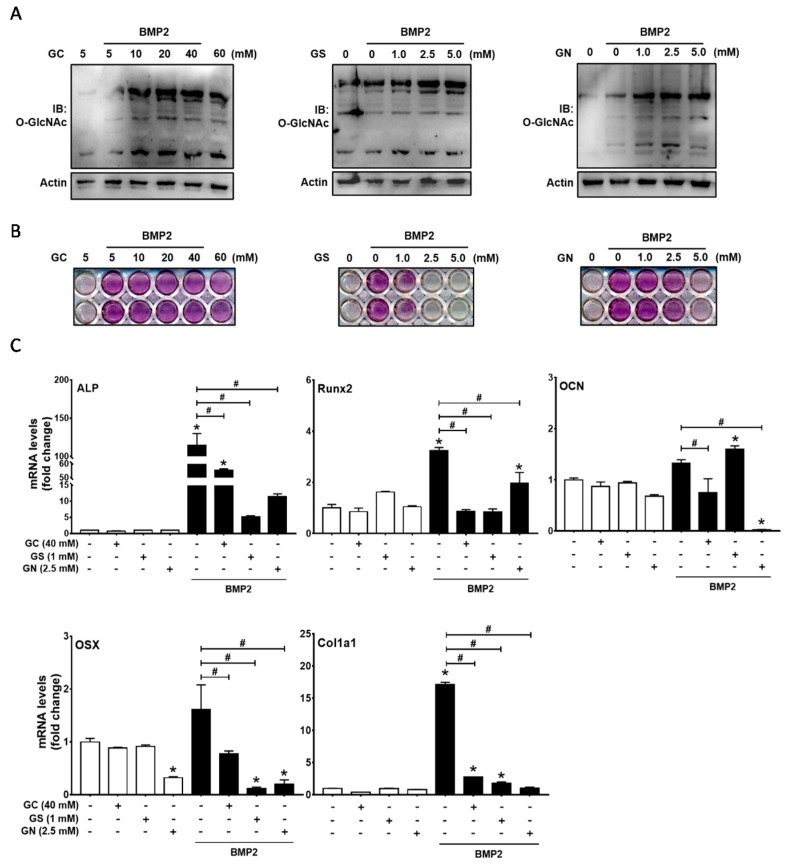
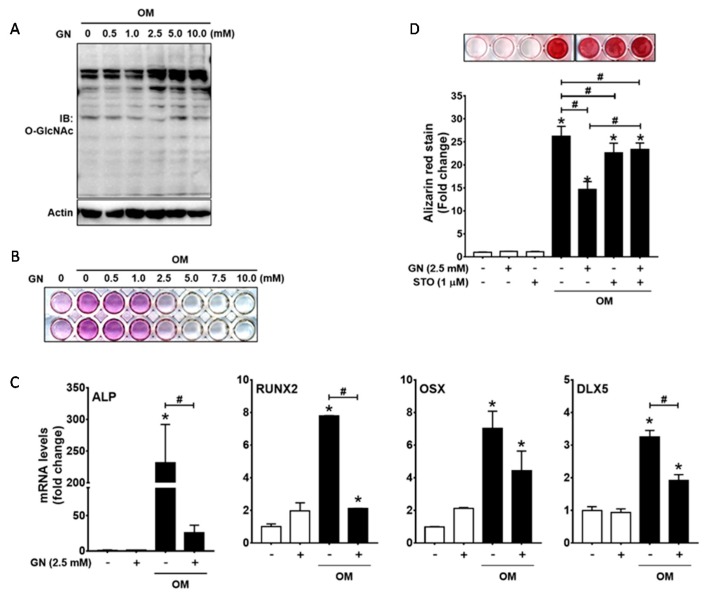
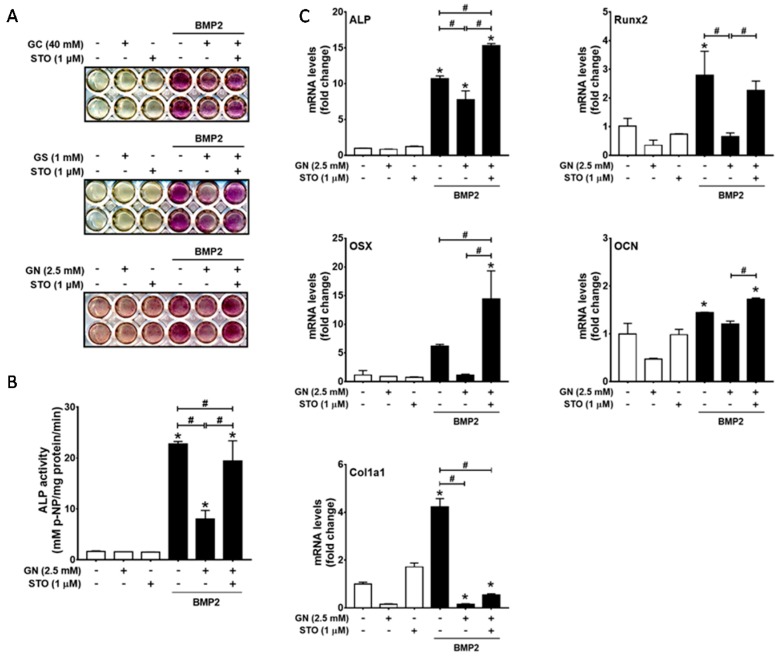
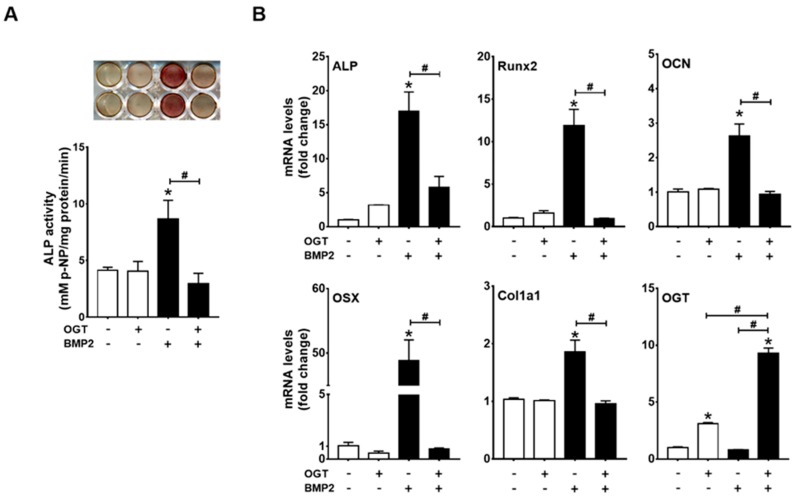
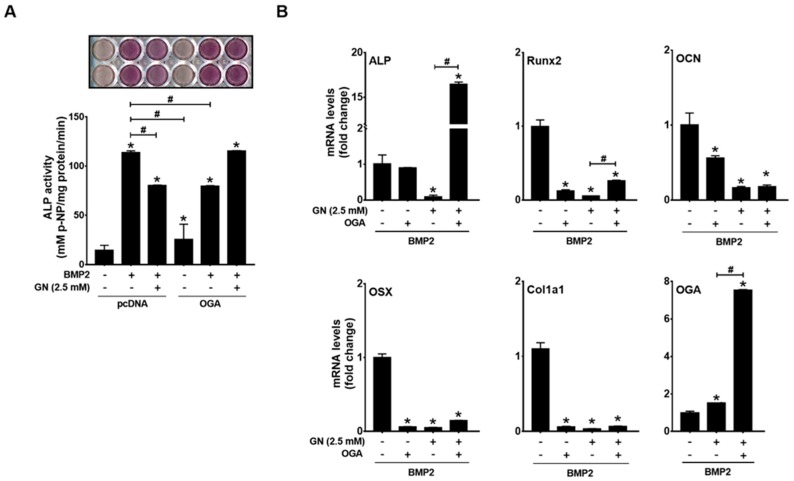
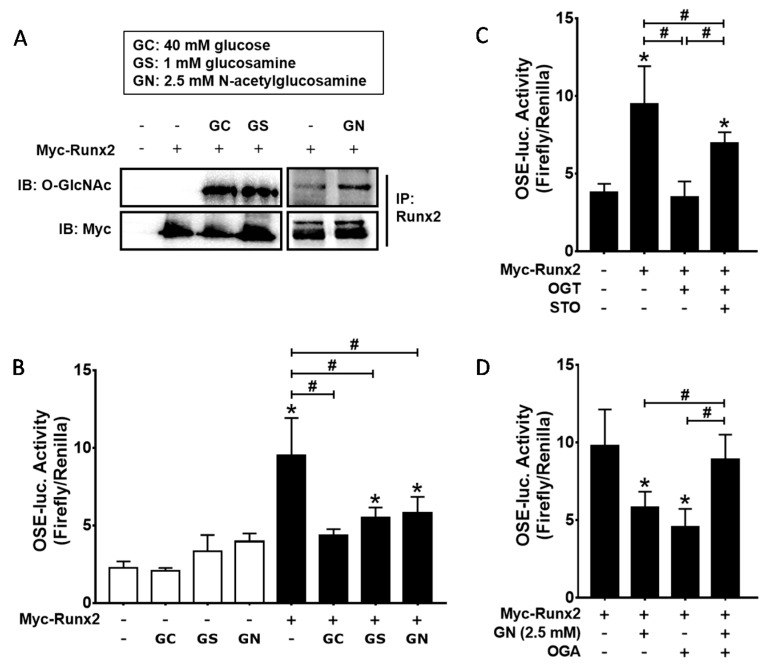
Hyperglycemic conditions in diabetic patients can affect various cellular functions, including the modulation of osteogenic differentiation. However, the molecular mechanisms by which hyperglycemia affects osteogenic differentiation are yet to be clarified. This study aimed to investigate whether the aberrant increase in protein -linked-β--acetylglucosamine glycosylation (-GlcNAcylation) contributes to the suppression of osteogenic differentiation due to hyperglycemia. To induce osteogenic differentiation, C2C12 cells were cultured in the presence of recombinant human bone morphogenetic protein 2 (BMP2). Excessive protein -GlcNAcylation was induced by treating C2C12 cells with high glucose, glucosamine, or -acetylglucosamine concentrations or by -GlcNAc transferase (OGT) overexpression. The effect of -GlcNAcylation on osteoblast differentiation was then confirmed by examining the expression levels of osteogenic marker gene mRNAs, activity of alkaline phosphatase, and transcriptional activity of Runx2, a critical transcription factor for osteoblast differentiation and bone formation. Cell treatment with high glucose, glucosamine or -acetylglucosamine increased -GlcNAcylation of Runx2 and the total levels of -GlcNAcylated proteins, which led to a decrease in the transcriptional activity of Runx2, expression levels of osteogenic marker genes (Runx2, osterix, alkaline phosphatase, and type I collagen), and activity of alkaline phosphatase. These inhibitory effects were rescued by lowering protein -GlcNAcylation levels by adding STO45849, an OGT inhibitor, or by overexpressing β--acetylglucosaminidase. Our findings suggest that excessive protein -GlcNAcylation contributes to high glucose-suppressed osteogenic differentiation.
糖尿病患者的高血糖状态会影响各种细胞功能,包括成骨分化的调节。然而,高血糖影响成骨分化的分子机制尚不清楚。本研究旨在探讨异常增加的蛋白质连接-β--乙酰氨基葡萄糖糖基化(-GlcNAcylation)是否由于高血糖而导致成骨分化受到抑制。为了诱导成骨分化,将 C2C12 细胞在重组人骨形态发生蛋白 2(BMP2)的存在下进行培养。通过用高葡萄糖、葡糖胺或乙酰氨基葡萄糖浓度或通过 -GlcNAc 转移酶(OGT)过表达来诱导 C2C12 细胞的过度蛋白质 -GlcNAcylation。然后通过检查成骨标记基因 mRNAs 的表达水平、碱性磷酸酶的活性以及 Runx2 的转录活性来确认 -GlcNAcylation 对成骨细胞分化的影响,Runx2 是成骨细胞分化和骨形成的关键转录因子。高葡萄糖、葡糖胺或乙酰氨基葡萄糖处理会增加 Runx2 的 -GlcNAcylation 和总 -GlcNAcylated 蛋白水平,导致 Runx2 的转录活性、成骨标记基因(Runx2、osterix、碱性磷酸酶和 I 型胶原)的表达水平和碱性磷酸酶的活性降低。通过添加 OGT 抑制剂 STO45849 或过表达β--乙酰氨基葡萄糖苷酶降低蛋白质 -GlcNAcylation 水平可以挽救这些抑制作用。我们的研究结果表明,过度的蛋白质 -GlcNAcylation 导致高血糖抑制的成骨分化。