Kiani Bahareh, Faivre Damien, Klumpp Stefan
Department Theory & Bio-Systems, Max Planck Institute of Colloids and Interfaces, Science Park Golm 14424 Potsdam, Germany.
Department Biomaterials, Max Planck Institute of Colloids and Interfaces, Science Park Golm, 14424 Potsdam, Germany.
PLoS One. 2018 Jan 9;13(1):e0190265. doi: 10.1371/journal.pone.0190265. eCollection 2018.
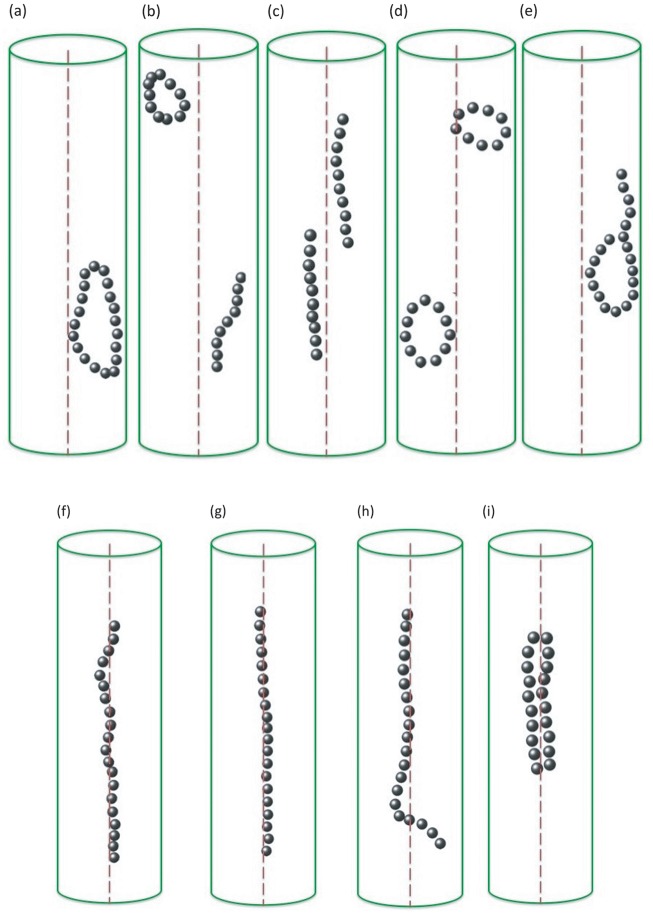
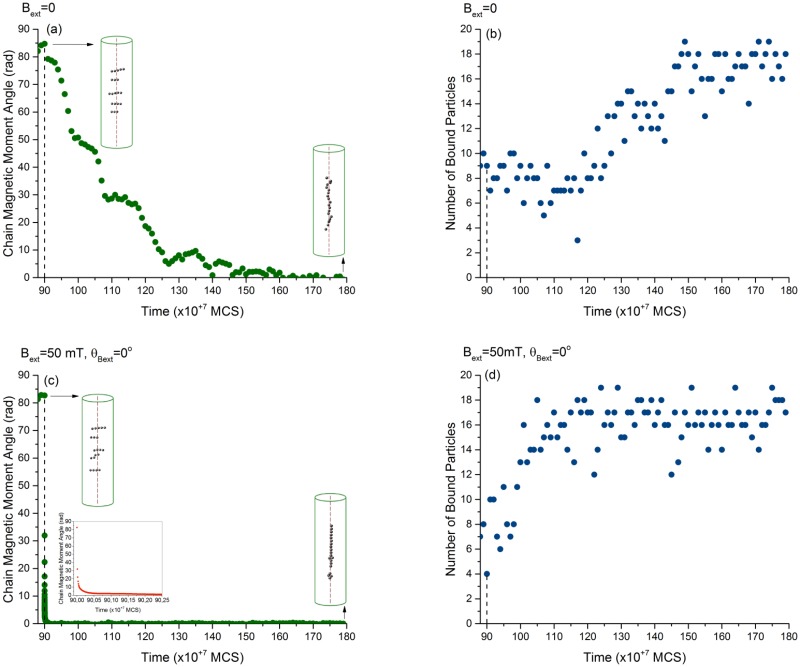
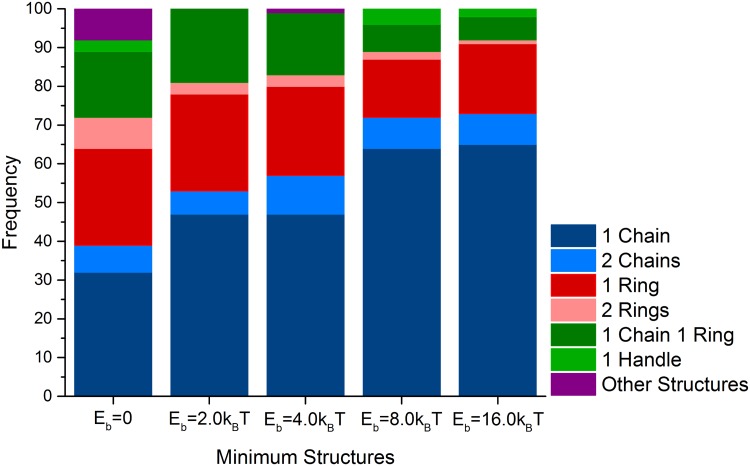
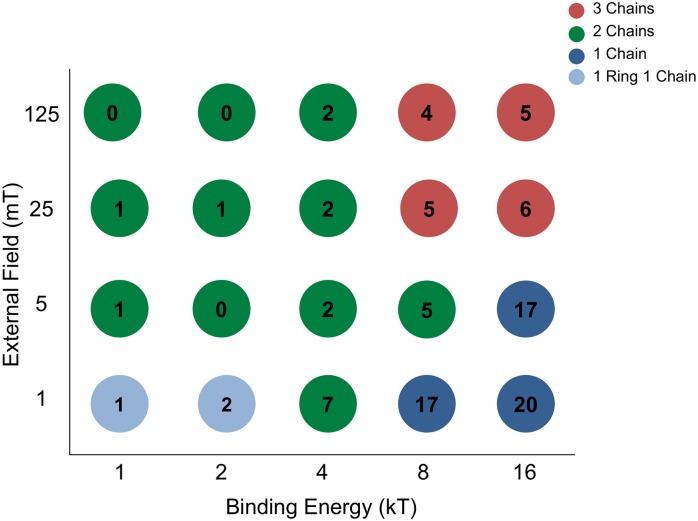
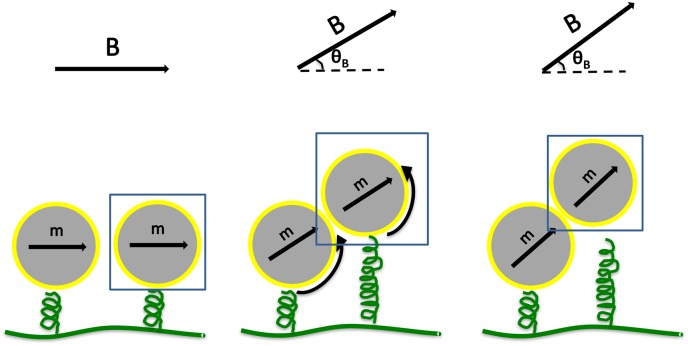
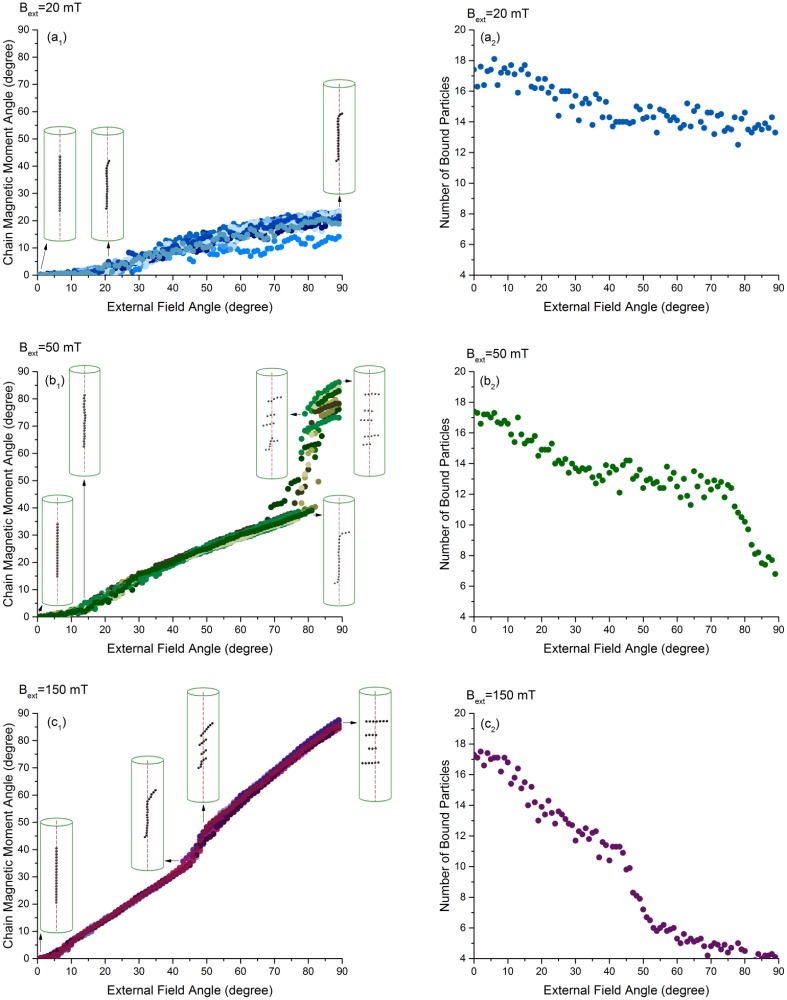
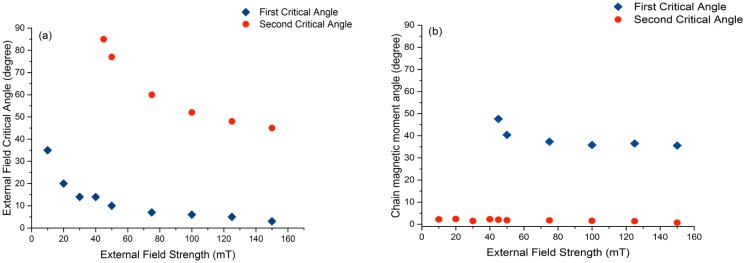
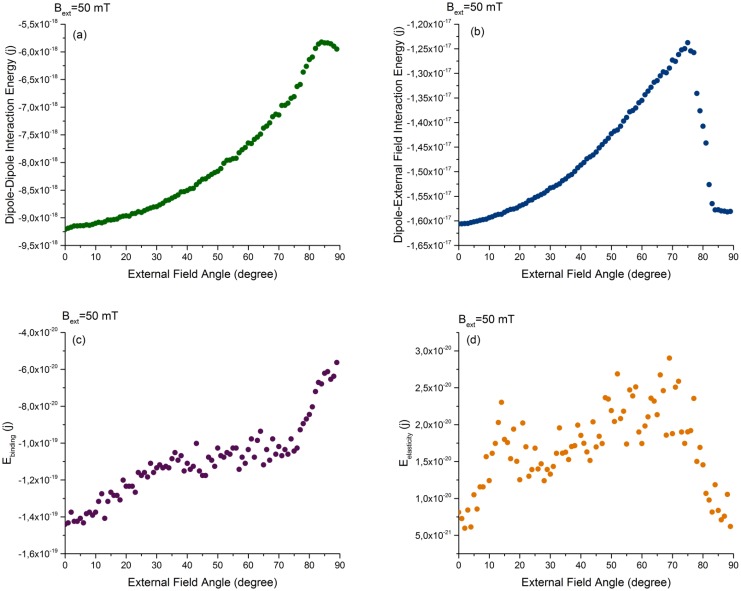
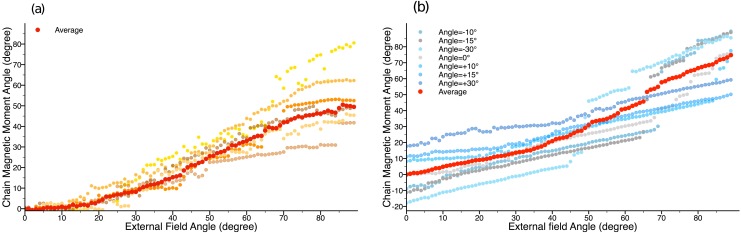
Magnetotactic bacteria orient in magnetic fields with the help of their magnetosome chain, a linear structure of membrane enclosed magnetic nanoparticles (magnetosomes) anchored to a cytoskeletal filament. Here, we use simulations to study the assembly and the stability of magnetosome chains. We introduce a computational model describing the attachment of the magnetosomes to the filament and their magnetic interactions. We show that the filamentous backbone is crucial for the robust assembly of the magnetic particles into a linear chain, which in turn is key for the functionality of the chain in cellular orientation and magnetically directed swimming. In addition, we simulate the response to an external magnetic field that is rotated away from the axis of the filament, an experimental method used to probe the mechanical stability of the chain. The competition between alignment along the filament and alignment with the external fields leads to the rupture of a chain if the applied field exceeeds a threshold value. These observations are in agreement with previous experiments at the population level. Beyond that, our simulations provide a detailed picture of chain rupture at the single cell level, which is found to happen through two abrupt events, which both depend on the field strength and orientation. The re-formation of the chain structure after such rupture is found to be strongly sped up in the presence of a magnetic field parallel to the filament, an observation that may also be of interest for the design of self-healing materials. Our simulations underline the dynamic nature of the magnetosome chain. More generally, they show the rich complexity of self-assembly in systems with competing driving forces for alignment.
趋磁细菌借助其磁小体链在磁场中定向,磁小体链是一种由膜包裹的磁性纳米颗粒(磁小体)组成的线性结构,这些纳米颗粒锚定在细胞骨架丝上。在此,我们通过模拟来研究磁小体链的组装和稳定性。我们引入了一个计算模型,该模型描述了磁小体与细丝的附着以及它们之间的磁相互作用。我们表明,丝状骨架对于将磁性颗粒稳健地组装成线性链至关重要,而这反过来又是该链在细胞定向和磁导向游泳中发挥功能的关键。此外,我们模拟了对远离细丝轴旋转的外部磁场的响应,这是一种用于探测链的机械稳定性的实验方法。如果施加的磁场超过阈值,沿细丝排列与与外部磁场排列之间的竞争会导致链断裂。这些观察结果与之前在群体水平上的实验一致。除此之外,我们的模拟提供了单细胞水平上链断裂的详细情况,发现链断裂是通过两个突然事件发生的,这两个事件都取决于场强和方向。发现在存在与细丝平行的磁场的情况下,这种断裂后链结构的重新形成会大大加速,这一观察结果可能对自修复材料的设计也有意义。我们的模拟强调了磁小体链的动态性质。更一般地说,它们展示了在具有竞争排列驱动力的系统中自组装的丰富复杂性。