Department of Internal Medicine, American University of Beirut Medical Center, Beirut 11-0236, Lebanon.
Department of Medicine, Indiana University School of Medicine, Indianapolis, IN 46202, USA.
Int J Mol Sci. 2018 Jan 8;19(1):182. doi: 10.3390/ijms19010182.
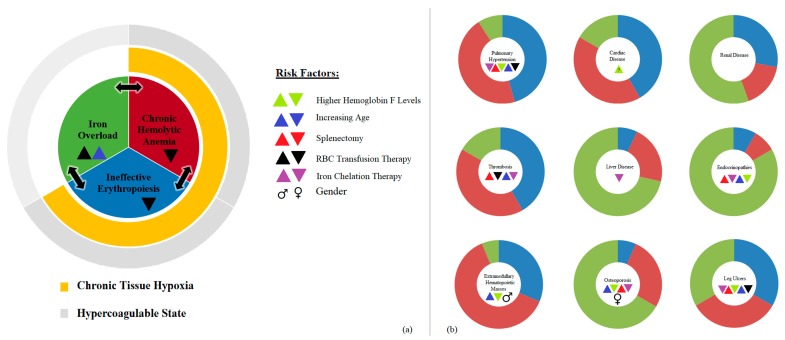
Patients with non-transfusion-dependent thalassemia (NTDT) experience many clinical complications despite their independence from frequent transfusions. Morbidities in NTDT stem from the interaction of multiple pathophysiological factors: ineffective erythropoiesis, iron overload (IOL), and hypercoagulability. Ineffective erythropoiesis and hemolysis are associated with chronic hypoxia and a hypercoagulable state. The latter are linked to a high prevalence of thromboembolic and cerebrovascular events, as well as leg ulcers and pulmonary hypertension. IOL in NTDT patients is a cumulative process that can lead to several iron-related morbidities in the liver (liver fibrosis), kidneys, endocrine glands (endocrinopathies), and vascular system (vascular disease). This review sheds light on the pathophysiology underlying morbidities associated with NTDT and summarizes the mainstays of treatment and some of the possible future therapeutic interventions.
非输血依赖型地中海贫血(NTDT)患者尽管无需频繁输血,但仍会经历许多临床并发症。NTDT 的发病机制源于多种病理生理因素的相互作用:无效造血、铁过载(IOL)和高凝状态。无效造血和溶血与慢性缺氧和高凝状态有关。后者与血栓栓塞和脑血管事件、腿部溃疡和肺动脉高压的高发率有关。NTDT 患者的 IOL 是一个累积的过程,可导致肝脏(纤维化)、肾脏、内分泌腺体(内分泌疾病)和血管系统(血管疾病)的多种与铁相关的疾病。本文综述了 NTDT 相关并发症的病理生理学基础,并总结了主要的治疗方法和一些可能的未来治疗干预措施。