Dermatology Department, University of Pisa, Via Roma 67, 56126 Pisa, Italy.
Department of Dermatology and Cutaneous Surgery, University of Miami Miller School of Medicine, 1295 NW 14th St, Miami, FL 33125, USA.
Int J Mol Sci. 2018 Jan 8;19(1):179. doi: 10.3390/ijms19010179.
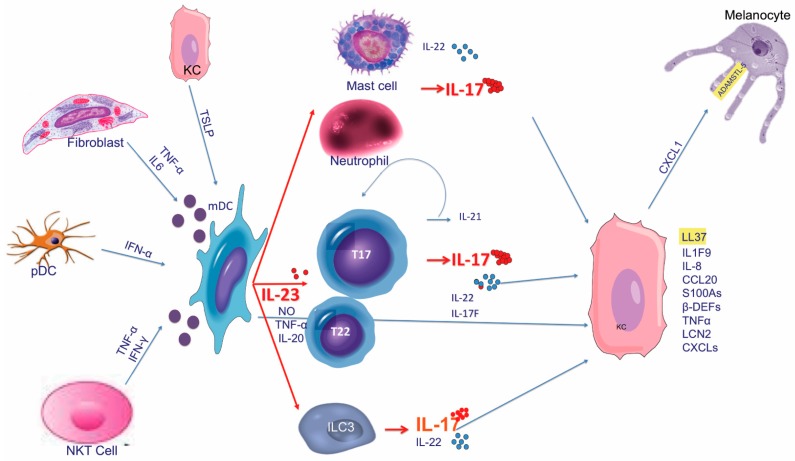
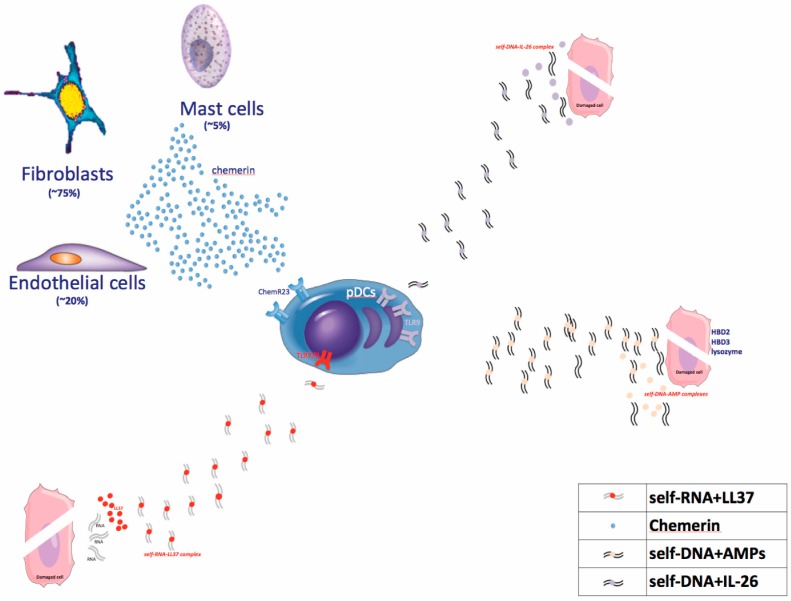
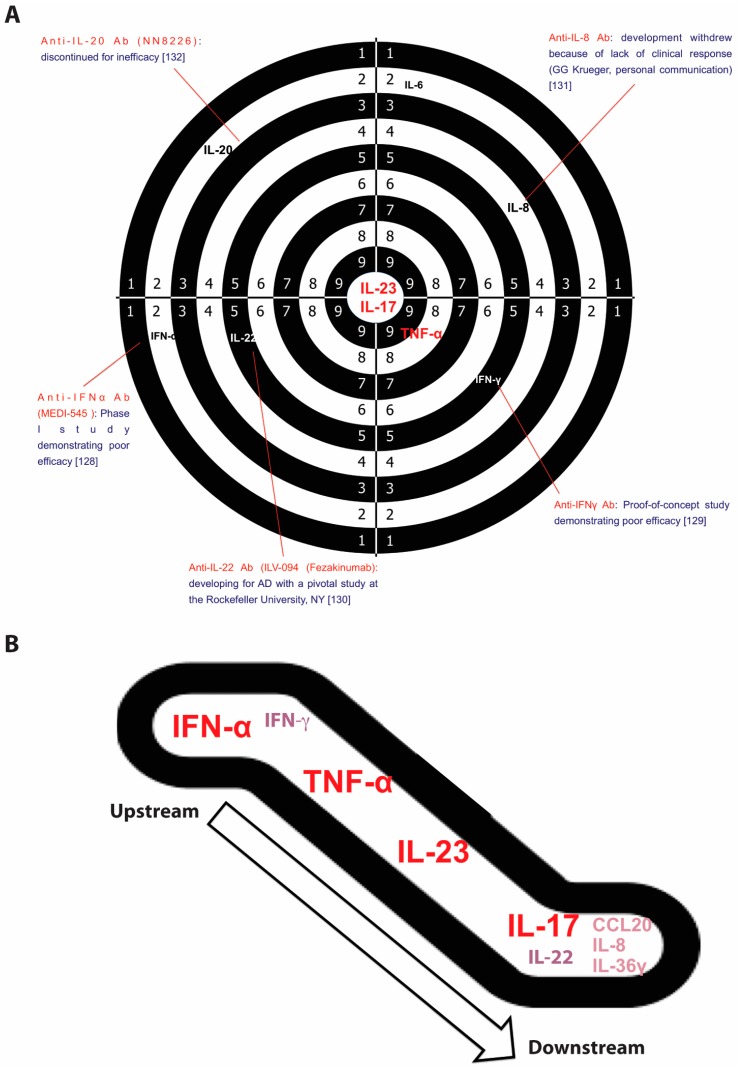
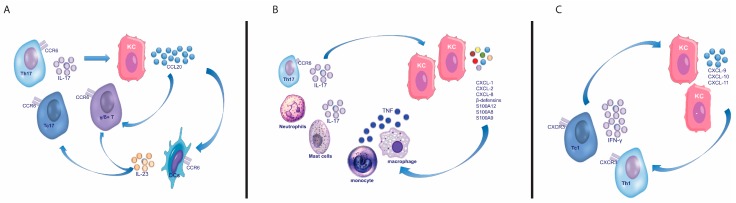
Psoriasis is a chronic inflammatory skin disease, the immunologic model of which has been profoundly revised following recent advances in the understanding of its pathophysiology. In the current model, a crosstalk between keratinocytes, neutrophils, mast cells, T cells, and dendritic cells is thought to create inflammatory and pro-proliferative circuits mediated by chemokines and cytokines. Various triggers, including recently identified autoantigens, Toll-like receptor agonists, chemerin, and thymic stromal lymphopoietin may activate the pathogenic cascade resulting in enhanced production of pro-inflammatory and proliferation-inducing mediators such as interleukin (IL)-17, tumor necrosis factor (TNF)-α, IL-23, IL-22, interferon (IFN)-α, and IFN-γ by immune cells. Among these key cytokines lie therapeutic targets for currently approved antipsoriatic therapies. This review aims to provide a comprehensive overview on the immune-mediated mechanisms characterizing the current pathogenic model of psoriasis.
银屑病是一种慢性炎症性皮肤病,随着对其病理生理学认识的最近进展,其免疫学模型已得到深刻修正。在当前的模型中,角质形成细胞、中性粒细胞、肥大细胞、T 细胞和树突状细胞之间的串扰被认为是由趋化因子和细胞因子介导的炎症和促增殖回路。各种触发因素,包括最近确定的自身抗原、Toll 样受体激动剂、chemerin 和胸腺基质淋巴生成素,可能会激活导致免疫细胞增强产生促炎和增殖诱导介质的致病级联反应,如白细胞介素 (IL)-17、肿瘤坏死因子 (TNF)-α、IL-23、IL-22、干扰素 (IFN)-α 和 IFN-γ。在这些关键细胞因子中,存在目前批准的抗银屑病疗法的治疗靶点。这篇综述旨在全面概述银屑病当前发病模型中的免疫介导机制。