Norfolk & Norwich, University Hospitals NHS Foundation Trust, Colney Lane, Norwich, Norfolk, NR4 7UY, UK.
, Norwich Norfolk, UK.
BMC Pregnancy Childbirth. 2018 Jan 10;18(1):21. doi: 10.1186/s12884-017-1648-2.
Women approach birth using various methods of preparation drawing from conventional healthcare providers alongside informal information sources (IIS) outside the professional healthcare context. An investigation of the forms in which these informal information sources are accessed and negotiated by women, and how these disconnected and often conflicting elements influence women's decision-making process for birth have yet to be evaluated. The level of antenatal preparedness women feel can have significant and long lasting implications on their birth experience and transition into motherhood and beyond. The aim of this study was to provide a deeper understanding of how informal information sources influence women's preparation for birth.
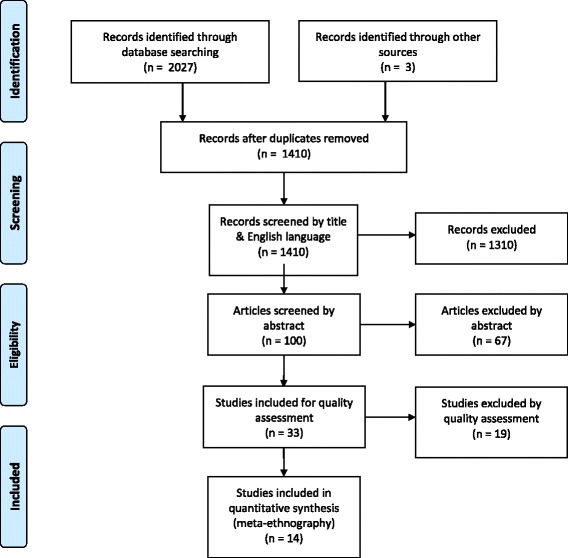
Seven electronic databases were searched with predetermined search terms. No limitations were imposed for year of publication. English language studies using qualitative methods exploring women's experiences of informal information sources and their impact upon women's birth preparation were included, subject to a quality appraisal framework. Searches were initiated in February 2016 and completed by March 2016. Studies were synthesised using an interpretive meta-ethnographic approach.
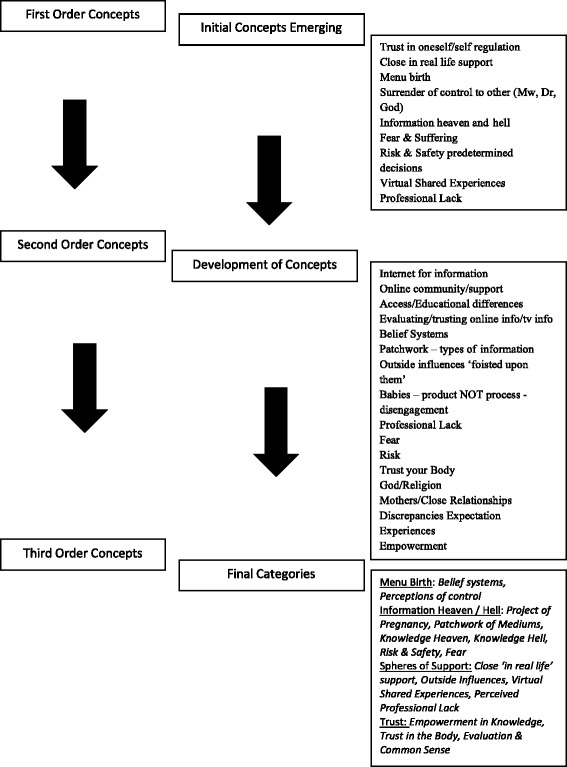
Fourteen studies were included for the final synthesis from Great Britain, Australia, Canada and the United States. Four main themes were identified: Menu Birth; Information Heaven/Hell; Spheres of Support; and Trust. It is evident that women do not enter pregnancy as empty vessels devoid of a conceptual framework, but rather have a pre-constructed embodied knowledge base upon which other information is superimposed. Allied to this, it is clear that informal information was sought to mitigate against the widespread experience of discordant information provided by maternity professionals.
Women's access to the deluge of informal information sources in mainstream media during pregnancy have significant impact on decision making for birth. These informal sources redefine the power dynamic between women and maternal healthcare providers, simultaneously increasing levels of anxiety and challenging women's pre-existing ideations and aspirations of personal birth processes. A lack of awareness by some professionals of women's information seeking behaviours generates barriers to women-centred support, leaving an experience expectation mismatch unchecked.
CRD42016041491 17/06/16.
女性在分娩时会采用各种准备方法,这些方法来自传统医疗保健提供者以及专业医疗保健环境之外的非正式信息来源(IIS)。目前尚未对这些非正式信息来源的获取和协商形式以及这些不相关且经常相互冲突的元素如何影响女性分娩决策过程进行评估。女性对产前准备的程度会对她们的分娩体验以及过渡到母亲身份和之后的生活产生重大且持久的影响。本研究旨在更深入地了解非正式信息来源如何影响女性的分娩准备。
使用预定的搜索词搜索了七个电子数据库。对出版物年份没有限制。纳入了使用定性方法探索女性对非正式信息来源的体验及其对女性分娩准备的影响的英语语言研究,但需符合质量评估框架。搜索于 2016 年 2 月开始,并于 2016 年 3 月完成。使用解释性元民族志方法对研究进行综合。
最终综合分析包括来自英国、澳大利亚、加拿大和美国的 14 项研究。确定了四个主要主题:菜单分娩;信息天堂/地狱;支持领域;和信任。显然,女性在怀孕时并不是空无一物,没有概念框架,而是具有预先构建的基于身体的知识库,其他信息在此基础上叠加。与此相关的是,很明显,非正式信息是为了减轻产妇专业人员提供的信息不一致的广泛经验。
女性在怀孕期间对主流媒体中大量非正式信息来源的访问对分娩决策产生重大影响。这些非正式来源重新定义了女性与产妇保健提供者之间的权力动态,同时增加了焦虑水平,并挑战了女性先前的个人分娩过程观念和愿望。一些专业人员对女性信息搜索行为缺乏认识,会阻碍以妇女为中心的支持,使期望不符的情况得不到检查。
CRD42016041491 17/06/16.