Department of Pediatrics, University of Pittsburgh School of Medicine, Pittsburgh, Pennsylvania, USA.
Center for Microbial Pathogenesis, Children's Hospital of Pittsburgh of UPMC, Pittsburgh, Pennsylvania, USA.
mBio. 2018 Jan 9;9(1):e01678-17. doi: 10.1128/mBio.01678-17.
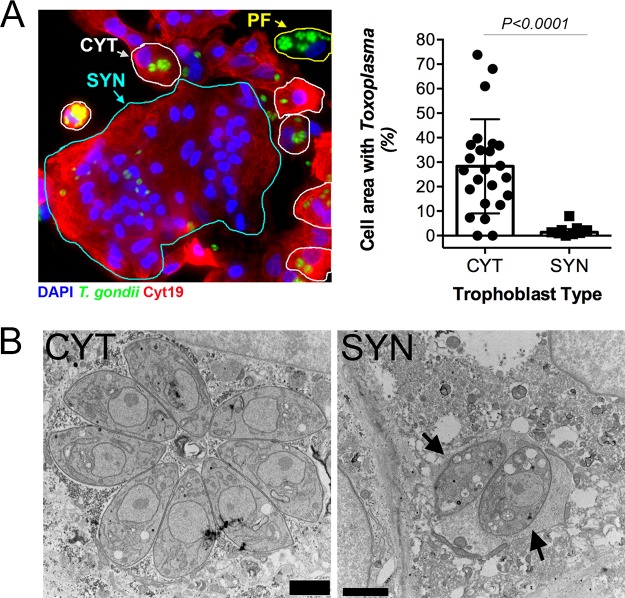
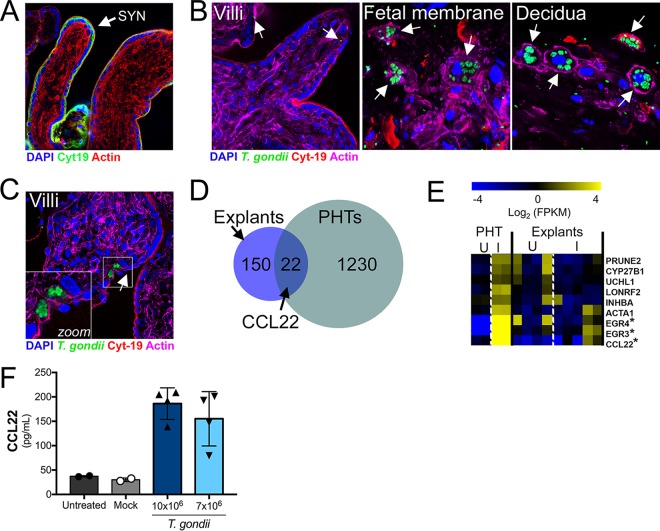
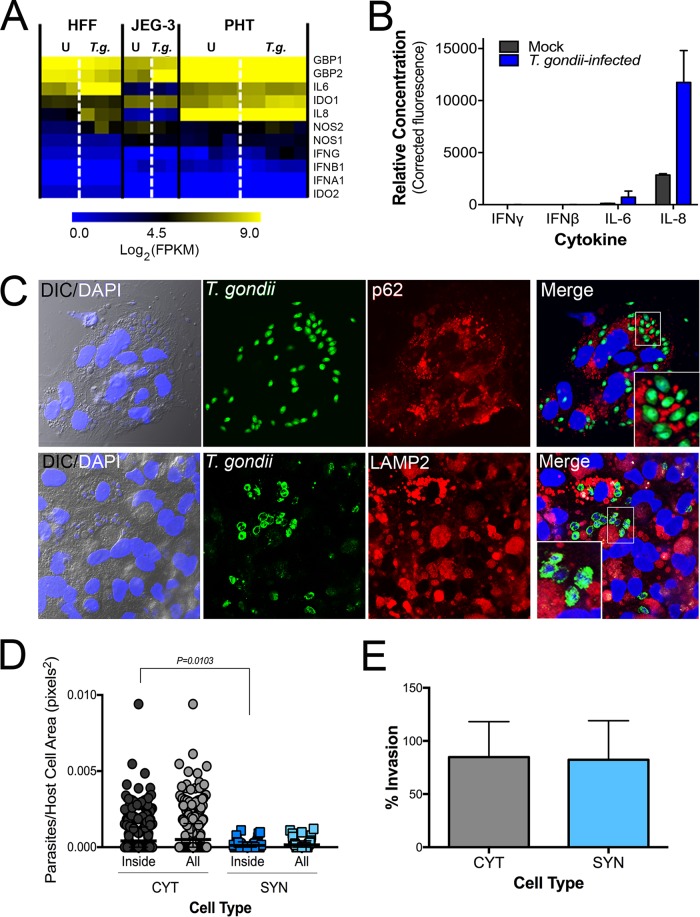
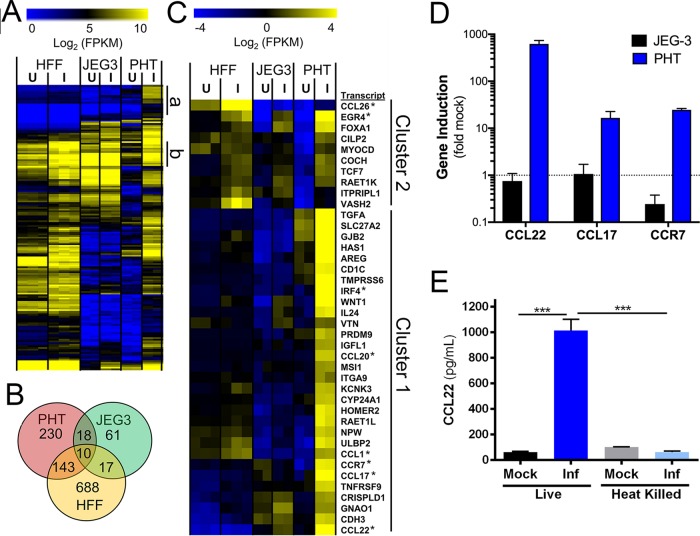
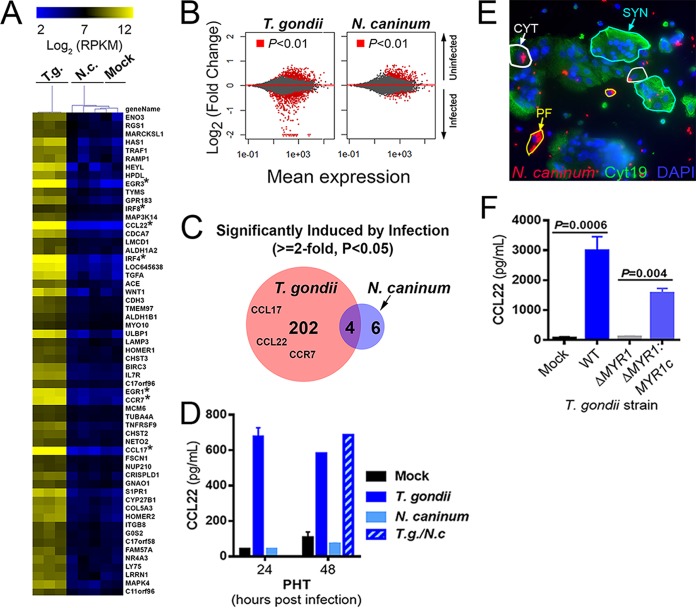
is a major source of congenital disease worldwide, but the cellular and molecular factors associated with its vertical transmission are largely unknown. In humans, the placenta forms the key interface between the maternal and fetal compartments and forms the primary barrier that restricts the hematogenous spread of microorganisms. Here, we utilized primary human trophoblast (PHT) cells isolated from full-term placentas and human midgestation chorionic villous explants to determine the mechanisms by which human trophoblasts restrict and respond to infection. We show that placental syncytiotrophoblasts, multinucleated cells that are in direct contact with maternal blood, restrict infection at two distinct stages of the parasite lytic cycle-at the time of attachment and also during intracellular replication. Utilizing comparative transcriptome sequencing (RNA-seq) transcriptional profiling, we also show that human placental trophoblasts from both the second and third trimesters respond uniquely to infection compared to trophoblast cell lines, typified by the upregulation of several immunity-related genes. One of the most differentially induced genes was the chemokine CCL22, which relies on the secretion of a parasite effector(s) either during or after invasion for its induction. Collectively, our findings provide new insights into the mechanisms by which the human placenta restricts the vertical transmission of at early and late stages of human pregnancy and demonstrate the existence of at least two interferon-independent pathways that restrict access to the fetal compartment. is a major source of congenital disease worldwide and must breach the placental barrier to be transmitted from maternal blood to the developing fetus. The events associated with the vertical transmission of are largely unknown. Here, we show that primary human syncytiotrophoblasts, the fetus-derived cells that comprise the primary placental barrier, restrict infection at two distinct stages of the parasite life cycle and respond to infection by inducing a unique immunomodulatory transcriptional profile. Collectively, our findings provide important insights into the mechanisms by which human syncytiotrophoblasts restrict infection at early and late stages of human pregnancy, identify both permissive and resistant human placental cell types, and identify the placenta-enriched signaling pathways induced in response to infection.
是全世界先天性疾病的主要来源,但与垂直传播相关的细胞和分子因素在很大程度上尚不清楚。在人类中,胎盘形成了母体和胎儿隔室之间的关键界面,并形成了限制微生物血源性传播的主要屏障。在这里,我们利用从足月胎盘和人类中期绒毛外植体分离的原代人滋养层 (PHT) 细胞来确定人滋养层限制和响应 感染的机制。我们表明,胎盘合体滋养层,即与母体血液直接接触的多核细胞,在寄生虫裂解周期的两个不同阶段限制 感染-在附着时以及在细胞内复制时。利用比较转录组测序 (RNA-seq) 转录谱分析,我们还表明,与滋养层细胞系相比,来自第二和第三个 trimester 的人胎盘滋养层对 感染的反应独特,其特征是几种免疫相关基因的上调。最具差异诱导的基因之一是趋化因子 CCL22,它依赖于寄生虫效应子的分泌,无论是在入侵期间还是之后,才能诱导其表达。总的来说,我们的研究结果提供了新的见解,即人类胎盘如何在人类妊娠的早期和晚期限制 的垂直传播,并证明至少存在两种干扰素非依赖性途径来限制 进入胎儿隔室。 是全世界先天性疾病的主要来源,必须突破胎盘屏障才能从母体血液传播到发育中的胎儿。与 垂直传播相关的事件在很大程度上尚不清楚。在这里,我们表明,原代人合体滋养层,即构成胎盘主要屏障的胎儿衍生细胞,在寄生虫生命周期的两个不同阶段限制 感染,并通过诱导独特的免疫调节转录谱来响应感染。总的来说,我们的研究结果提供了重要的见解,即人合体滋养层如何在人类妊娠的早期和晚期限制 感染,确定允许和抵抗的人胎盘细胞类型,并确定感染后诱导的胎盘丰富的信号通路。