Grover Geetika, Ploughman Michelle, Philpott Devin T, Kelly Liam P, Devasahayam Augustine J, Wadden Katie, Power Kevin E, Button Duane C
School of Human Kinetics and Recreation, Memorial University, Canada.
Recovery and Performance Laboratory, Memorial University, Canada.
Mult Scler J Exp Transl Clin. 2017 Dec 21;3(4):2055217317747625. doi: 10.1177/2055217317747625. eCollection 2017 Oct-Dec.
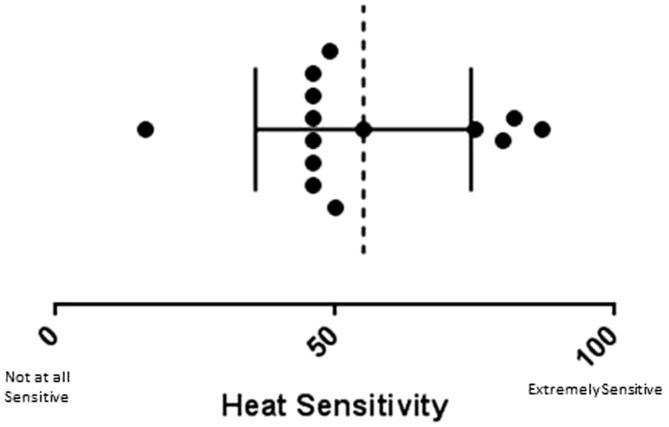
Heat sensitivity and fatigue limit the ability of multiple sclerosis patients to participate in exercise.
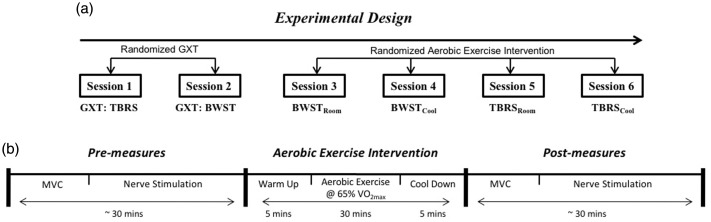
The purpose of this study was to determine the optimal aerobic exercise parameters (environmental temperature and exercise modality) to limit exercise-induced central and muscle fatigue among people with multiple sclerosis.
Fourteen people with multiple sclerosis with varying levels of disability completed four randomized exercise sessions at 65% of the maximal volume of oxygen: body-weight supported treadmill cool (16°C), body-weight supported treadmill room (21°C), total-body recumbent stepper cool and total-body recumbent stepper room. Maximum voluntary contraction, electromyography, and evoked contractile properties were collected from the more affected plantar flexors along with subjective levels of fatigue, body temperature and perceived level of exertion.
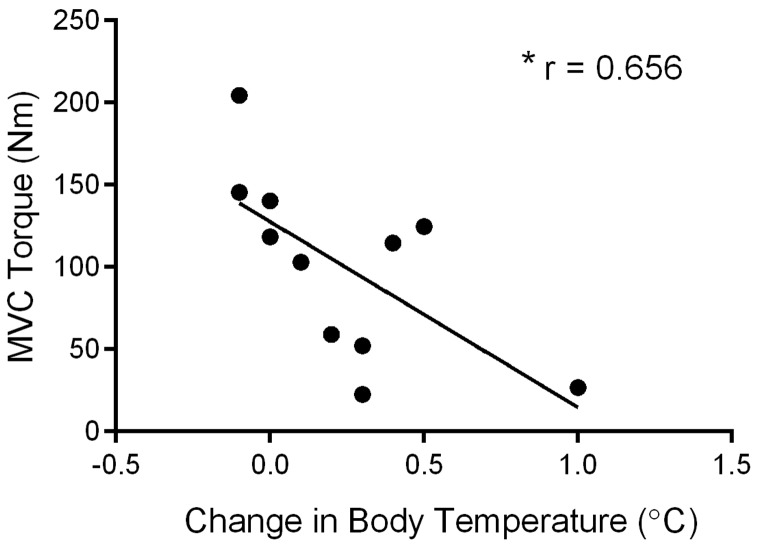
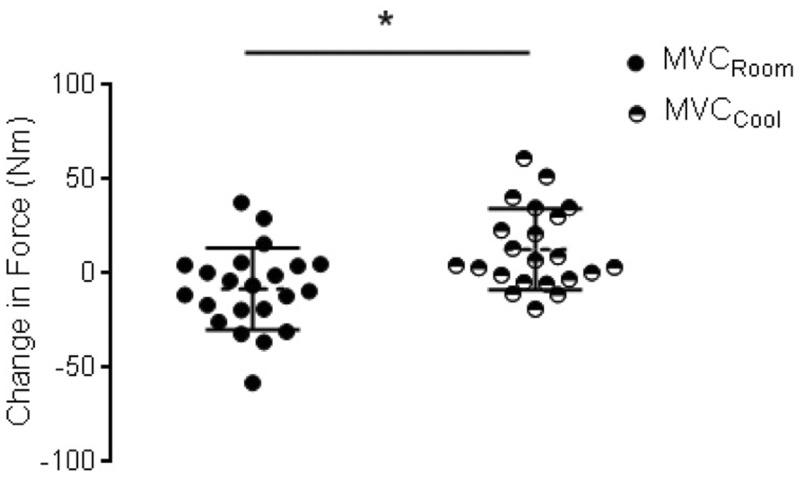
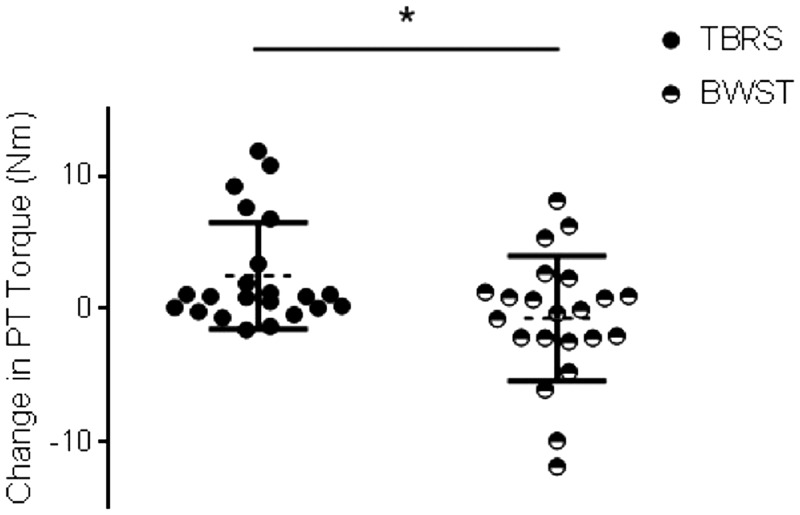
Exercise in cooler room temperature increased maximum voluntary contraction force ( = 0.010) and stabilized body temperature ( = 0.011) compared to standard room temperature. People with multiple sclerosis experienced greater peak twitch torque ( = 0.047), shorter time to peak twitch ( = 0.035) and a longer half relaxation time ( = 0.046) after total-body recumbent stepper suggestive of less muscle fatigue.
Cooling the exercise environment limits the negative effects of central fatigue during aerobic exercise and using total-body recumbent stepper (work distributed among four limbs) rather than body-weight supported treadmill lessens muscular fatigue. Therapists can titrate these two variables to help people with multiple sclerosis achieve sufficient exercise workloads.
热敏感性和疲劳限制了多发性硬化症患者参与运动的能力。
本研究的目的是确定最佳有氧运动参数(环境温度和运动方式),以限制多发性硬化症患者运动诱发的中枢和肌肉疲劳。
14名残疾程度不同的多发性硬化症患者以最大摄氧量的65%完成了四次随机运动试验:减重平板冷却(16°C)、减重平板室温(21°C)、全身卧式踏步机冷却和全身卧式踏步机室温。从受影响更严重的足底屈肌收集最大自主收缩、肌电图和诱发收缩特性,同时收集主观疲劳程度、体温和主观用力程度。
与标准室温相比,在较低室温下运动可增加最大自主收缩力(=0.010)并稳定体温(=0.011)。多发性硬化症患者在进行全身卧式踏步机运动后,峰值抽搐扭矩更大(=0.047),达到峰值抽搐的时间更短(=0.035),半松弛时间更长(=0.046),提示肌肉疲劳减轻。
降低运动环境温度可限制有氧运动期间中枢疲劳的负面影响,使用全身卧式踏步机(工作分布在四肢)而非减重平板可减轻肌肉疲劳。治疗师可调整这两个变量,以帮助多发性硬化症患者实现足够的运动负荷。