School of Horticulture Landscape Architecture, Henan Institute of Science and Technology, Xin Xiang, China.
PLoS One. 2018 Jan 10;13(1):e0190175. doi: 10.1371/journal.pone.0190175. eCollection 2018.
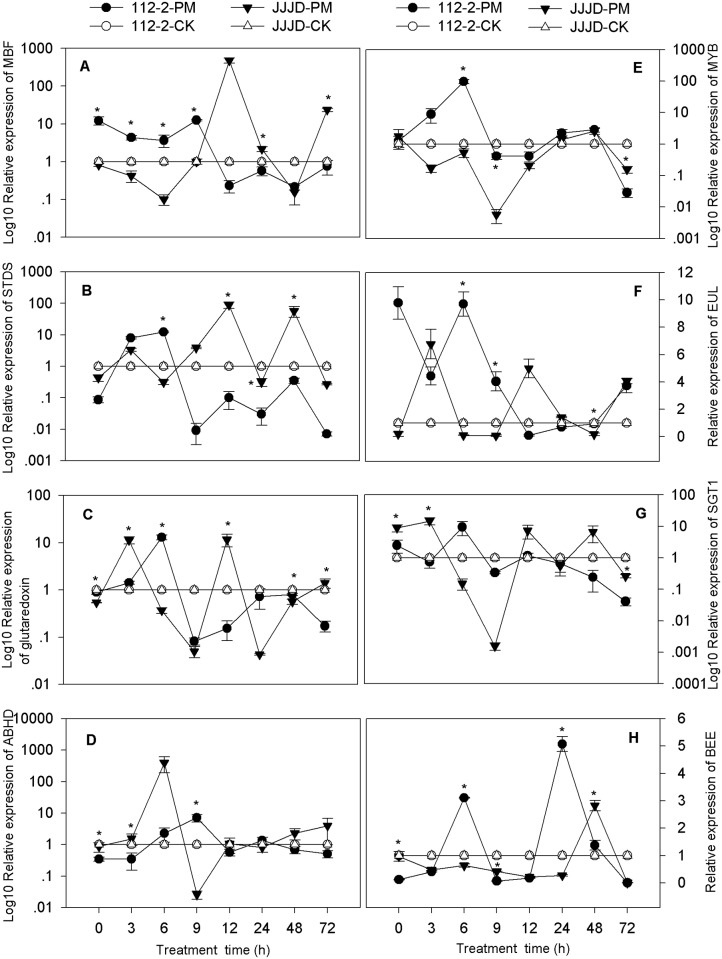
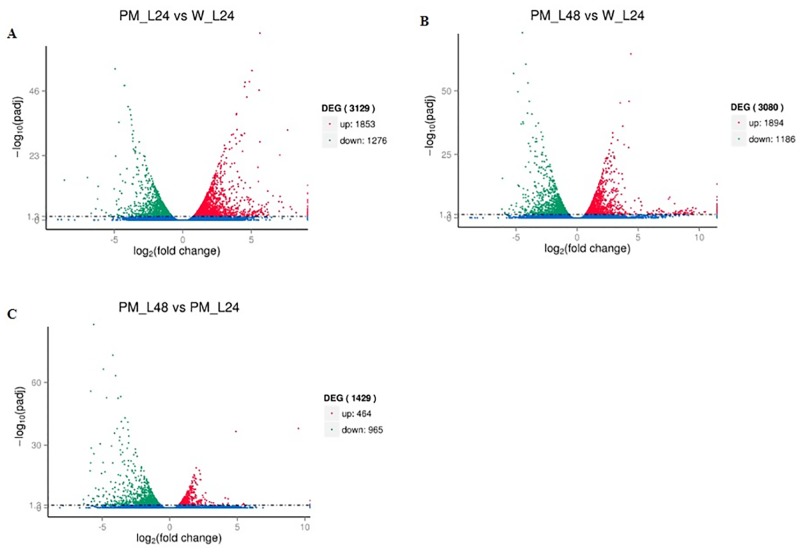
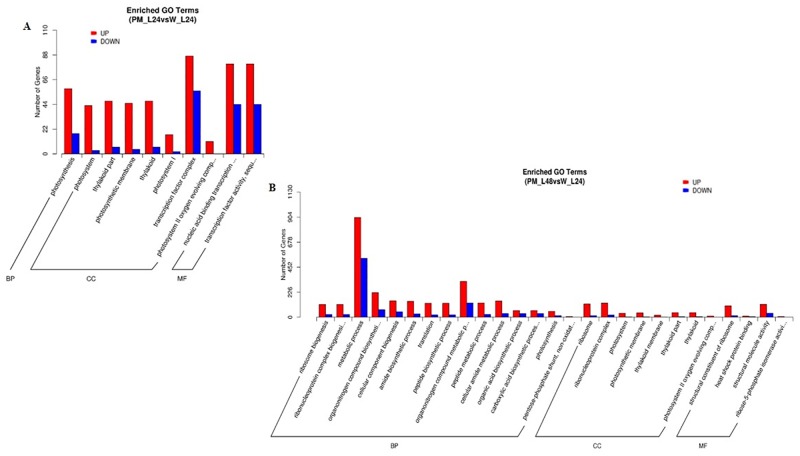
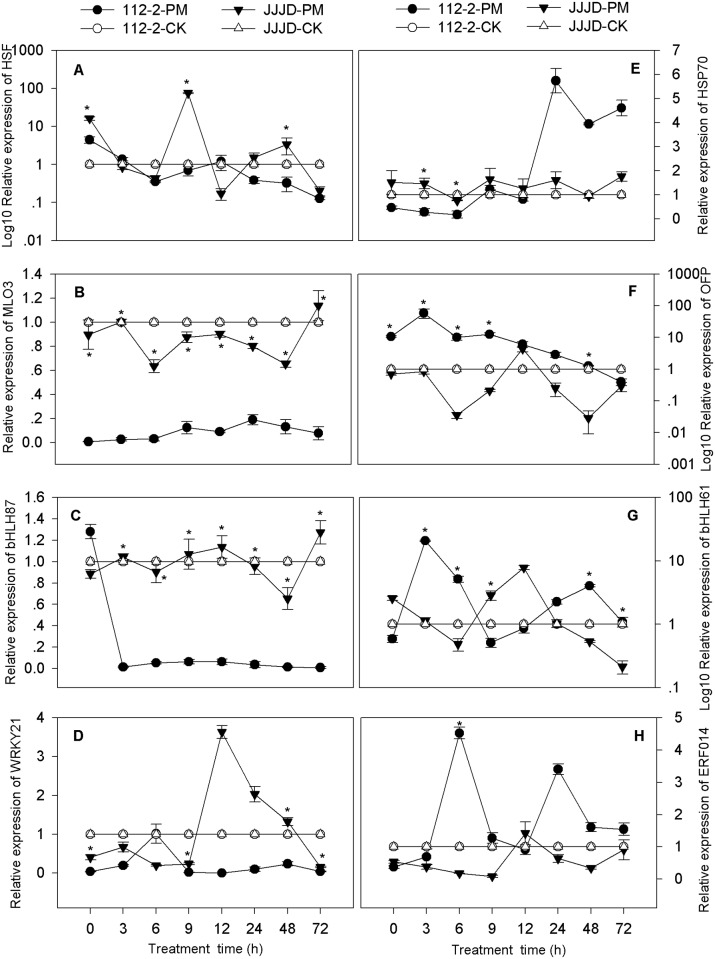
Cucurbit powdery mildew (PM) is one of the most severe fungal diseases, but the molecular mechanisms underlying PM resistance remain largely unknown, especially in pumpkin (Cucurbita moschata Duch.). The goal of this study was to identify gene expression differences in PM-treated plants (harvested at 24 h and 48 h after inoculation) and untreated (control) plants of inbred line "112-2" using RNA sequencing (RNA-Seq). The inbred line "112-2" has been purified over 8 consecutive generations of self-pollination and shows high resistance to PM. More than 7600 transcripts were examined in pumpkin leaves, and 3129 and 3080 differentially expressed genes (DEGs) were identified in inbred line "112-2" at 24 and 48 hours post inoculation (hpi), respectively. Based on the KEGG (Kyoto Encyclopedia of Genes and Genomes) pathway database and GO (Gene Ontology) database, a complex regulatory network for PM resistance that may involve hormone signal transduction pathways, transcription factors and defense responses was revealed at the transcription level. In addition, the expression profiles of 16 selected genes were analyzed using quantitative RT-PCR. Among these genes, the transcript levels of 6 DEGs, including bHLH87 (Basic Helix-loop-helix transcription factor), ERF014 (Ethylene response factor), WRKY21 (WRKY domain), HSF (heat stress transcription factor A), MLO3 (Mildew Locus O), and SGT1 (Suppressor of G-Two Allele of Skp1), in PM-resistant "112-2" were found to be significantly up- or down-regulated both before 9 hpi and at 24 hpi or 48 hpi; this behavior differed from that observed in the PM-susceptible material (cultivar "Jiujiangjiaoding"). The transcriptome data provide novel insights into the response of Cucurbita moschata to PM stress and are expected to be highly useful for dissecting PM defense mechanisms in this major vegetable and for improving pumpkin breeding with enhanced resistance to PM.
南瓜蔓枯病(PM)是最严重的真菌病害之一,但 PM 抗性的分子机制在很大程度上尚不清楚,特别是在南瓜(Cucurbita moschata Duch.)中。本研究的目的是使用 RNA 测序(RNA-Seq)鉴定接种后 24 h 和 48 h 处理的自交系“112-2”植物(接种后收获)和未处理(对照)植物之间的基因表达差异。自交系“112-2”已经经过连续 8 代的自交纯化,表现出对 PM 的高抗性。在南瓜叶片中检查了超过 7600 个转录本,在接种后 24 和 48 小时(hpi),自交系“112-2”中分别鉴定出 3129 和 3080 个差异表达基因(DEG)。基于京都基因与基因组百科全书(KEGG)途径数据库和基因本体论(GO)数据库,揭示了一个可能涉及激素信号转导途径、转录因子和防御反应的 PM 抗性复杂调控网络。此外,使用定量 RT-PCR 分析了 16 个选定基因的表达谱。在这些基因中,包括 bHLH87(碱性螺旋-环-螺旋转录因子)、ERF014(乙烯响应因子)、WRKY21(WRKY 结构域)、HSF(热应激转录因子 A)、MLO3(白粉病位点 O)和 SGT1(Skp1 的抑制物)在内的 6 个 DEG 的转录水平在 PM 抗性“112-2”中被发现无论是在 9 hpi 之前还是在 24 hpi 或 48 hpi 时都明显上调或下调;这种行为与 PM 敏感材料(品种“九江胶丁”)的观察结果不同。转录组数据为 Cucurbita moschata 对 PM 胁迫的反应提供了新的见解,有望为剖析该主要蔬菜的 PM 防御机制提供重要帮助,并提高南瓜对 PM 的抗性。