Arnold T E, Kenney W F, Curtis J H, Bianchi T S, Brenner M
Department of Geological Sciences, University of Florida, Gainesville, Florida, United States of America.
Land Use and Environmental Change Institute, University of Florida, Gainesville, Florida, United States of America.
PLoS One. 2018 Jan 11;13(1):e0191073. doi: 10.1371/journal.pone.0191073. eCollection 2018.
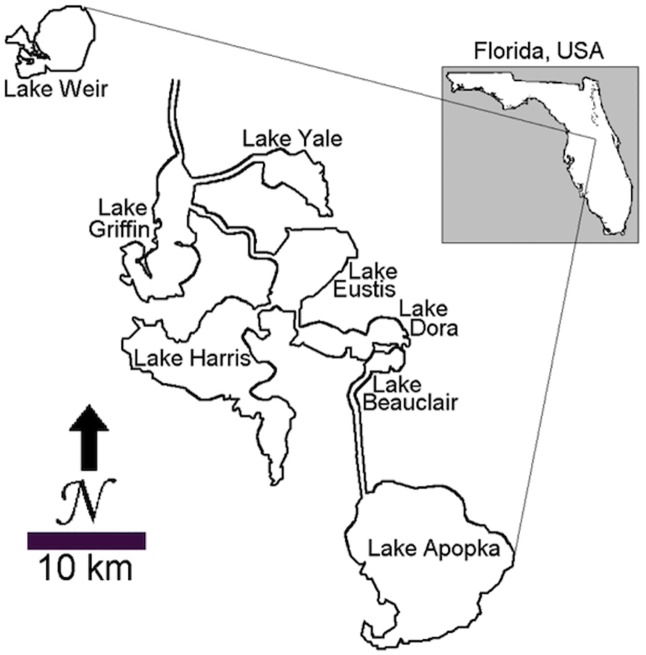
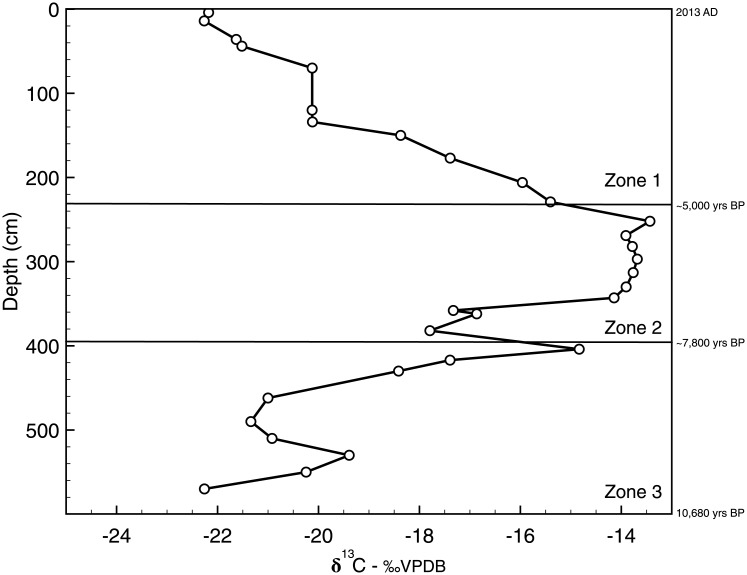
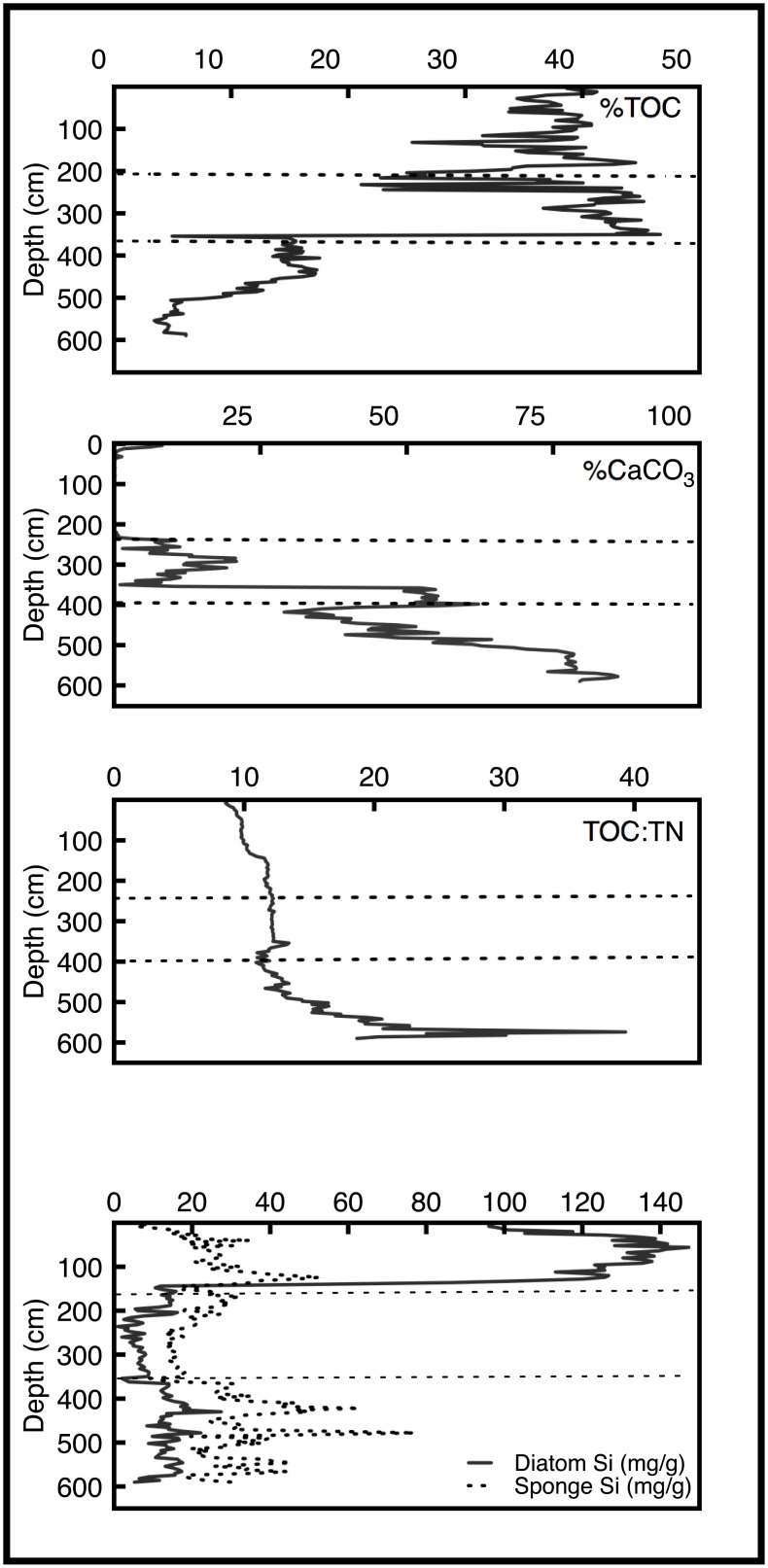
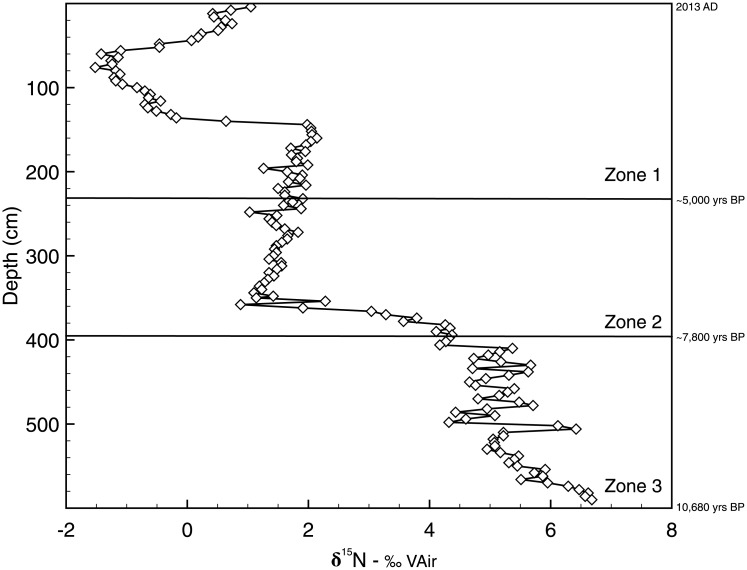
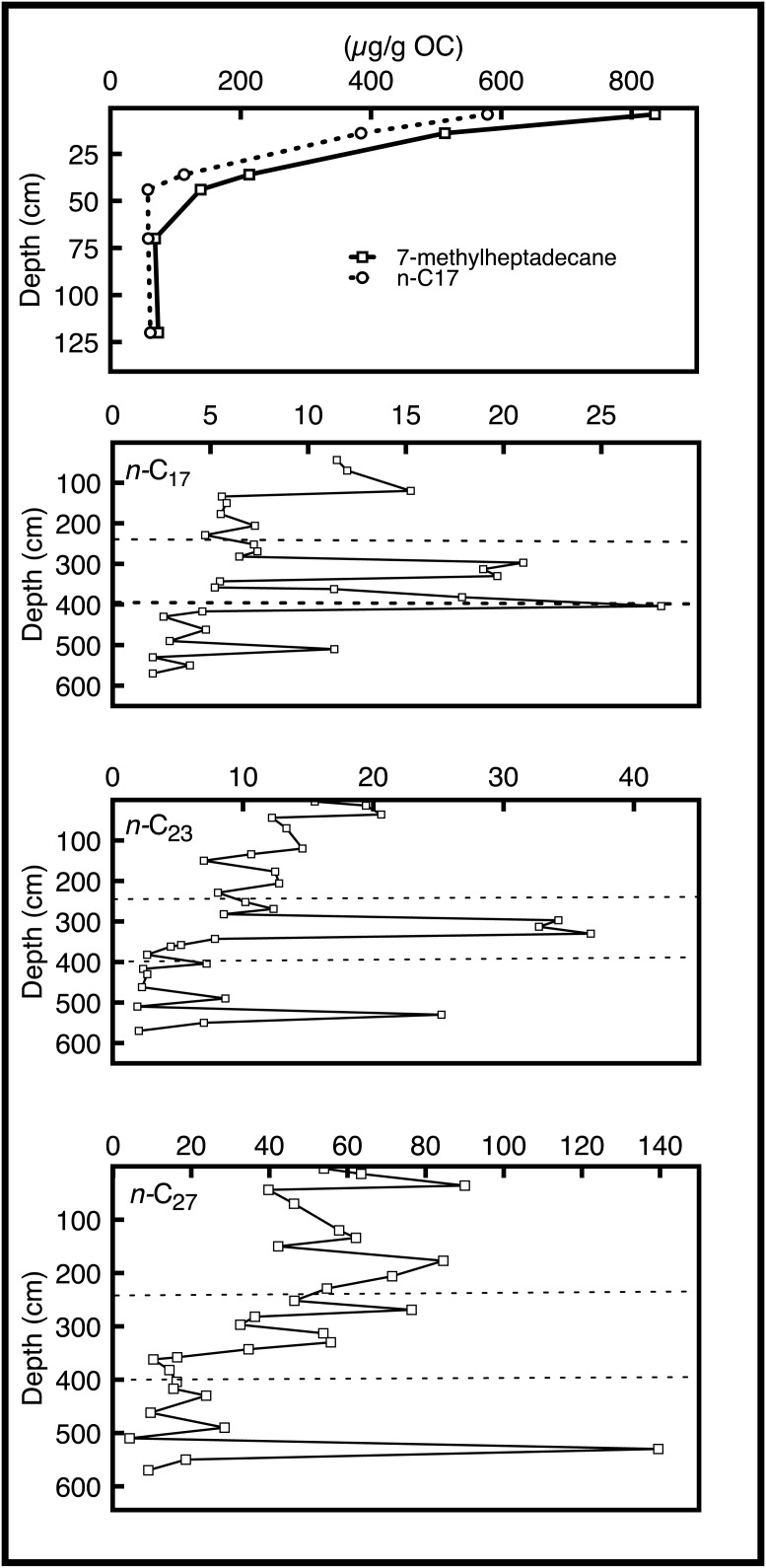
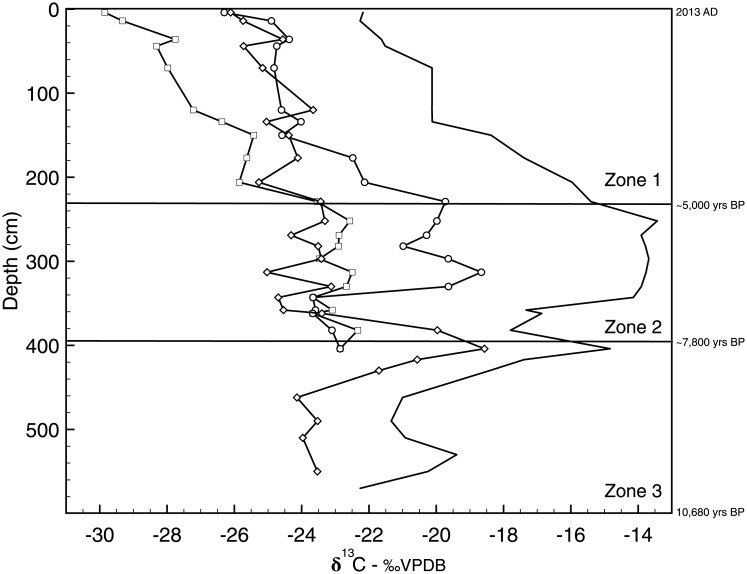
We carried out geochemical analyses on a sediment core from Lake Harris, Florida (USA) to identify sources of organic matter to the sediment throughout the Holocene, and relate changes in those sources to shifts in past climate and environmental conditions. We hypothesized that the sources of organic matter changed in response to regional hydrologic shifts following de-glaciation, and to human population expansion in the state during the 20th century. Hydroclimate shifts in Florida were related to: 1) a steady rise in relative sea level and the fresh water table that began in the early Holocene, 2) wetland formation and expansion ca. 5,000 cal yrs BP, and 3) the onset of the modern El Niño (ENSO) cycle ~3,000 cal yrs BP. Stratigraphic changes in sediment variables from Lake Harris reflect each of these hydroclimate periods. Early in the Holocene, Lake Harris was a marsh-like system in a relatively dry, open-prairie environment. Organic sediments deposited at that time were derived largely from terrestrial sources, as inferred from high TOC/TN ratios, a dominance of longer-chain of n-alkanes (n-C29-31), relatively negative organic carbon isotope values (δ13CTOC), and low biogenic silica concentrations. In the middle Holocene, a positive shift in δ13CTOC coincided with the onset of wetter conditions in Florida. Submerged macrophyte biomarkers (n-C21-23) dominated, and during that period bulk organic carbon isotope values were most similar to δ13C values of mid-chain-length n-alkanes. In the late Holocene, δ13CTOC values declined, CaCO3 levels decreased to trace amounts, organic carbon concentrations increased and diatom biogenic silica concentrations increased from 10 to 120 mg g-1. Around 2,900 cal yrs BP, the effects of ENSO intensified and many Florida lakes deepened to their current limnetic state. Concentrations of algal and cyanobacterial biomarkers in the Lake Harris core increased by orders of magnitude after about AD 1940, in response to human-induced eutrophication, an inference supported by values of δ15N that fluctuate around zero.
我们对取自美国佛罗里达州哈里斯湖的一个沉积岩芯进行了地球化学分析,以确定全新世期间沉积物中有机质的来源,并将这些来源的变化与过去气候和环境条件的转变联系起来。我们假设,有机质的来源变化是对冰消作用后区域水文变化以及20世纪该州人口扩张的响应。佛罗里达州的水文气候变化与以下因素有关:1)全新世早期开始的相对海平面和淡水水位的稳步上升;2)约5000 cal yr BP湿地的形成和扩张;3)约3000 cal yr BP现代厄尔尼诺(ENSO)循环的开始。哈里斯湖沉积物变量的地层变化反映了这些水文气候时期中的每一个。在全新世早期,哈里斯湖是一个类似沼泽的系统,处于相对干燥的开阔草原环境中。根据高TOC/TN比值、长链正构烷烃(n-C29-31)占主导、相对负的有机碳同位素值(δ13CTOC)以及低生物源二氧化硅浓度推断,当时沉积的有机沉积物主要来自陆地来源。在全新世中期,δ13CTOC的正向变化与佛罗里达州更湿润条件的开始相吻合。水下大型植物生物标志物(n-C21-23)占主导,在此期间,总有机碳同位素值与中链长度正构烷烃的δ13C值最为相似。在全新世晚期,δ13CTOC值下降,碳酸钙水平降至微量,有机碳浓度增加,硅藻生物源二氧化硅浓度从10 mg g-1增加到120 mg g-1。约2900 cal yr BP,ENSO的影响加剧,许多佛罗里达湖泊加深到当前的贫营养状态。公元1940年后,哈里斯湖岩芯中藻类和蓝细菌生物标志物的浓度增加了几个数量级,这是对人为富营养化的响应,δ15N值在零左右波动的这一推断支持了这一点。