Nakayama Emi E, Saito Akatsuki, Sultana Tahmina, Jin Zhuan, Nohata Kyotaro, Shibata Masato, Hosoi Miho, Motomura Kazushi, Shioda Tatsuo, Sangkitporn Somchai, Loket Ruangchai, Saeng-Aroon Siriphan
1 Department of Viral Infections, Research Institute for Microbial Diseases, Osaka University , Osaka, Japan .
2 Thailand-Japan Research Collaboration Center on Emerging and Re-Emerging Infections (RCC-ERI), Osaka University , Nonthaburi, Thailand .
AIDS Res Hum Retroviruses. 2018 Apr;34(4):382-392. doi: 10.1089/AID.2017.0212. Epub 2018 Feb 13.
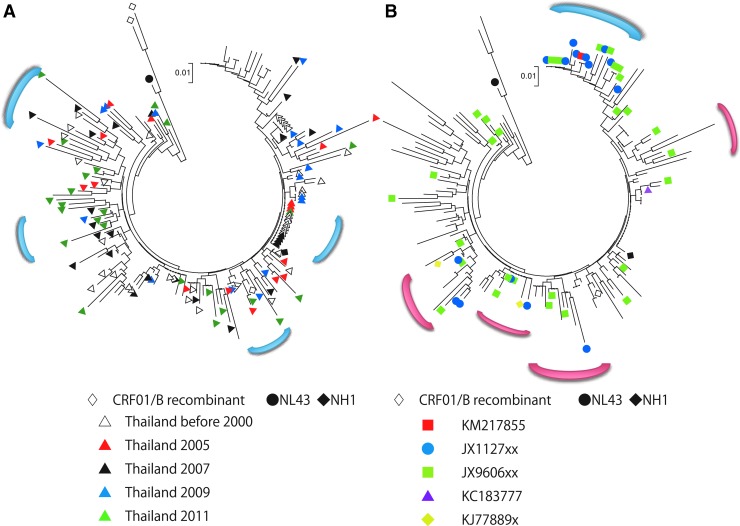
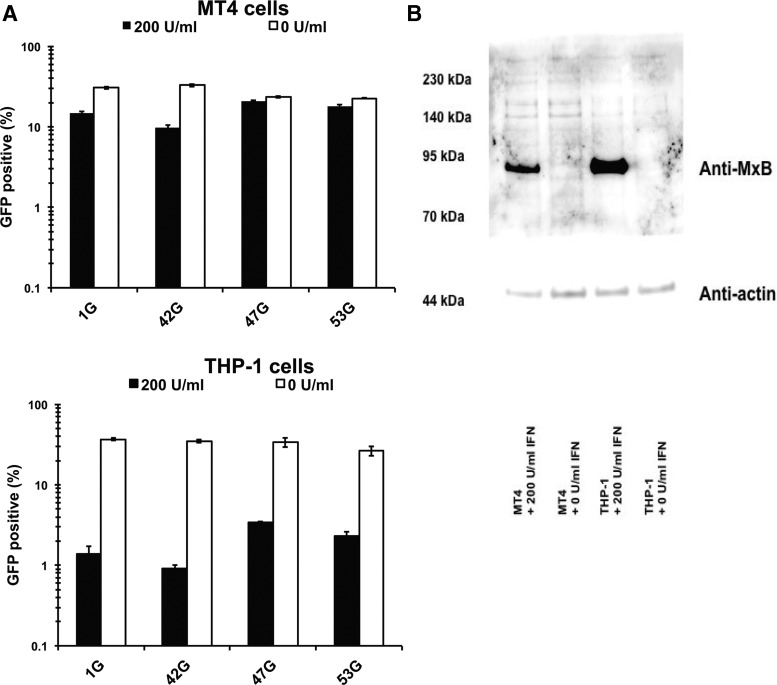
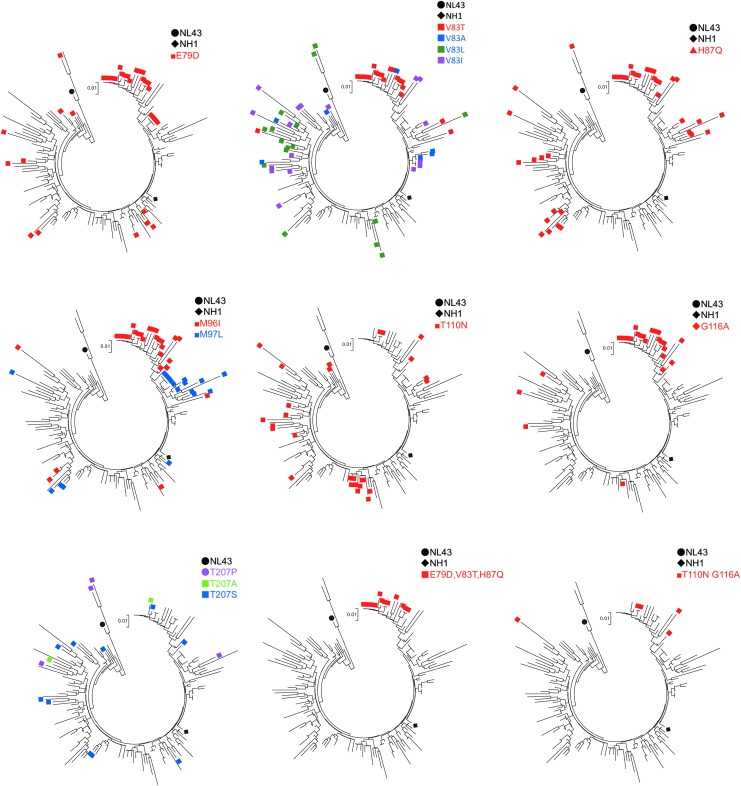
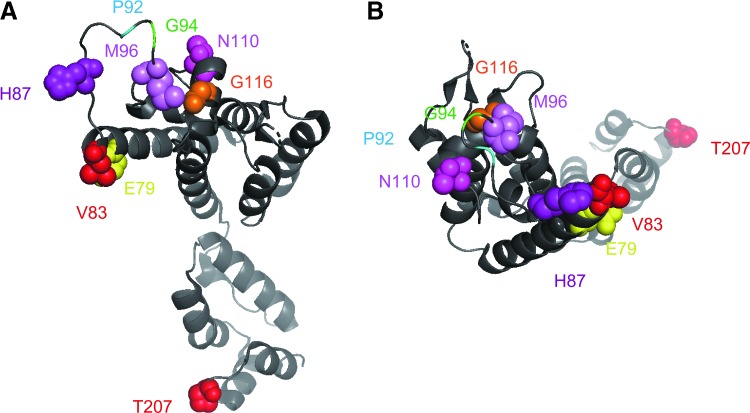
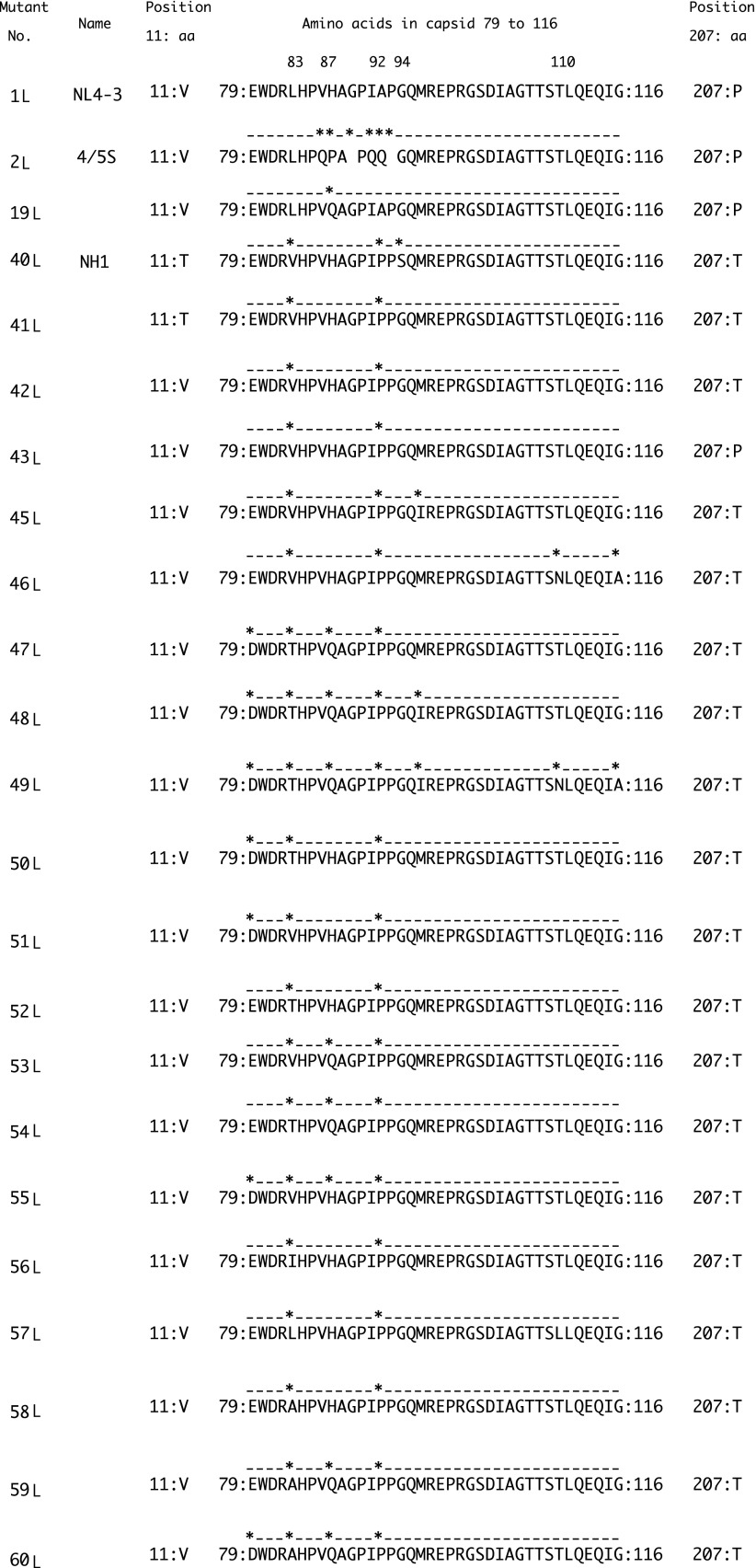
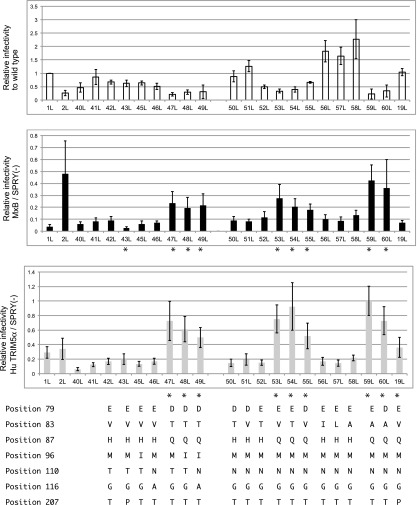
TRIM5α and MxB are known as restriction factors that inhibit the early step of intracellular HIV-1 replication cycle. Both factors are believed to interact with the incoming virus core to suppress HIV-1 infection. The extreme diversity of HIV-1 is thought to be a consequence of its propensity to mutate to escape immune responses and host restriction factors. We recently determined the capsid sequences for 144 HIV-1 CRF01_AE viruses obtained in Thailand from 2005 to 2011. In this study, we further analyzed the amino acid variations among the capsid sequences of 204 HIV-1 CRF01_AE obtained in Thailand and China, including 84 of the aforementioned 144 viruses, to detect mutations permitting escape from restriction by host factors. We found a characteristic combination of E79D, V83T, and H87Q in sequences from Chinese viruses and subsequently showed that this combination conferred partial resistance to MxB. Interestingly, this combination conferred resistance to human TRIM5α as well. The H87Q mutation alone conferred resistance to MxB in the CRF01_AE background, but not in subtype B virus. In contrast, the H87Q mutation alone conferred resistance to human TRIM5α in both the CFR01_AE and subtype B backgrounds. BLAST analysis revealed the presence of the E79D, V83T, and H87Q combination in CRF01_AE viruses isolated not only in China but also in many other countries. Although the mechanistic details as well as precise role of MxB antiviral activity in infected individuals remain to be clarified, our data suggest an interaction between MxB and the HIV-1 capsid in vivo.
TRIM5α和MxB是已知的限制因子,可抑制细胞内HIV-1复制周期的早期步骤。这两种因子都被认为与进入的病毒核心相互作用以抑制HIV-1感染。HIV-1的极端多样性被认为是其易于突变以逃避免疫反应和宿主限制因子的结果。我们最近确定了2005年至2011年在泰国获得的144株HIV-1 CRF01_AE病毒的衣壳序列。在本研究中,我们进一步分析了在泰国和中国获得的204株HIV-1 CRF01_AE衣壳序列中的氨基酸变异,包括上述144株病毒中的84株,以检测允许逃避宿主因子限制的突变。我们在中国病毒的序列中发现了E79D、V83T和H87Q的特征性组合,随后表明这种组合赋予了对MxB的部分抗性。有趣的是,这种组合也赋予了对人TRIM5α的抗性。单独的H87Q突变在CRF01_AE背景中赋予了对MxB的抗性,但在B亚型病毒中则没有。相反,单独的H87Q突变在CFR01_AE和B亚型背景中都赋予了对人TRIM5α的抗性。BLAST分析显示,不仅在中国,而且在许多其他国家分离的CRF01_AE病毒中都存在E79D、V83T和H87Q组合。尽管MxB抗病毒活性在受感染个体中的机制细节以及确切作用仍有待阐明,但我们的数据表明MxB与HIV-1衣壳在体内存在相互作用。