Wei Wei, Guo Haoran, Ma Min, Markham Richard, Yu Xiao-Fang
Institute of Virology and AIDS Research, First Hospital of Jilin University, Changchun, Jilin Province, China; Department of Molecular Microbiology and Immunology, Johns Hopkins Bloomberg School of Public Health, Baltimore, MD, United States.
School of Life Sciences, Tianjin University, Tianjin, China.
EBioMedicine. 2016 Jun;8:230-236. doi: 10.1016/j.ebiom.2016.04.020. Epub 2016 Apr 17.
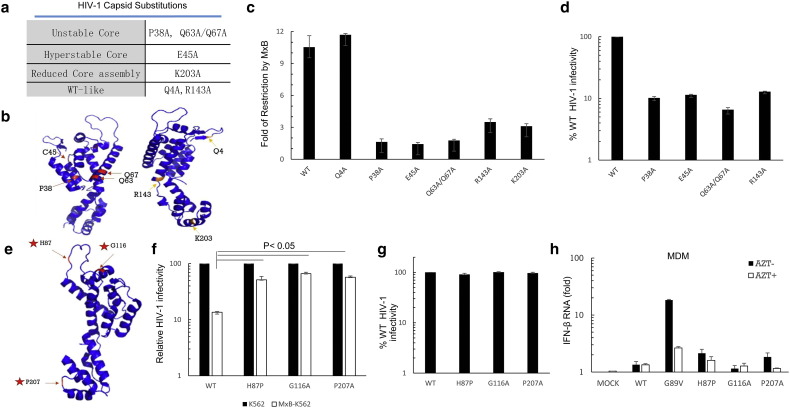
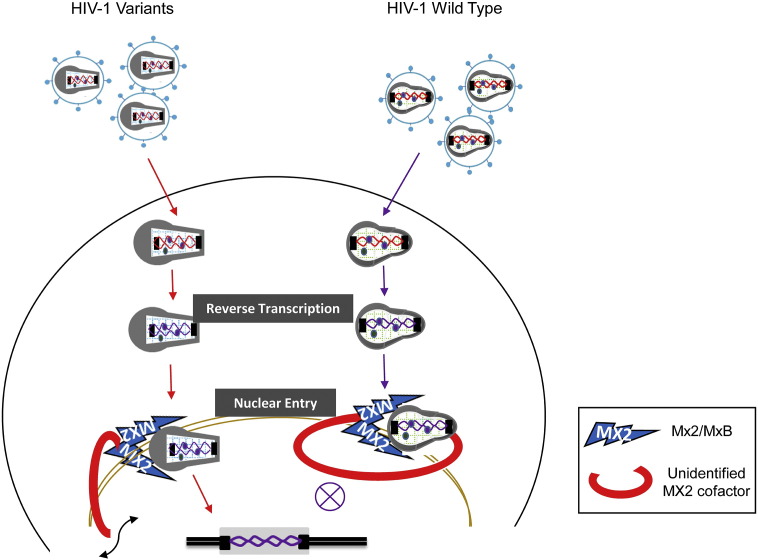
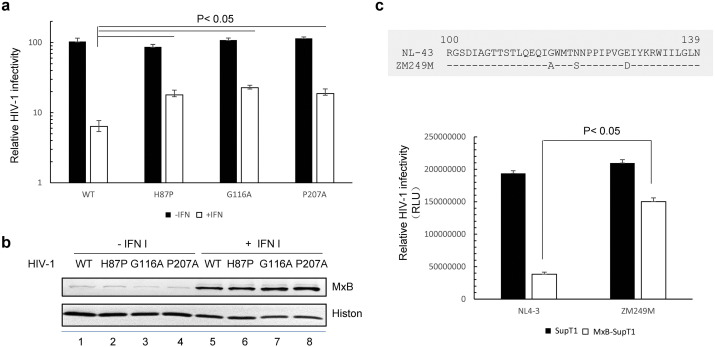
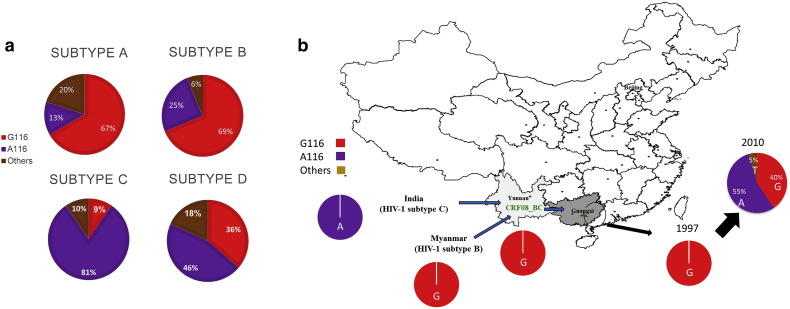
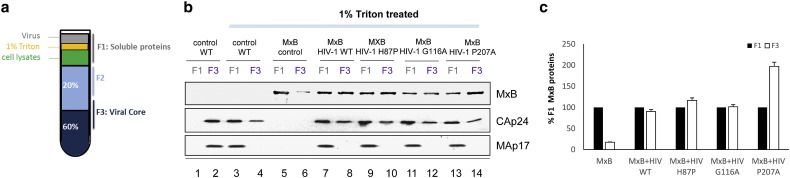
Recent studies have identified human myxovirus resistance protein 2 (MxB or Mx2) as an interferon induced inhibitor of HIV-1 replication. However, whether HIV-1 can overcome MxB restriction without compromise of viral fitness has been undefined. Here, we have discovered that naturally occurring capsid (CA) variants can render HIV-1 resistant to the activity of MxB without losing viral infectivity or the ability to escape from interferon induction. Moreover, these MxB resistant HIV-1 variants do not lose MxB recognition. Surprisingly, MxB resistant CA variants are most commonly found in the Clade C HIV-1 that is the most rapidly expanding Clade throughout the world. Accumulation of MxB resistant mutations is also observed during HIV-1 spreading in human populations. These findings support a potential role for MxB as a selective force during HIV-1 transmission and evolution.
最近的研究已确定人类黏液病毒抗性蛋白2(MxB或Mx2)是一种干扰素诱导的HIV-1复制抑制剂。然而,HIV-1能否在不损害病毒适应性的情况下克服MxB限制尚不清楚。在此,我们发现天然存在的衣壳(CA)变体可使HIV-1对MxB的活性产生抗性,而不会丧失病毒感染力或逃避干扰素诱导的能力。此外,这些对MxB具有抗性的HIV-1变体不会失去对MxB的识别。令人惊讶的是,对MxB具有抗性的CA变体最常见于C组HIV-1中,而C组是全球范围内扩张最快的分支。在HIV-1在人群中传播期间也观察到对MxB具有抗性的突变的积累。这些发现支持了MxB在HIV-1传播和进化过程中作为一种选择力量的潜在作用。