Loucari Constantinos C, Patsali Petros, van Dijk Thamar B, Stephanou Coralea, Papasavva Panayiota, Zanti Maria, Kurita Ryo, Nakamura Yukio, Christou Soteroulla, Sitarou Maria, Philipsen Sjaak, Lederer Carsten W, Kleanthous Marina
1 Department of Molecular Genetics Thalassaemia, The Cyprus Institute of Neurology and Genetics , Nicosia, Cyprus .
2 Cyprus School of Molecular Medicine , Nicosia, Cyprus .
Hum Gene Ther Methods. 2018 Feb;29(1):60-74. doi: 10.1089/hgtb.2017.190.
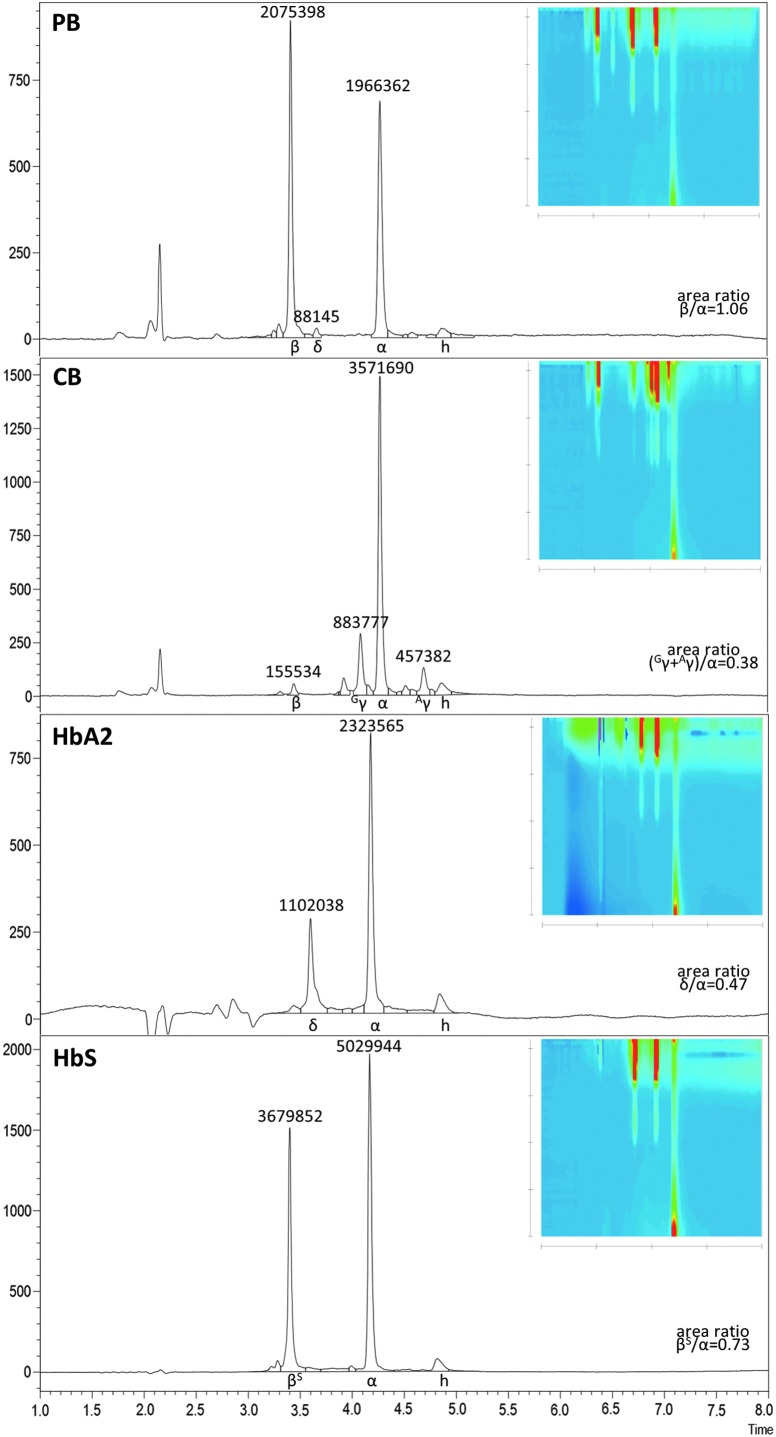
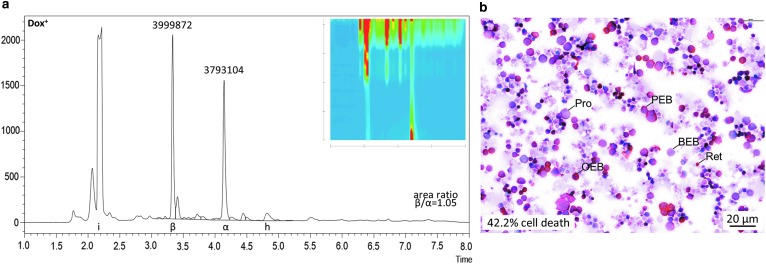
The β-hemoglobinopathies sickle cell anemia and β-thalassemia are the focus of many gene-therapy studies. A key disease parameter is the abundance of globin chains because it indicates the level of anemia, likely toxicity of excess or aberrant globins, and therapeutic potential of induced or exogenous β-like globins. Reversed-phase high-performance liquid chromatography (HPLC) allows versatile and inexpensive globin quantification, but commonly applied protocols suffer from long run times, high sample requirements, or inability to separate murine from human β-globin chains. The latter point is problematic for in vivo studies with gene-addition vectors in murine disease models and mouse/human chimeras. This study demonstrates HPLC-based measurements of globin expression (1) after differentiation of the commonly applied human umbilical cord blood-derived erythroid progenitor-2 cell line, (2) in erythroid progeny of CD34 cells for the analysis of clustered regularly interspaced short palindromic repeats/Cas9-mediated disruption of the globin regulator BCL11A, and (3) of transgenic mice holding the human β-globin locus. At run times of 8 min for separation of murine and human β-globin chains as well as of human γ-globin chains, and with routine measurement of globin-chain ratios for 12 nL of blood (tested for down to 0.75 nL) or of 300,000 in vitro differentiated cells, the methods presented here and any variant-specific adaptations thereof will greatly facilitate evaluation of novel therapy applications for β-hemoglobinopathies.
β-珠蛋白生成障碍性贫血(镰状细胞贫血)和β-地中海贫血是许多基因治疗研究的重点。一个关键的疾病参数是珠蛋白链的丰度,因为它表明贫血的程度、过量或异常珠蛋白可能的毒性,以及诱导或外源性β样珠蛋白的治疗潜力。反相高效液相色谱法(HPLC)可实现通用且廉价的珠蛋白定量,但常用方案存在运行时间长、样品需求量大或无法区分鼠源和人源β-珠蛋白链等问题。对于在鼠类疾病模型和小鼠/人类嵌合体中使用基因添加载体的体内研究而言,后一点是个难题。本研究展示了基于HPLC的珠蛋白表达测量方法:(1)在常用的人脐带血来源的红系祖细胞-2细胞系分化后进行测量;(2)在CD34细胞的红系后代中进行测量,以分析成簇规律间隔短回文重复序列/Cas9介导的珠蛋白调节因子BCL11A的破坏情况;(3)对携带人β-珠蛋白基因座的转基因小鼠进行测量。在8分钟的运行时间内即可分离鼠源和人源β-珠蛋白链以及人γ-珠蛋白链,并且可对12纳升血液(低至0.75纳升也进行了测试)或300,000个体外分化细胞进行珠蛋白链比例的常规测量,本文介绍的方法及其任何特定变体的改进方法将极大地促进对β-珠蛋白生成障碍性贫血新治疗应用的评估。