Qian Guang, Bao Yongbo, Li Chenghua, Xie Qingqing, Lu Meng, Lin Zhihua
School of Marine Sciences, Ningbo University, Ningbo, China.
Zhejiang Key Laboratory of Aquatic Germplasm Resources, College of Biological and Environmental Sciences, Zhejiang Wanli University, Ningbo, China.
Front Physiol. 2017 Dec 18;8:1061. doi: 10.3389/fphys.2017.01061. eCollection 2017.
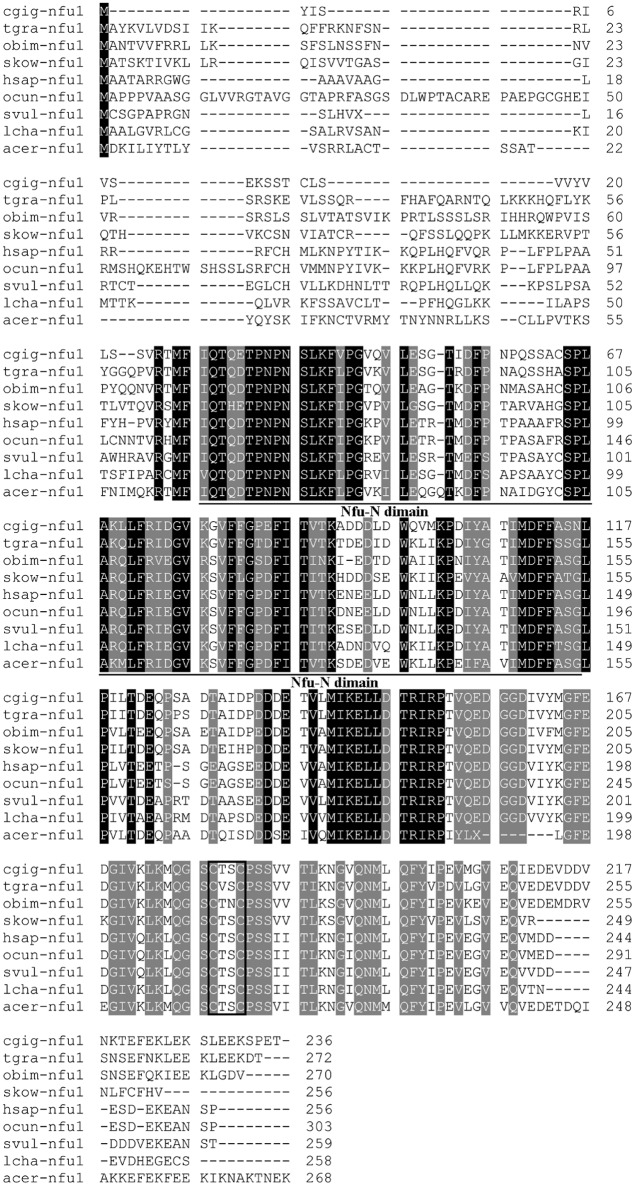
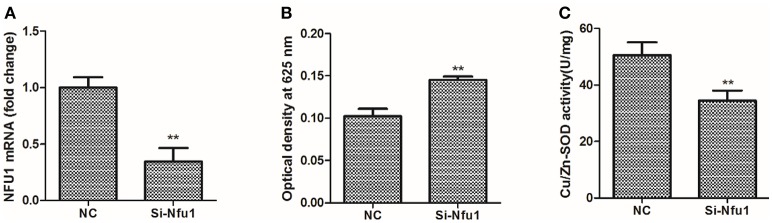
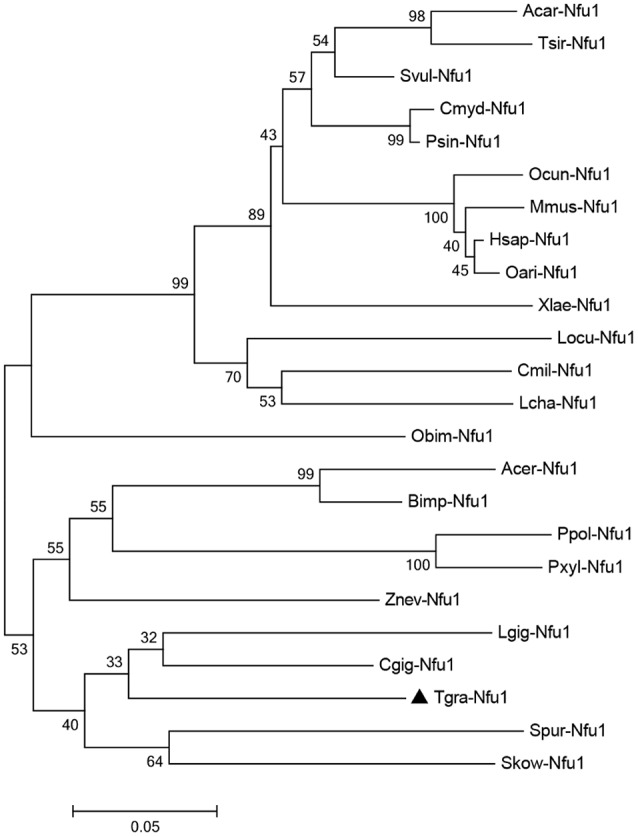
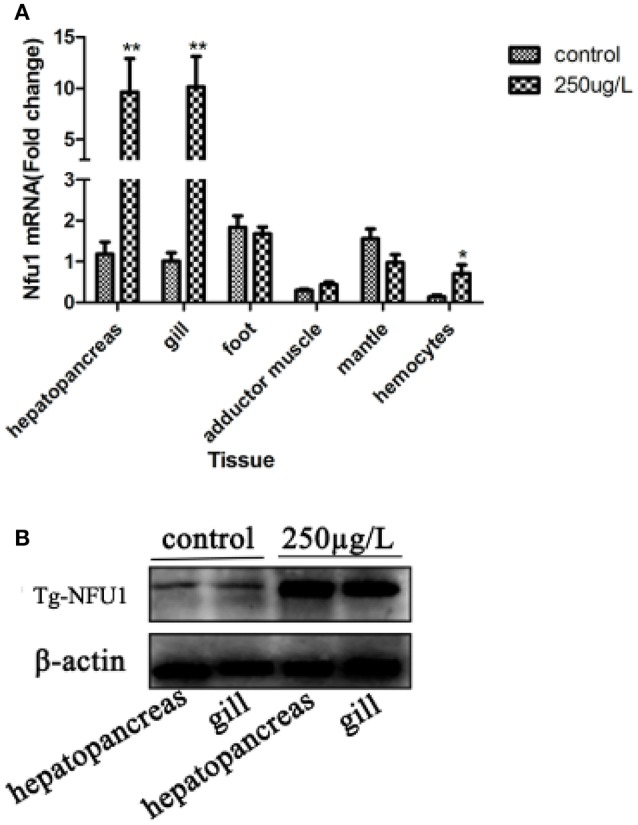
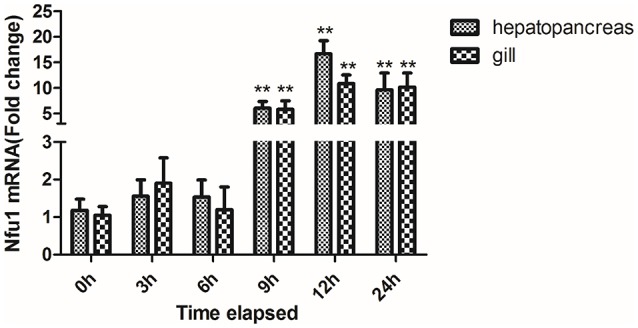
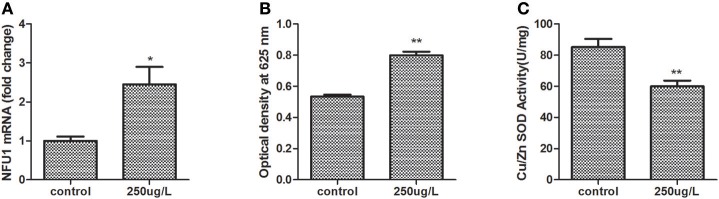
The blood clam , a eukaryotic bottom-dwelling bivalve species has a strong ability to tolerate and accumulate cadmium. In our previous study, Nfu1 (iron-sulfur cluster scaffold protein), which is involved in Fe-S cluster biogenesis, was shown to be significantly up-regulated under Cd stress, as determined by proteomic analysis. To investigate the function of Nfu1 in cadmium (Cd) detoxification, the function of blood clam Nfu1 (designated as Tg-Nfu1) was investigated by integrated molecular and protein approaches. The full-length cDNA of Tg-Nfu1 is 1167 bp and encodes a protein of 272 amino acid residues. The deduced Tg-Nfu1 protein is 30 kDa contains a conserved Nfu-N domain and a Fe-S cluster binding motif (C-X-X-C). qRT-PCR analysis revealed that Tg-Nfu1 was ubiquitously expressed in all examined tissues; it was up-regulated in the hepatopancreas and gill, and kept a high level from 9 to 24 h after Cd exposure (250 μg/L). Western blot analysis further revealed that the Tg-Nfu1 protein was also highly expressed in the hepatopancreas and gill after 24 h of Cd stress. Further functional analysis showed that the production of ROS was increased and Cu/ZnSOD activity was inhibited in blood clam, treated with the specific Nfu1 siRNA and Cd stress, respectively. These results suggest that Tg-Nfu1 could protect blood clam from oxidative damage caused by Cd stress.
血蛤是一种真核底栖双壳贝类物种,具有很强的耐受和积累镉的能力。在我们之前的研究中,通过蛋白质组学分析确定,参与铁硫簇生物合成的Nfu1(铁硫簇支架蛋白)在镉胁迫下显著上调。为了研究Nfu1在镉(Cd)解毒中的功能,采用综合分子和蛋白质方法对血蛤Nfu1(命名为Tg-Nfu1)的功能进行了研究。Tg-Nfu1的全长cDNA为1167 bp,编码一个由272个氨基酸残基组成的蛋白质。推导的Tg-Nfu1蛋白为30 kDa,包含一个保守的Nfu-N结构域和一个铁硫簇结合基序(C-X-X-C)。qRT-PCR分析表明,Tg-Nfu1在所有检测组织中均有广泛表达;在肝胰腺和鳃中上调,在镉暴露(250μg/L)后9至24小时保持高水平。蛋白质印迹分析进一步表明,镉胁迫24小时后,Tg-Nfu1蛋白在肝胰腺和鳃中也高度表达。进一步的功能分析表明,分别用特异性Nfu1 siRNA和镉胁迫处理血蛤后,活性氧的产生增加,铜/锌超氧化物歧化酶活性受到抑制。这些结果表明,Tg-Nfu1可以保护血蛤免受镉胁迫引起的氧化损伤。