Bhansali Shipra, Bhansali Anil, Walia Rama, Saikia Uma Nahar, Dhawan Veena
Department of Experimental Medicine and Biotechnology, Postgraduate Institute of Medical Education and Research (PGIMER), Chandigarh, India.
Department of Endocrinology, Postgraduate Institute of Medical Education and Research (PGIMER), Chandigarh, India.
Front Endocrinol (Lausanne). 2017 Dec 15;8:347. doi: 10.3389/fendo.2017.00347. eCollection 2017.
Hyperglycemia-mediated oxidative stress impedes cell-reparative process like autophagy, which has been implicated in impairment of β-cell function in type 2 diabetes mellitus (T2DM). However, the role of mitophagy (selective mitochondrial autophagy) in progression of hyperglycemia remains elusive. This study aimed to assess the impact of increasing severity of hyperglycemia on mitochondrial stress and mitophagy.
A case-control study included healthy controls, subjects with prediabetes, newly diagnosed T2DM (NDT2DM) and advanced duration of T2DM (ADT2DM) ( = 20 each). Mitochondrial stress indices, transcriptional and translational expression of mitophagy markers (, and ) and transmission electron microscopic (TEM) studies were performed in peripheral blood mononuclear cells.
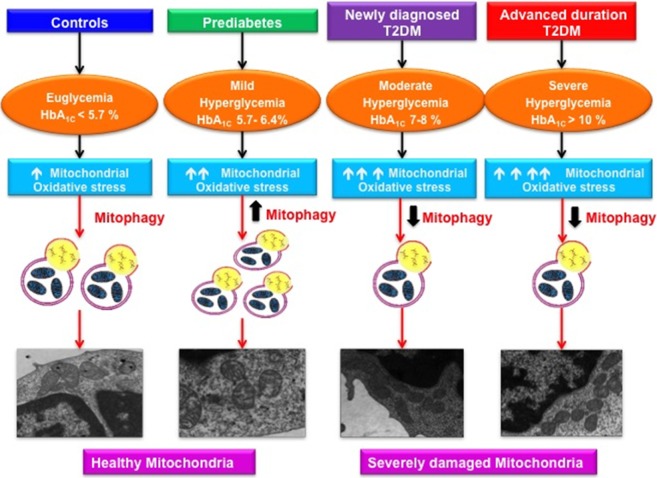
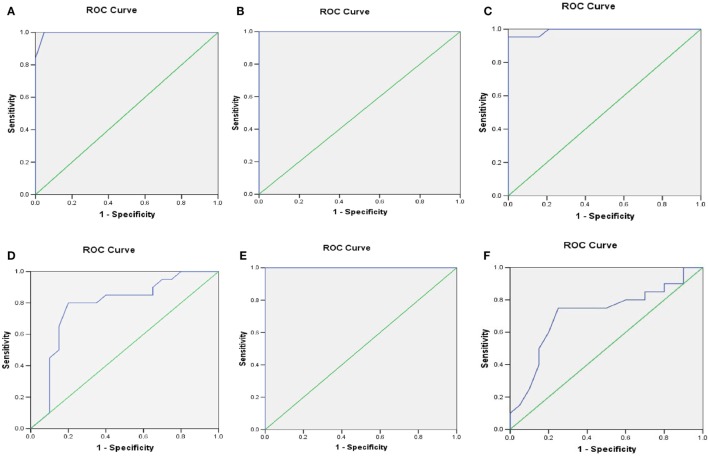
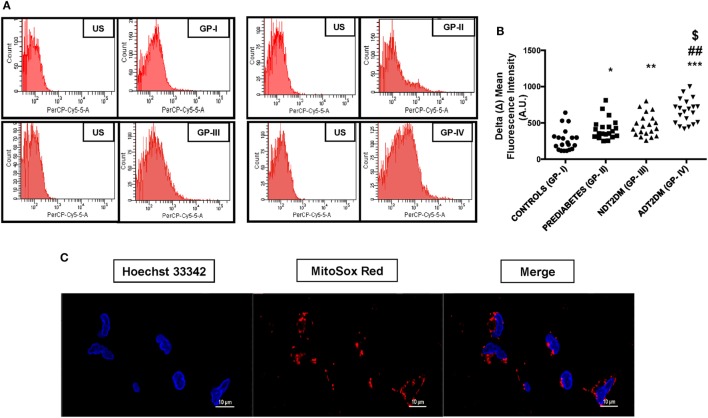
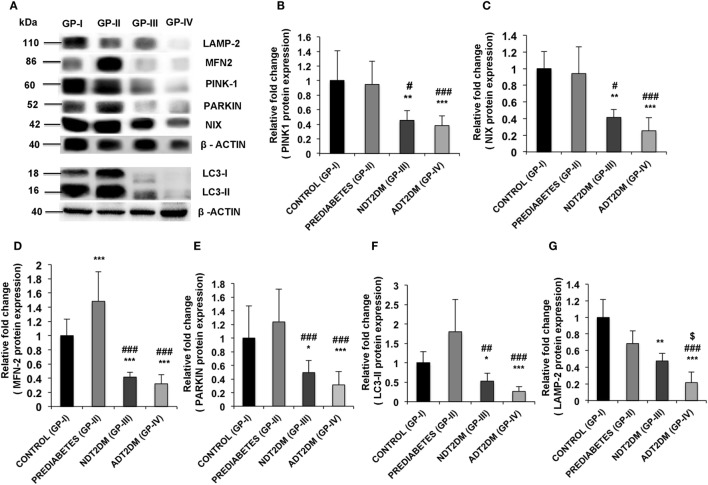
With mild hyperglycemia in subjects with prediabetes, to moderate to severe hyperglycemia in NDT2DM and ADT2DM, a progressive rise in mitochondrial oxidative stress was observed. Prediabetic subjects exhibited significantly increased expression of mitophagy-related markers and showed a positive association with HOMA-β, whereas, patients with NDT2DM and ADT2DM demonstrated decreased expression, with a greater decline in ADT2DM subjects. TEM studies revealed significantly reduced number of distorted mitochondria in prediabetics, as compared to the T2DM patients. In addition, receiver operating characteristic analysis showed HbA > 7% (53 mmol/mol) was associated with attenuated mitophagy.
Increasing hyperglycemia is associated with progressive rise in oxidative stress and altered mitochondrial morphology. Sustenance of mitophagy at HbA < 7% (53 mmol/mol) strengthens the rationale of achieving HbA below this cutoff for good glycemic control. An "adaptive" increase in mitophagy may delay progression to T2DM by preserving the β-cell function in subjects with prediabetes.
高血糖介导的氧化应激会阻碍自噬等细胞修复过程,这与2型糖尿病(T2DM)患者β细胞功能受损有关。然而,线粒体自噬(选择性线粒体自噬)在高血糖进展中的作用仍不清楚。本研究旨在评估高血糖严重程度增加对线粒体应激和线粒体自噬的影响。
一项病例对照研究纳入了健康对照者、糖尿病前期患者、新诊断的T2DM(NDT2DM)患者和病程较长的T2DM(ADT2DM)患者(每组20例)。对外周血单个核细胞进行线粒体应激指标、线粒体自噬标志物( 、 和 )的转录和翻译表达以及透射电子显微镜(TEM)研究。
随着糖尿病前期患者出现轻度高血糖,NDT2DM和ADT2DM患者出现中度至重度高血糖,线粒体氧化应激逐渐增加。糖尿病前期患者的线粒体自噬相关标志物表达显著增加,且与HOMA-β呈正相关,而NDT2DM和ADT2DM患者的表达降低,ADT2DM患者下降更明显。TEM研究显示,与T2DM患者相比,糖尿病前期患者线粒体变形数量显著减少。此外,受试者工作特征分析显示,糖化血红蛋白(HbA)>7%(53 mmol/mol)与线粒体自噬减弱有关。
血糖升高与氧化应激的逐渐增加和线粒体形态改变有关。糖化血红蛋白<7%(53 mmol/mol)时维持线粒体自噬,强化了将糖化血红蛋白控制在该阈值以下以实现良好血糖控制的理论依据。线粒体自噬的“适应性”增加可能通过保留糖尿病前期患者的β细胞功能来延缓向T2DM的进展。