Medicinal Bioconvergence Research Center, Seoul National University, Suwon, Korea.
College of Pharmacy, Seoul National University, Seoul, Korea.
Exp Mol Med. 2018 Jan 12;50(1):e424. doi: 10.1038/emm.2017.231.
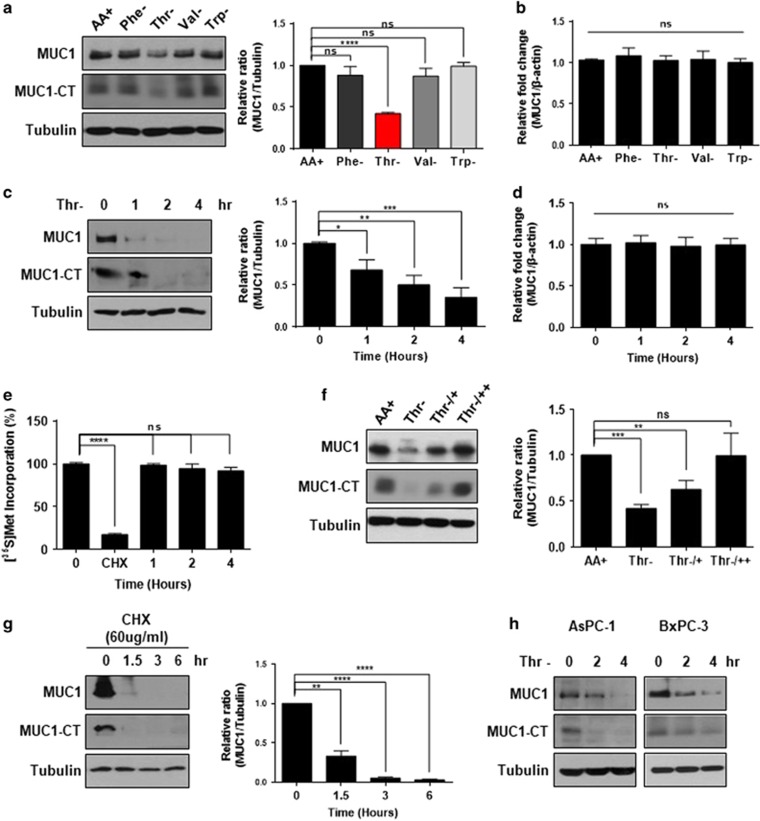
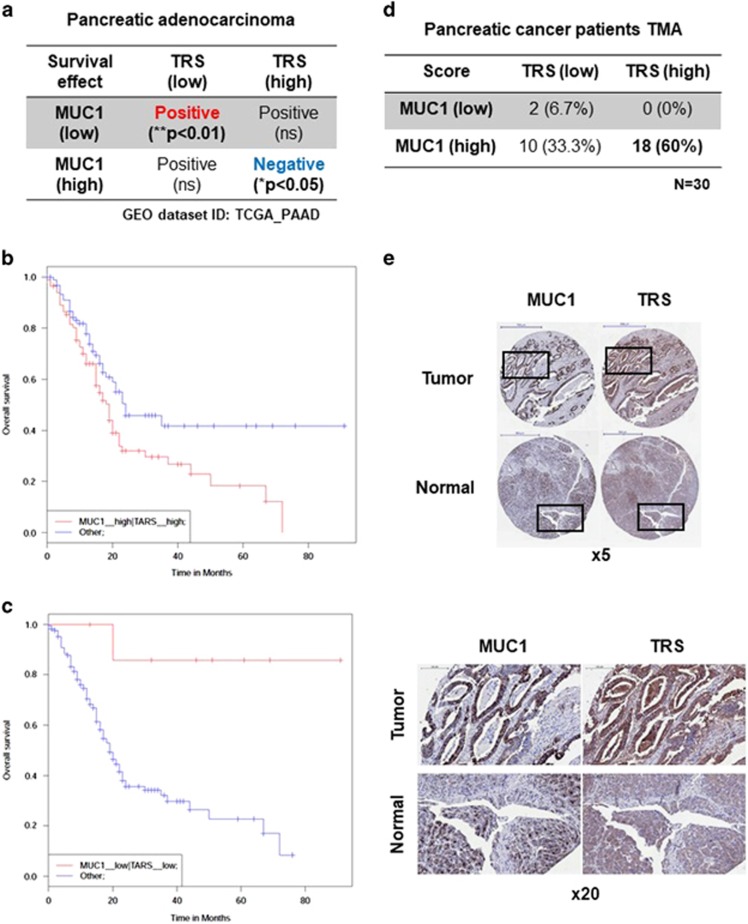
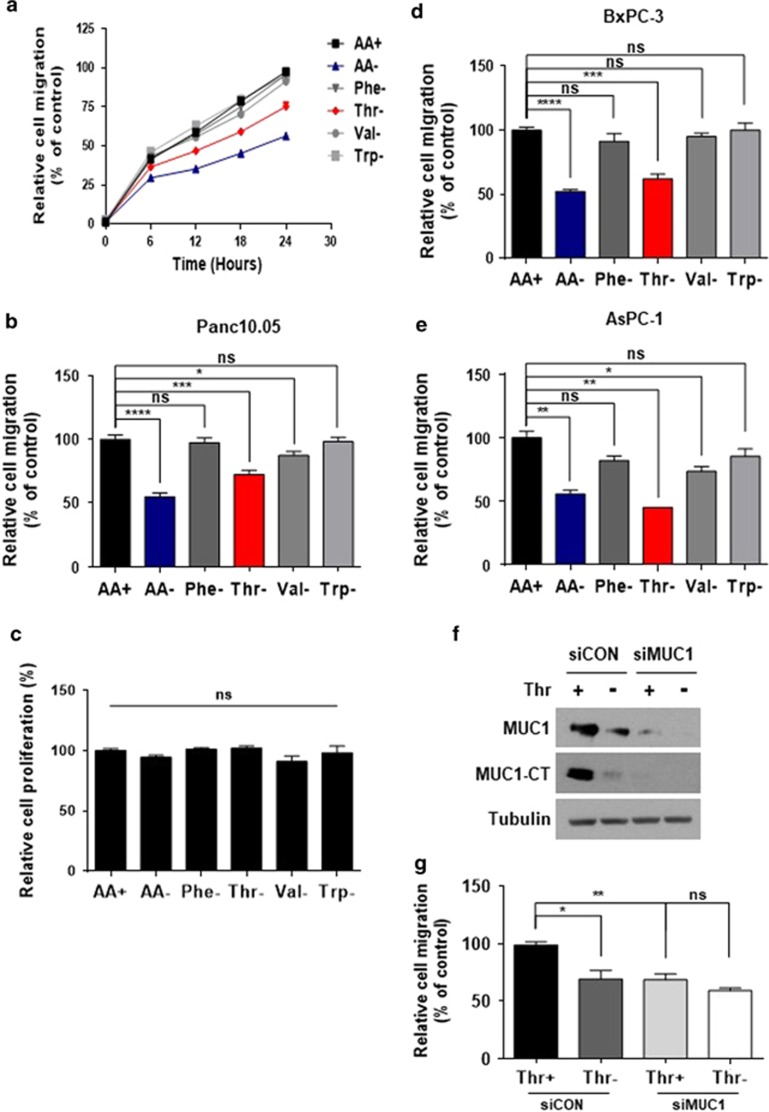
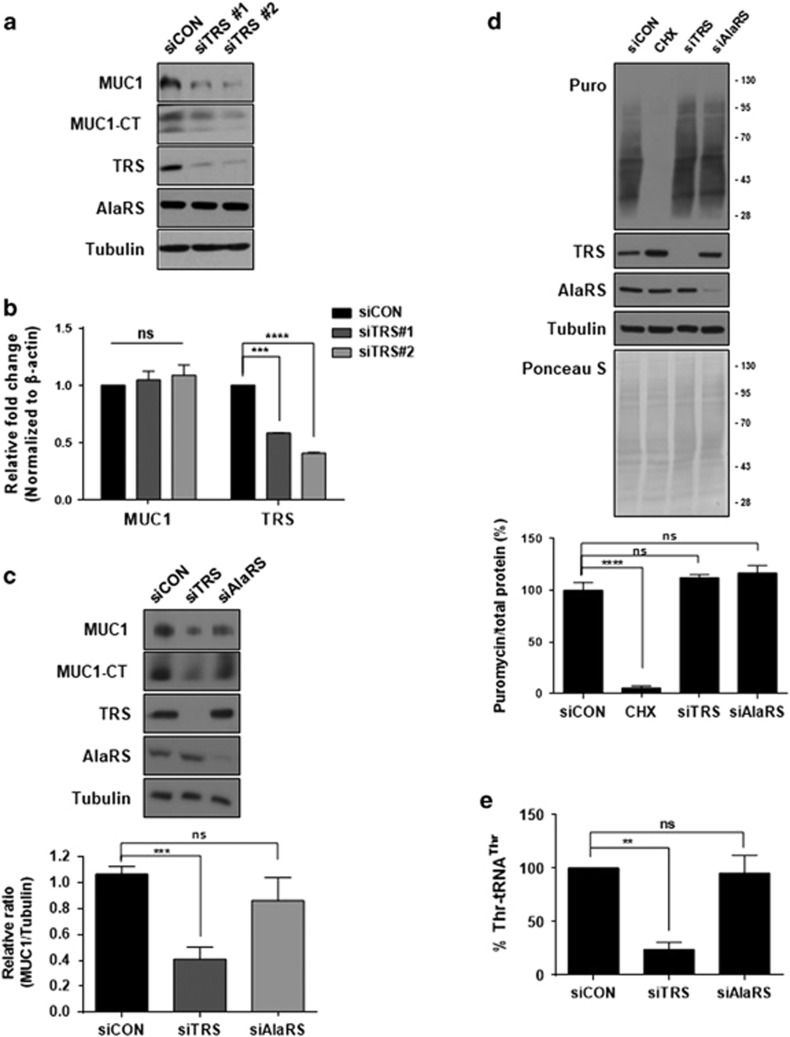
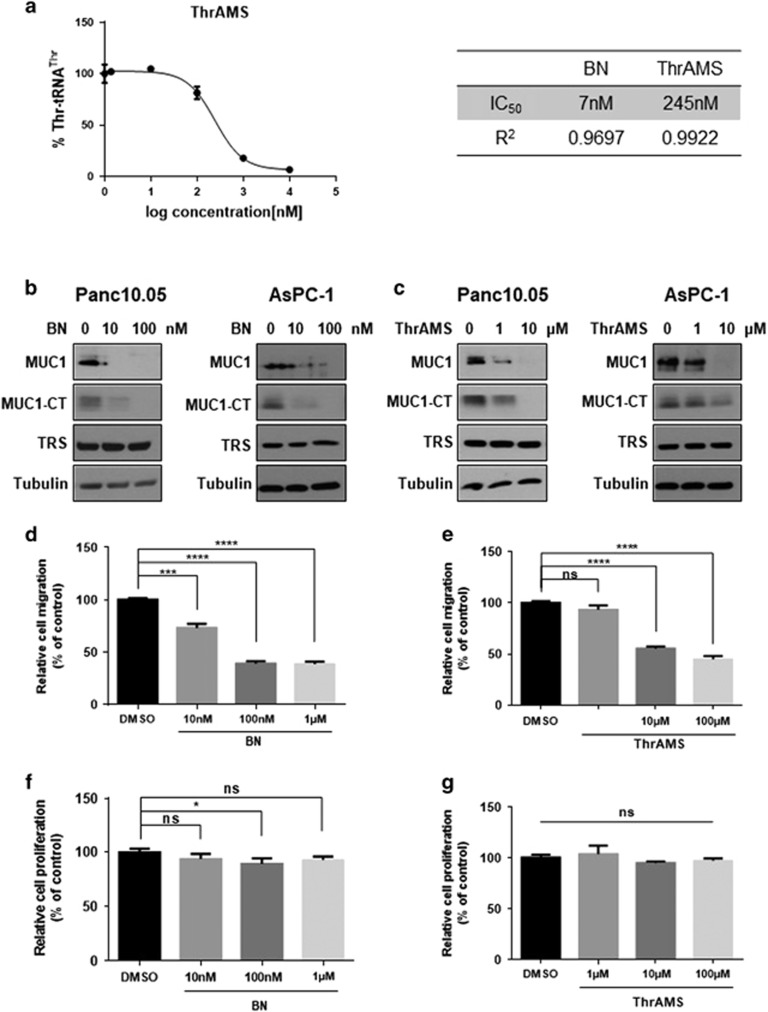
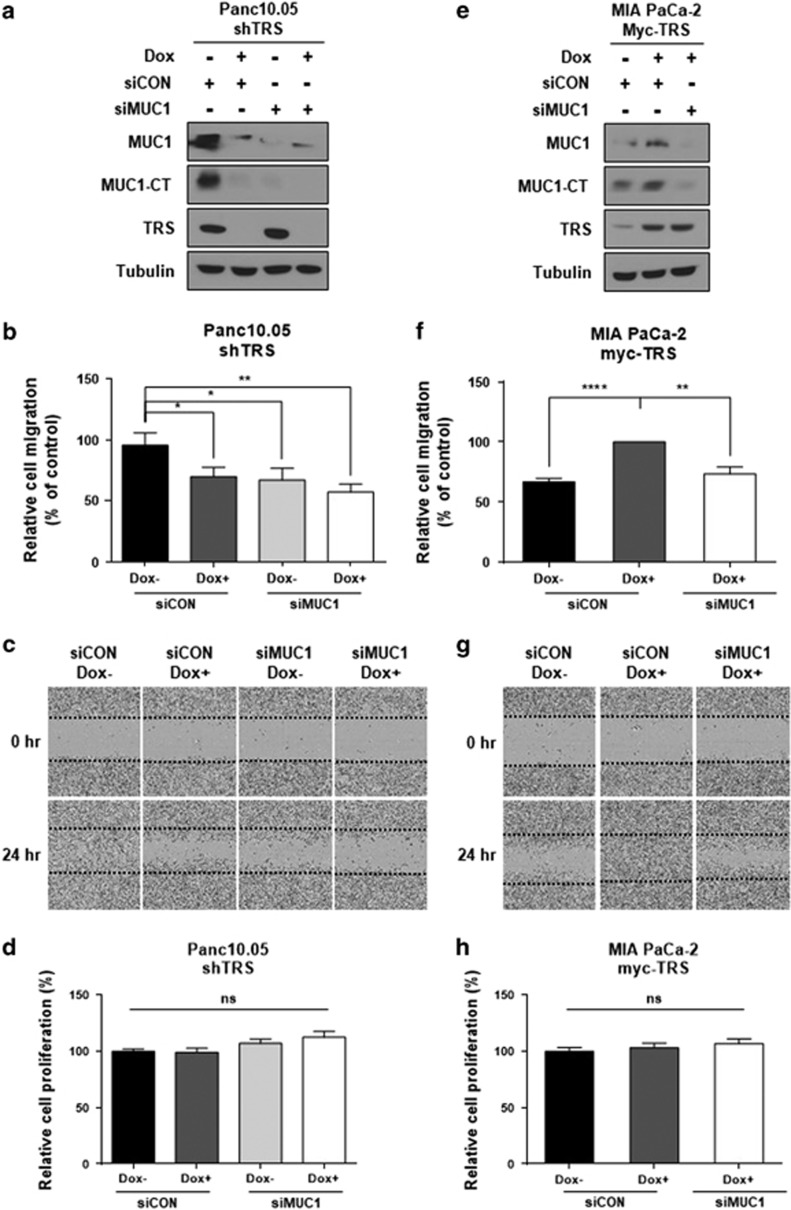
Mucin1 (MUC1), a heterodimeric oncoprotein, containing tandem repeat structures with a high proportion of threonine, is aberrantly overexpressed in many human cancers including pancreatic cancer. Since the overall survival rate of pancreatic cancer patients has remained low for several decades, novel therapeutic approaches are highly needed. Intestinal mucin has been known to be affected by dietary threonine supply since de novo synthesis of mucin proteins is sensitive to luminal threonine concentration. However, it is unknown whether biosynthesis of MUC1 is regulated by threonine in human cancers. In this study, data provided suggests that threonine starvation reduces the level of MUC1 and inhibits the migration of MUC1-expressing pancreatic cancer cells. Interestingly, knockdown of threonyl-tRNA synthetase (TRS), an enzyme that catalyzes the ligation of threonine to its cognate tRNA, also suppresses MUC1 levels but not mRNA levels. The inhibitors of TRS decrease the level of MUC1 protein and prohibit the migration of MUC1-expressing pancreatic cancer cells. In addition, a positive correlation between TRS and MUC1 levels is observed in human pancreatic cancer cells. Concurrent with these results, the bioinformatics data indicate that co-expression of both TRS and MUC1 is correlated with the poor survival of pancreatic cancer patients. Taken together, these findings suggest a role for TRS in controlling MUC1-mediated cancer cell migration and provide insight into targeting TRS as a novel therapeutic approach to pancreatic cancer treatment.
黏蛋白 1(MUC1)是一种异二聚体癌蛋白,包含串联重复结构,其中含有大量的苏氨酸,在许多人类癌症中异常过表达,包括胰腺癌。由于几十年来胰腺癌患者的总体生存率一直较低,因此非常需要新的治疗方法。由于肠黏蛋白的从头合成对腔道苏氨酸浓度敏感,因此已知其受膳食苏氨酸供应的影响。然而,尚不清楚在人类癌症中 MUC1 的生物合成是否受苏氨酸调节。在这项研究中,提供的数据表明,苏氨酸饥饿会降低 MUC1 的水平并抑制表达 MUC1 的胰腺癌细胞的迁移。有趣的是,苏氨酰-tRNA 合成酶(TRS)的敲低也会抑制 MUC1 的水平,但不会抑制其 mRNA 水平。TRS 的抑制剂可降低 MUC1 蛋白水平并阻止表达 MUC1 的胰腺癌细胞迁移。此外,在人类胰腺癌细胞中观察到 TRS 和 MUC1 水平之间存在正相关。与这些结果一致的是,生物信息学数据表明 TRS 和 MUC1 的共表达与胰腺癌患者的不良预后相关。总之,这些发现表明 TRS 在控制 MUC1 介导的癌细胞迁移中起作用,并为靶向 TRS 作为治疗胰腺癌的新治疗方法提供了思路。