Department of Oncology, Shanghai Medical College, Fudan University, Shanghai 200032, P.R. China.
Int J Mol Med. 2018 Apr;41(4):2050-2058. doi: 10.3892/ijmm.2018.3382. Epub 2018 Jan 11.
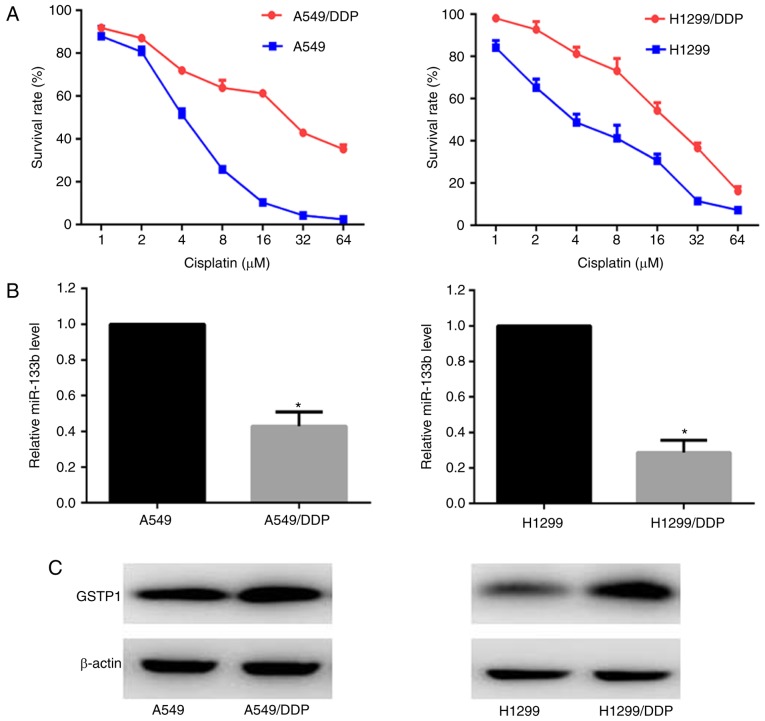
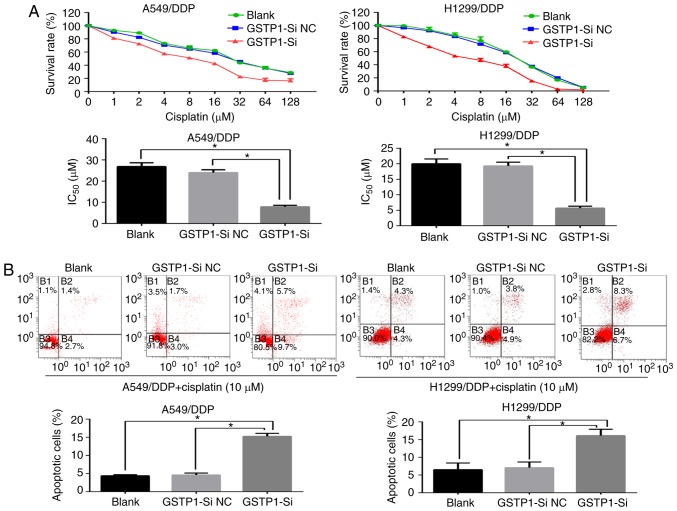
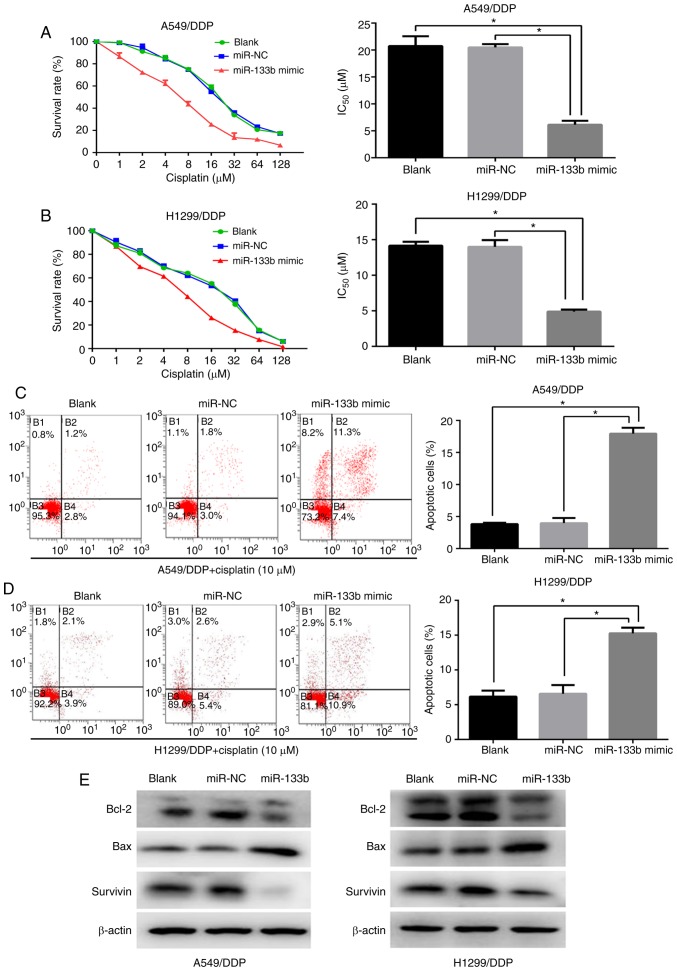
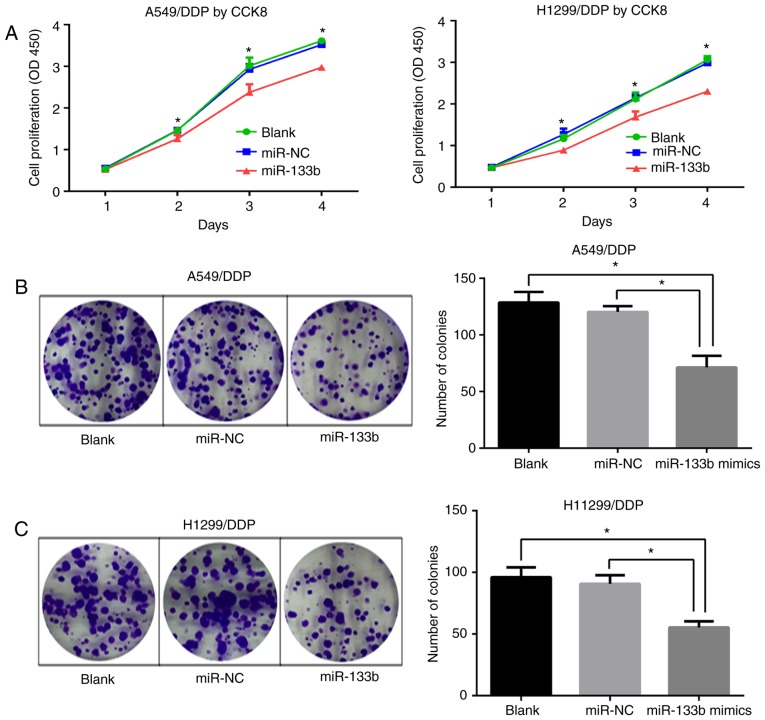
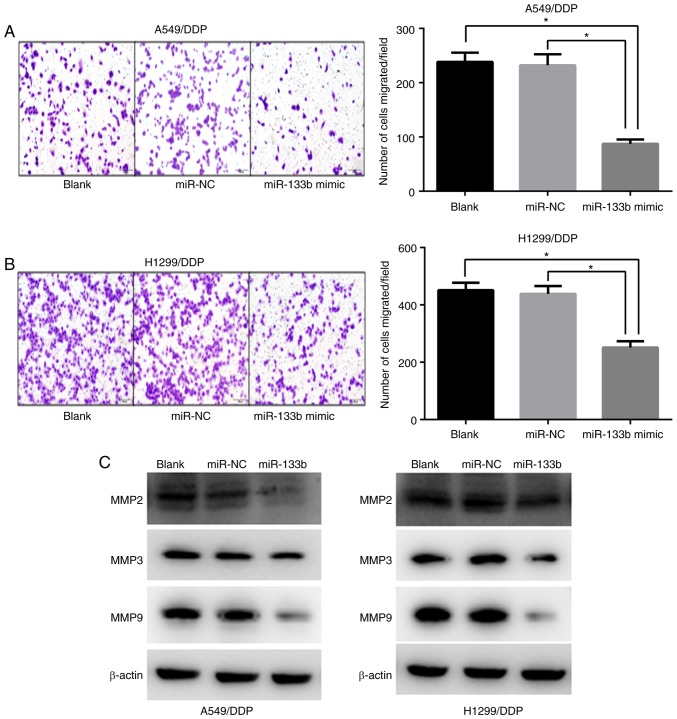
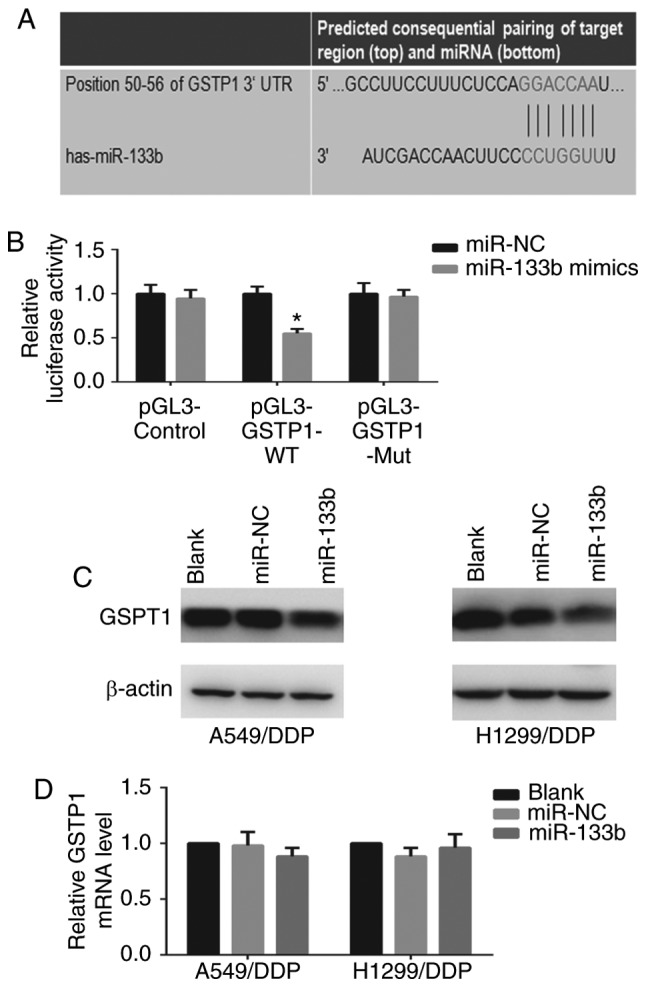
MicroRNAs play a critical role in chemoresistance and are implicated in various biological and pathological processes of cells. The objective of the present study was to explore the role of miR‑133b and its mechanism in the regulation of cisplatin resistance and tumor progression in cisplatin‑resistant non‑small cell lung cancer (NSCLC) cells. Reverse transcription‑quantitative polymerase chain reaction and western blot assays of the cisplatin‑resistant cell lines A549/DPP and H1299/DDP displayed the reduced expression of miR‑133b and increased expression of glutathione-S-transferase P1 (GSTP1) in the resistant cells compared with the respective parental cell lines A549 and H1299. Cell Counting kit‑8, flow cytometry, colony formation and Transwell migration assays indicated that the overexpression of miR‑133b increased the chemosensitivity to cisplatin and attenuated the proliferation and migration capacities of the cisplatin‑resistant NSCLC cell lines in vitro. A dual‑luciferase reporter assay demonstrated that miR‑133b negatively regulated the expression of GSTP1 by targeting its 3'‑untranslated region. In addition, the knockdown of GSTP1 by transfection with small interfering RNA exerted similar effects on cell chemosensitivity, proliferation and migration as did ectopic miR‑133b expression, in addition to the upregulation of Bax and downregulation of Bcl‑2, survivin and matrix metalloproteinase expression. In conclusion, the present study findings provide the insights that miR‑133b reduces cisplatin resistance and its overexpression contributes to the suppression of the malignant growth and aggressiveness of cisplatin‑resistant NSCLC cells by targeting GSTP1. This could potentially be exploited as a novel therapeutic strategy for the reversal of cisplatin resistance.
微小 RNA 在化疗耐药中发挥着关键作用,并与细胞的各种生物学和病理过程有关。本研究旨在探讨 miR-133b 的作用及其在调节顺铂耐药非小细胞肺癌(NSCLC)细胞顺铂耐药和肿瘤进展中的机制。顺铂耐药细胞系 A549/DPP 和 H1299/DDP 的逆转录-定量聚合酶链反应和 Western blot 分析显示,耐药细胞中 miR-133b 的表达降低,谷胱甘肽-S-转移酶 P1(GSTP1)的表达增加,与相应的亲本细胞系 A549 和 H1299 相比。细胞计数试剂盒-8、流式细胞术、集落形成和 Transwell 迁移实验表明,miR-133b 的过表达增加了顺铂的化疗敏感性,并减弱了顺铂耐药 NSCLC 细胞系在体外的增殖和迁移能力。双荧光素酶报告基因实验表明,miR-133b 通过靶向 GSTP1 的 3'UTR 负调控其表达。此外,用小干扰 RNA 转染敲低 GSTP1 可产生与外源性 miR-133b 表达相似的细胞化疗敏感性、增殖和迁移效应,同时上调 Bax 并下调 Bcl-2、生存素和基质金属蛋白酶的表达。综上所述,本研究结果表明,miR-133b 降低顺铂耐药性,其过表达通过靶向 GSTP1 有助于抑制顺铂耐药 NSCLC 细胞的恶性生长和侵袭性。这可能成为逆转顺铂耐药的一种新的治疗策略。