Department of Hepatology, Qingdao No. 6 People's Hospital, Qingdao, Shandong 266033, P.R. China.
Mol Med Rep. 2018 Mar;17(3):4483-4489. doi: 10.3892/mmr.2018.8399. Epub 2018 Jan 9.
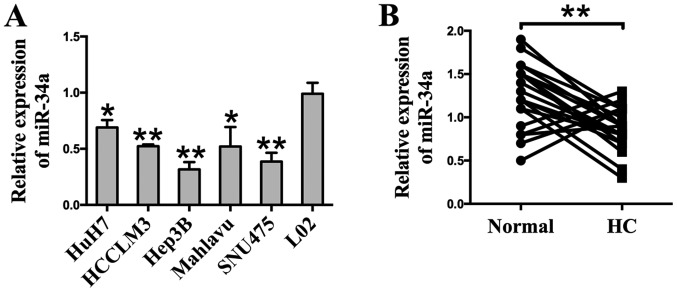
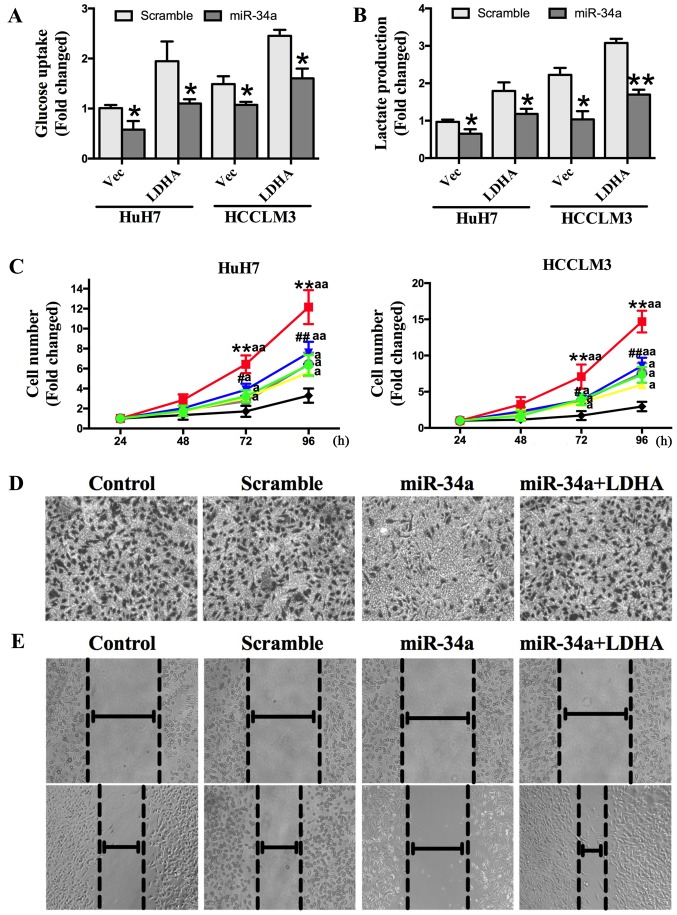
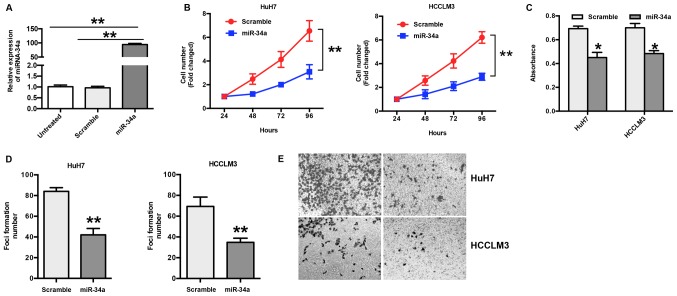
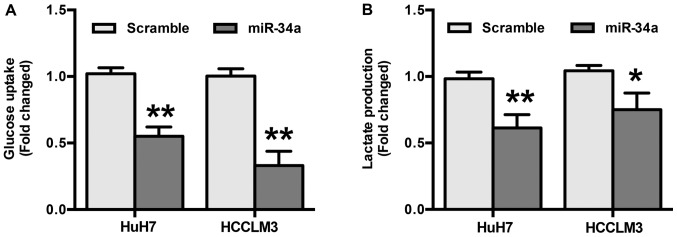
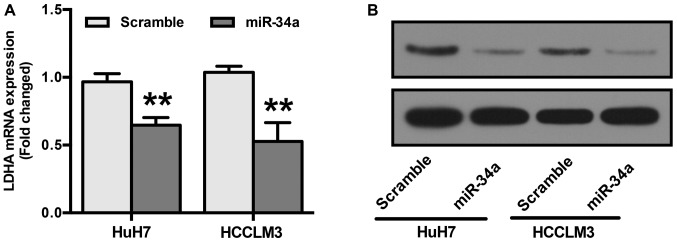
MicroRNAs (miRs) have been proposed as minimally invasive prognostic markers for various types of cancer, including liver cancer, which is one of the most common cancers worldwide. In the present study, the expression of miR‑34a in human liver cancer tissues and cell lines was evaluated and the effects of miR‑34a on cell proliferation, invasion and glycolysis in hepatocellular carcinoma (HCC) cells were determined. The results indicated that miR‑34a was downregulated in human liver cancer tissues. Overexpression of miR‑34a significantly inhibited liver cancer cell proliferation and clone formation. In terms of the underlying mechanism, miR‑34a was indicated to negatively regulate the expression of lactate dehydrogenase A (LDHA), which consequently inhibited LDHA‑dependent glucose uptake in the cancer cells, as well as cell proliferation and invasion. Collectively, these data suggest that miR‑34a functions as a negative regulator of glucose metabolism and may serve as a novel marker for liver cancer prognosis.
微小 RNA(miRs)被提议作为各种类型癌症(包括肝癌)的微创预后标志物,肝癌是全球最常见的癌症之一。在本研究中,评估了 miR-34a 在人肝癌组织和细胞系中的表达,并确定了 miR-34a 对肝癌细胞(HCC)中细胞增殖、侵袭和糖酵解的影响。结果表明,miR-34a 在人肝癌组织中下调。miR-34a 的过表达显著抑制肝癌细胞的增殖和克隆形成。就潜在机制而言,miR-34a 被表明可负调控乳酸脱氢酶 A(LDHA)的表达,从而抑制癌细胞中 LDHA 依赖性葡萄糖摄取以及细胞增殖和侵袭。总之,这些数据表明 miR-34a 作为葡萄糖代谢的负调节剂发挥作用,并且可能作为肝癌预后的新型标志物。