Xiao Xue, Chen Hua, Yang Lili, Xie Guoping, Shimuzu Risa, Murai Akiko
Laboratory Department of xingouqiao Street Community Health Service Center, Qingshan District, Wuhan City, Hubei Province, China.
Laboratory Department of community health service station, Wuhan Engineering University, Wuhan City, Hubei Province, China.
Transl Oncol. 2022 Oct;24:101503. doi: 10.1016/j.tranon.2022.101503. Epub 2022 Aug 4.
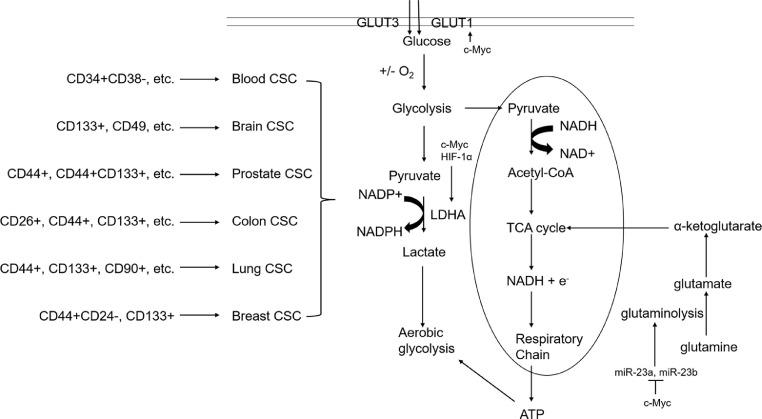
The cancer stem cell (CSC) hypothesis postulates that cancer originates from the malignant transformation of stem cells and is considered to apply to a variety of cancers. Additionally, cancer cells alter metabolic processes to sustain their characteristic uncontrolled growth and proliferation. Further, microRNAs (miRNAs) are found to be involved in acquisition of stem cell-like properties, regulation and reprogramming of cancer cells during cancer progression through its post-transcriptional-regulatory activity. In this concise review, we aim to integrate the current knowledge and recent advances to elucidate the mechanisms involved in the regulation of cell reprogramming and highlights the potential therapeutic implications for the future.
癌症干细胞(CSC)假说假定癌症起源于干细胞的恶性转化,并被认为适用于多种癌症。此外,癌细胞会改变代谢过程以维持其不受控制的生长和增殖特性。此外,人们发现微小RNA(miRNA)通过其转录后调节活性参与癌症进展过程中干细胞样特性的获得、癌细胞的调节和重编程。在这篇简要综述中,我们旨在整合当前的知识和最新进展,以阐明细胞重编程调控所涉及的机制,并突出其对未来潜在的治疗意义。