• 文献检索
  • 文档翻译
  • 深度研究
  • 学术资讯
  • Suppr Zotero 插件Zotero 插件
  • 邀请有礼
  • 套餐&价格
  • 历史记录
应用&插件
Suppr Zotero 插件Zotero 插件浏览器插件Mac 客户端Windows 客户端微信小程序
定价
高级版会员购买积分包购买API积分包
服务
文献检索文档翻译深度研究API 文档MCP 服务
关于我们
关于 Suppr公司介绍联系我们用户协议隐私条款
关注我们

Suppr 超能文献

核心技术专利:CN118964589B侵权必究
粤ICP备2023148730 号-1Suppr @ 2026

文献检索

告别复杂PubMed语法,用中文像聊天一样搜索,搜遍4000万医学文献。AI智能推荐,让科研检索更轻松。

立即免费搜索

文件翻译

保留排版,准确专业,支持PDF/Word/PPT等文件格式,支持 12+语言互译。

免费翻译文档

深度研究

AI帮你快速写综述,25分钟生成高质量综述,智能提取关键信息,辅助科研写作。

立即免费体验

改良普拉提作为尿失禁标准物理治疗护理的辅助手段:一项随机对照试验的混合方法试点研究

Modified Pilates as an adjunct to standard physiotherapy care for urinary incontinence: a mixed methods pilot for a randomised controlled trial.

作者信息

Lausen Adi, Marsland Louise, Head Samantha, Jackson Joanna, Lausen Berthold

机构信息

Department of Affective Neuroscience and Psychophysiology, Institute for Psychology, University of Goettingen, Gosslerstr. 14, 37073, Goettingen, Germany.

Department of Mathematical Sciences, University of Essex, Wivenhoe Park, Colchester, CO4 3SQ, UK.

出版信息

BMC Womens Health. 2018 Jan 12;18(1):16. doi: 10.1186/s12905-017-0503-y.

DOI:10.1186/s12905-017-0503-y
PMID:29329567
原文链接:https://pmc.ncbi.nlm.nih.gov/articles/PMC5767028/
Abstract

BACKGROUND

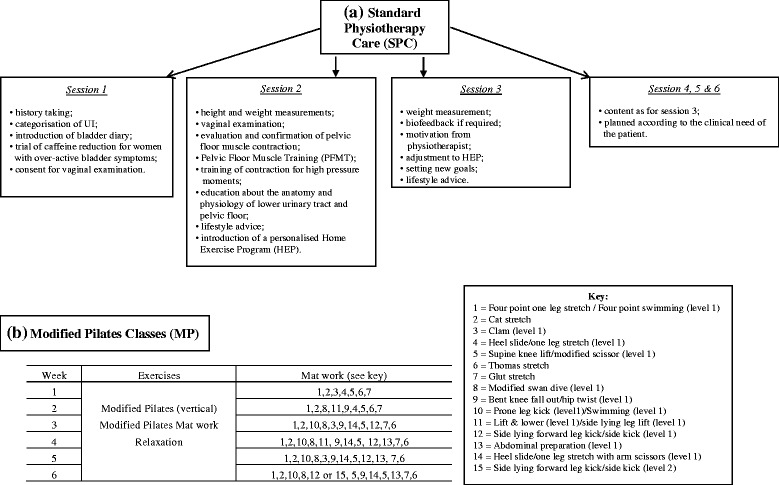
Urinary incontinence (UI) is a distressing condition affecting at least 5 million women in England and Wales. Traditionally, physiotherapy for UI comprises pelvic floor muscle training, but although evidence suggests this can be effective it is also recognised that benefits are often compromised by patient motivation and commitment. In addition, there is increasing recognition that physical symptoms alone are poor indicators of the impact of incontinence on individuals' lives. Consequently, more holistic approaches to the treatment of UI, such as Modified Pilates (MP) have been recommended. This study aimed to provide preliminary findings about the effectiveness of a 6-week course of MP classes as an adjunct to standard physiotherapy care for UI, and to test the feasibility of a randomised controlled trial (RCT) design.

METHODS

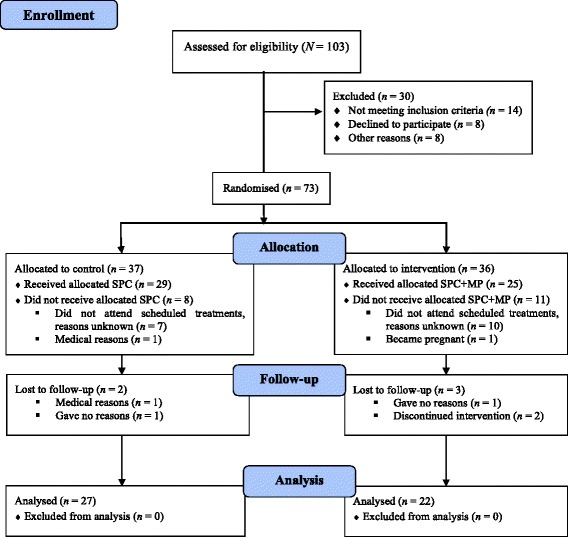
The study design was a single centre pilot RCT, plus qualitative interviews. 73 women referred to Women's Health Physiotherapy Services for UI at Colchester Hospital University NHS Foundation Trust were randomly assigned to two groups: a 6-week course of MP classes in addition to standard physiotherapy care (intervention) or standard physiotherapy care only (control). Main outcome measures were self-reported UI, quality of life and self-esteem at baseline (T1), completion of treatment (T2), and 5 months after randomisation (T3). Qualitative interviews were conducted with a subgroup at T2 and T3. Due to the nature of the intervention blinding of participants, physiotherapists and researchers was not feasible.

RESULTS

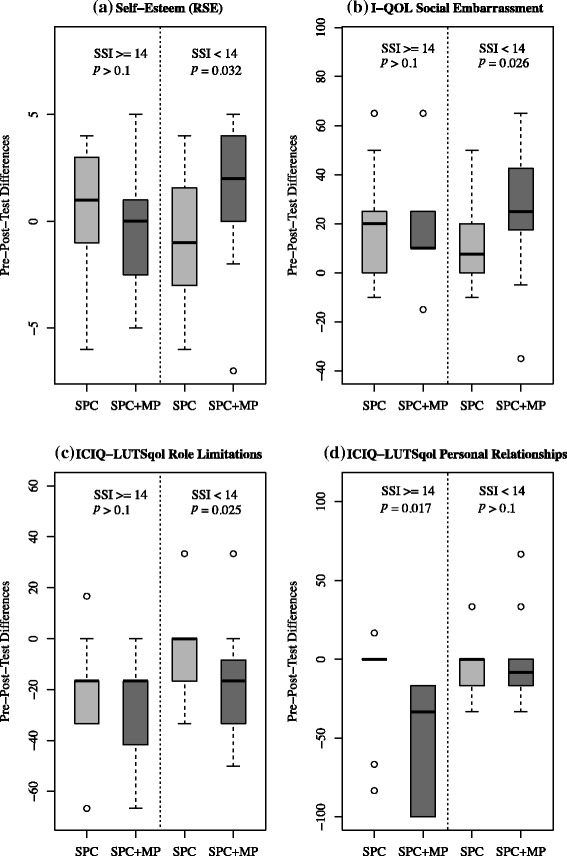
Post-intervention data revealed a range of benefits for women who attended MP classes and who had lower symptom severity at baseline: improved self-esteem (p = 0.032), decreased social embarrassment (p = 0.026) and lower impact on normal daily activities (p = 0.025). In contrast, women with higher symptom severity showed improvement in their personal relationships (p = 0.017). Qualitative analysis supported these findings and also indicated that MP classes could positively influence attitudes to exercise, diet and wellbeing.

CONCLUSIONS

A definitive RCT is feasible but will require a large sample size to inform clinical practice.

TRIAL REGISTRATION

ISRCTN74075972 Registered 12/12/12 (Retrospectively registered).

摘要

背景

尿失禁(UI)是一种令人苦恼的疾病,在英格兰和威尔士至少影响着500万女性。传统上,针对尿失禁的物理治疗包括盆底肌肉训练,尽管有证据表明这种方法可能有效,但人们也认识到,患者的积极性和投入程度常常会影响治疗效果。此外,人们越来越认识到,仅身体症状并不能很好地反映尿失禁对个人生活的影响。因此,有人推荐采用更全面的尿失禁治疗方法,如改良普拉提(MP)。本研究旨在提供初步结果,以探讨为期6周的MP课程作为尿失禁标准物理治疗辅助手段的有效性,并测试随机对照试验(RCT)设计的可行性。

方法

本研究设计为单中心试点随机对照试验,并辅以定性访谈。73名转诊至科尔切斯特医院大学国民保健服务基金会信托妇女健康物理治疗服务中心治疗尿失禁的女性被随机分为两组:除标准物理治疗外,参加为期6周的MP课程(干预组)或仅接受标准物理治疗(对照组)。主要结局指标包括基线时(T1)、治疗结束时(T2)以及随机分组后5个月(T3)的自我报告尿失禁情况、生活质量和自尊。在T2和T3时对一个亚组进行了定性访谈。由于干预措施的性质,对参与者、物理治疗师和研究人员进行盲法处理不可行。

结果

干预后数据显示,参加MP课程且基线症状严重程度较低的女性有一系列益处:自尊得到改善(p = 0.032)、社交尴尬感降低(p = 0.026)以及对正常日常活动的影响较小(p = 0.025)。相比之下,症状严重程度较高的女性在个人关系方面有所改善(p = 0.017)。定性分析支持了这些发现,还表明MP课程可对运动、饮食和健康态度产生积极影响。

结论

进行确定性随机对照试验是可行的,但需要大样本量才能为临床实践提供依据。

试验注册

ISRCTN74075972,于2012年12月12日注册(追溯注册)。
https://cdn.ncbi.nlm.nih.gov/pmc/blobs/39a5/5767028/a62e92e814a4/12905_2017_503_Fig3_HTML.jpg
https://cdn.ncbi.nlm.nih.gov/pmc/blobs/39a5/5767028/2f6ca855def4/12905_2017_503_Fig1_HTML.jpg
https://cdn.ncbi.nlm.nih.gov/pmc/blobs/39a5/5767028/05ad1cc0d82a/12905_2017_503_Fig2_HTML.jpg
https://cdn.ncbi.nlm.nih.gov/pmc/blobs/39a5/5767028/a62e92e814a4/12905_2017_503_Fig3_HTML.jpg
https://cdn.ncbi.nlm.nih.gov/pmc/blobs/39a5/5767028/2f6ca855def4/12905_2017_503_Fig1_HTML.jpg
https://cdn.ncbi.nlm.nih.gov/pmc/blobs/39a5/5767028/05ad1cc0d82a/12905_2017_503_Fig2_HTML.jpg
https://cdn.ncbi.nlm.nih.gov/pmc/blobs/39a5/5767028/a62e92e814a4/12905_2017_503_Fig3_HTML.jpg

相似文献

1
Modified Pilates as an adjunct to standard physiotherapy care for urinary incontinence: a mixed methods pilot for a randomised controlled trial.改良普拉提作为尿失禁标准物理治疗护理的辅助手段:一项随机对照试验的混合方法试点研究
BMC Womens Health. 2018 Jan 12;18(1):16. doi: 10.1186/s12905-017-0503-y.
2
Involuntary reflexive pelvic floor muscle training in addition to standard training versus standard training alone for women with stress urinary incontinence: study protocol for a randomized controlled trial.压力性尿失禁女性患者在标准训练基础上增加非自主反射性盆底肌训练与单纯标准训练比较的随机对照试验研究方案。
Trials. 2015 Nov 17;16:524. doi: 10.1186/s13063-015-1051-0.
3
Yoga and Pilates compared to pelvic floor muscle training for urinary incontinence in elderly women: A randomised controlled pilot trial.瑜伽和普拉提与盆底肌训练对老年女性尿失禁的比较:一项随机对照初步试验。
Complement Ther Clin Pract. 2022 Feb;46:101502. doi: 10.1016/j.ctcp.2021.101502. Epub 2021 Oct 26.
4
Group physiotherapy compared to individual physiotherapy to treat urinary incontinence in aging women: study protocol for a randomized controlled trial.团体物理治疗与个体物理治疗治疗老年女性尿失禁的比较:一项随机对照试验的研究方案。
Trials. 2017 Nov 16;18(1):544. doi: 10.1186/s13063-017-2261-4.
5
An evidence-based self-management package for urinary incontinence in older women: a mixed methods feasibility study.基于证据的老年女性尿失禁自我管理方案:混合方法可行性研究。
BMC Urol. 2020 Apr 20;20(1):43. doi: 10.1186/s12894-020-00603-8.
6
Pelvic floor morphometry: a predictor of success of pelvic floor muscle training for women with stress and mixed urinary incontinence.盆底形态测量:压力性和混合性尿失禁女性盆底肌肉训练成功的预测指标
Int Urogynecol J. 2017 Aug;28(8):1233-1239. doi: 10.1007/s00192-016-3254-7. Epub 2017 Jan 12.
7
The effects of pelvic floor muscle training on stress and mixed urinary incontinence and quality of life.盆底肌训练对压力性和混合性尿失禁及生活质量的影响。
J Wound Ostomy Continence Nurs. 2009 Jul-Aug;36(4):429-35. doi: 10.1097/WON.0b013e3181aaf539.
8
Pelvic floor muscle training for urinary incontinence in women.女性尿失禁的盆底肌训练
Cochrane Database Syst Rev. 2001(1):CD001407. doi: 10.1002/14651858.CD001407.
9
Evaluation of a new disposable "tampon like" electrostimulation technology (Pelviva®) for the treatment of urinary incontinence in women: a 12-week single blind randomized controlled trial.评价一种新的一次性“类似卫生棉条”的电刺激技术(Pelviva®)治疗女性尿失禁的效果:为期 12 周的单盲随机对照试验。
Neurourol Urodyn. 2013 Jun;32(5):460-6. doi: 10.1002/nau.22326. Epub 2012 Sep 28.
10
Effectiveness of Pelvic Floor Muscle Training for Urinary Incontinence: Comparison Within and Between Nonhomebound and Homebound Older Adults.盆底肌训练对尿失禁的有效性:非居家和居家老年人内部及之间的比较
J Wound Ostomy Continence Nurs. 2016 May-Jun;43(3):291-300. doi: 10.1097/WON.0000000000000227.

引用本文的文献

1
Comparisons of approaches to pelvic floor muscle training for urinary incontinence in women.女性尿失禁盆底肌肉训练方法的比较。
Cochrane Database Syst Rev. 2024 Dec 20;12(12):CD009508. doi: 10.1002/14651858.CD009508.pub2.
2
Exploring the influence of leadership styles on psychological well-being and satisfaction of Pilates classes clients.探索领导风格对普拉提课程客户心理健康和满意度的影响。
BMC Sports Sci Med Rehabil. 2024 Jul 23;16(1):160. doi: 10.1186/s13102-024-00949-8.
3
Comparative analysis of pelvic floor muscle training and Pilates in managing urinary incontinence among postmenopausal women: a randomized controlled trial.

本文引用的文献

1
Pelvic floor muscle training versus no treatment, or inactive control treatments, for urinary incontinence in women.盆底肌训练与不治疗或非主动对照治疗对女性尿失禁的疗效比较
Cochrane Database Syst Rev. 2014 May 14(5):CD005654. doi: 10.1002/14651858.CD005654.pub3.
2
There is not yet strong evidence that exercise regimens other than pelvic floor muscle training can reduce stress urinary incontinence in women: a systematic review.尚无强有力的证据表明除了盆底肌肉训练以外的运动方案可以减少女性的压力性尿失禁:一项系统评价。
J Physiother. 2013 Sep;59(3):159-68. doi: 10.1016/S1836-9553(13)70180-2.
3
Pilates: how does it work and who needs it?
绝经后女性压力性尿失禁患者行盆底肌训练与普拉提训练的对比分析:一项随机对照试验。
Int Urogynecol J. 2024 Mar;35(3):561-569. doi: 10.1007/s00192-023-05712-0. Epub 2024 Jan 11.
4
Effectiveness of Pelvic Floor Muscle Training on Quality of Life in Women with Urinary Incontinence: A Systematic Review and Meta-Analysis.盆腔底肌肉训练对女性尿失禁患者生活质量的影响:系统评价和荟萃分析。
Medicina (Kaunas). 2023 May 23;59(6):1004. doi: 10.3390/medicina59061004.
5
Effect of a Comprehensive Rehabilitation Program for Community Women with Urinary Incontinence: A Retrospect Cohort Study.社区尿失禁女性综合康复计划的效果:一项回顾性队列研究。
Healthcare (Basel). 2021 Dec 6;9(12):1686. doi: 10.3390/healthcare9121686.
6
The Rolf Method of Structural Integration and Pelvic Floor Muscle Facilitation: Preliminary Results of a Randomized, Interventional Study.罗尔夫结构整合法与盆底肌促进法:一项随机干预研究的初步结果。
J Clin Med. 2020 Dec 9;9(12):3981. doi: 10.3390/jcm9123981.
7
Electromyographic characteristics of pelvic floor muscles in women with stress urinary incontinence following sEMG-assisted biofeedback training and Pilates exercises.电刺激生物反馈联合 Pilates 训练治疗压力性尿失禁患者的盆底肌肌电图特征。
PLoS One. 2019 Dec 2;14(12):e0225647. doi: 10.1371/journal.pone.0225647. eCollection 2019.
普拉提:它是如何起作用的,谁需要它?
Muscles Ligaments Tendons J. 2011 Dec 29;1(2):61-6. Print 2011 Apr.
4
Effect of physical inactivity on major non-communicable diseases worldwide: an analysis of burden of disease and life expectancy.体力活动不足对全球主要非传染性疾病的影响:疾病负担和预期寿命的分析。
Lancet. 2012 Jul 21;380(9838):219-29. doi: 10.1016/S0140-6736(12)61031-9.
5
A randomized clinical trial comparing pelvic floor muscle training to a Pilates exercise program for improving pelvic muscle strength.一项比较盆底肌肉训练与普拉提锻炼计划以改善盆底肌肉力量的随机临床试验。
Int Urogynecol J. 2010 Apr;21(4):401-8. doi: 10.1007/s00192-009-1046-z. Epub 2010 Jan 22.
6
Group treatments for sensitive health care problems: a randomised controlled trial of group versus individual physiotherapy sessions for female urinary incontinence.小组治疗敏感健康问题:小组治疗与个体物理治疗对女性尿失禁的随机对照试验。
BMC Womens Health. 2009 Sep 14;9:26. doi: 10.1186/1472-6874-9-26.
7
Risk factors for urinary incontinence among middle-aged women.中年女性尿失禁的危险因素。
Am J Obstet Gynecol. 2006 Feb;194(2):339-45. doi: 10.1016/j.ajog.2005.07.051.
8
Patient-reported impact of urinary incontinence--results from treatment seeking women in 14 European countries.患者报告的尿失禁影响——来自14个欧洲国家寻求治疗的女性的结果。
Maturitas. 2005 Nov 30;52 Suppl 2:S24-34. doi: 10.1016/j.maturitas.2005.09.005. Epub 2005 Nov 16.
9
Is urinary incontinence a barrier to exercise in women?尿失禁是女性运动的障碍吗?
Obstet Gynecol. 2005 Aug;106(2):307-14. doi: 10.1097/01.AOG.0000168455.39156.0f.
10
Weight loss: a novel and effective treatment for urinary incontinence.减肥:一种治疗尿失禁的新颖且有效的方法。
J Urol. 2005 Jul;174(1):190-5. doi: 10.1097/01.ju.0000162056.30326.83.