Department of Pathology, University of Utah, Salt Lake City, UT 84112; and.
Department of Pathobiology, University of Illinois at Urbana-Champaign, Urbana, IL 61802.
J Immunol. 2018 Feb 15;200(4):1457-1470. doi: 10.4049/jimmunol.1701248. Epub 2018 Jan 12.
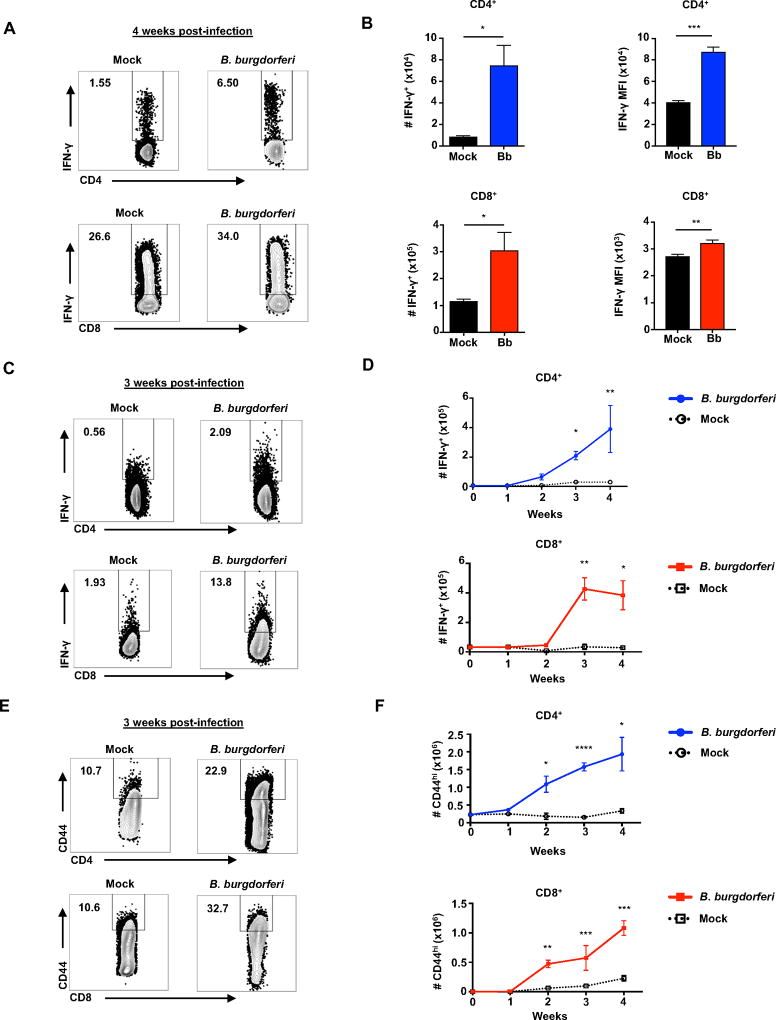
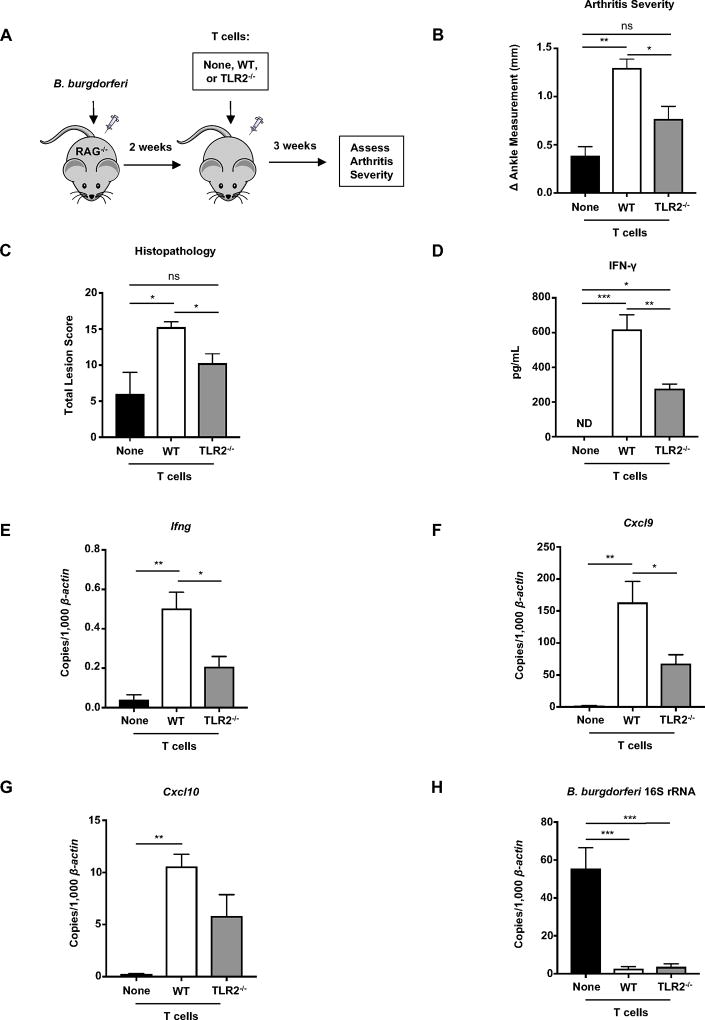
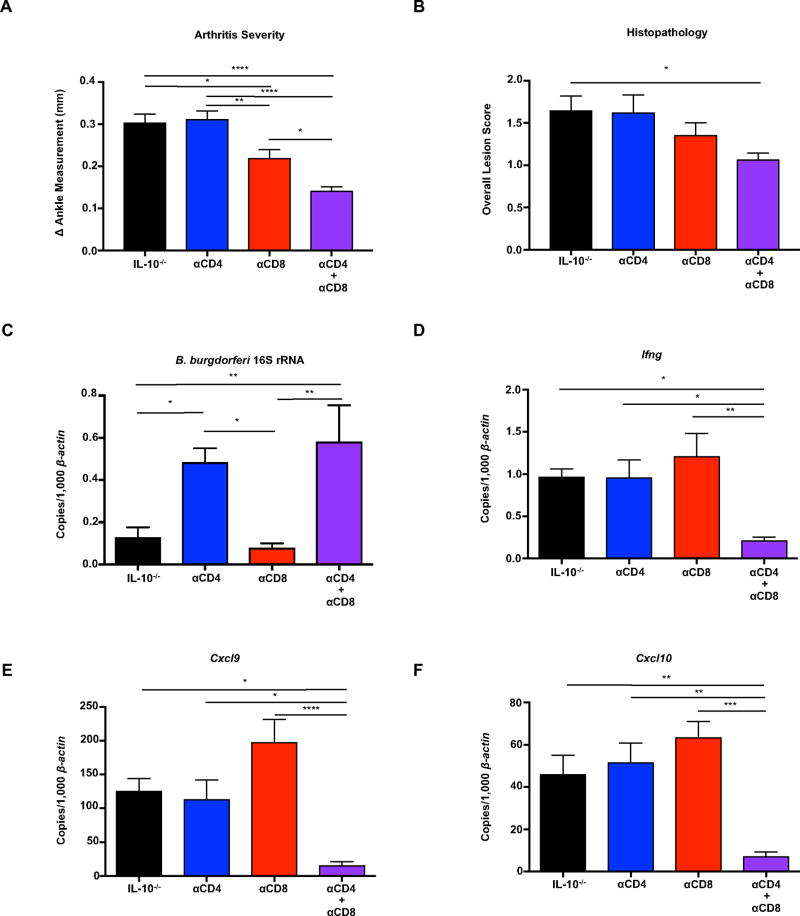
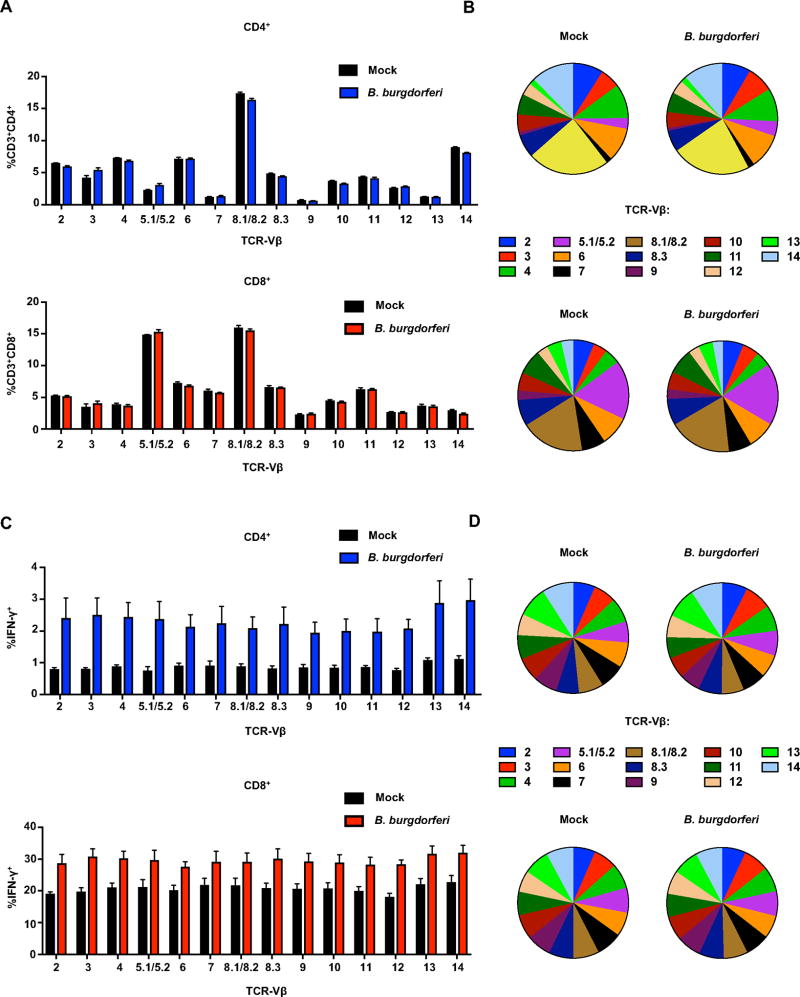
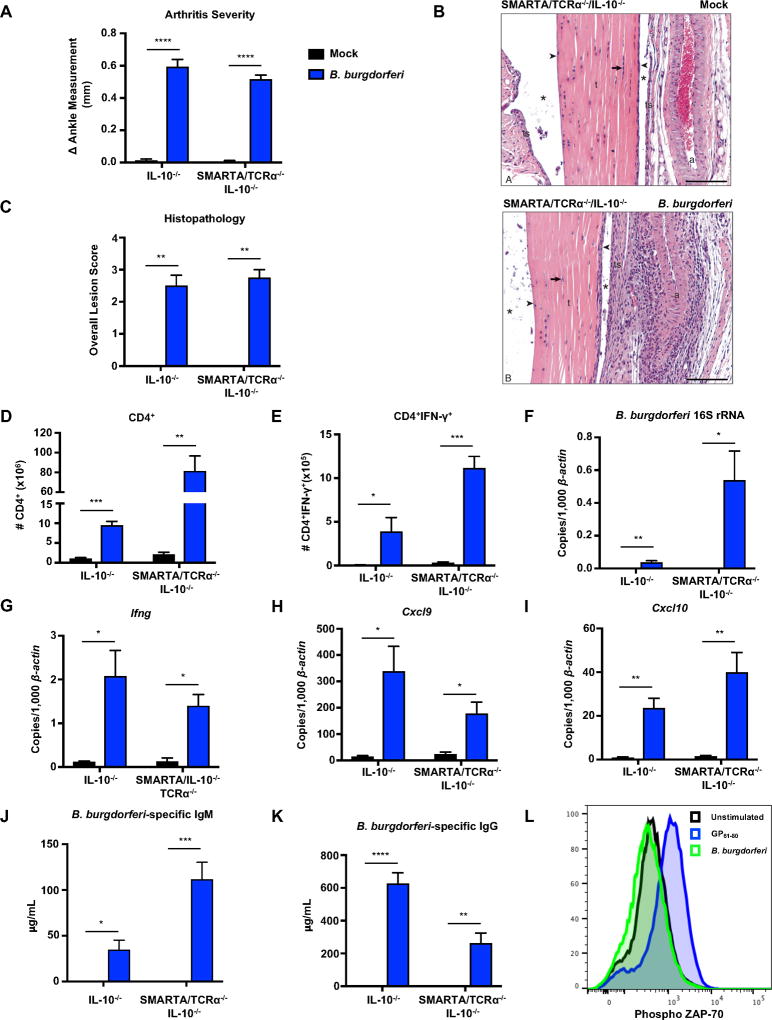
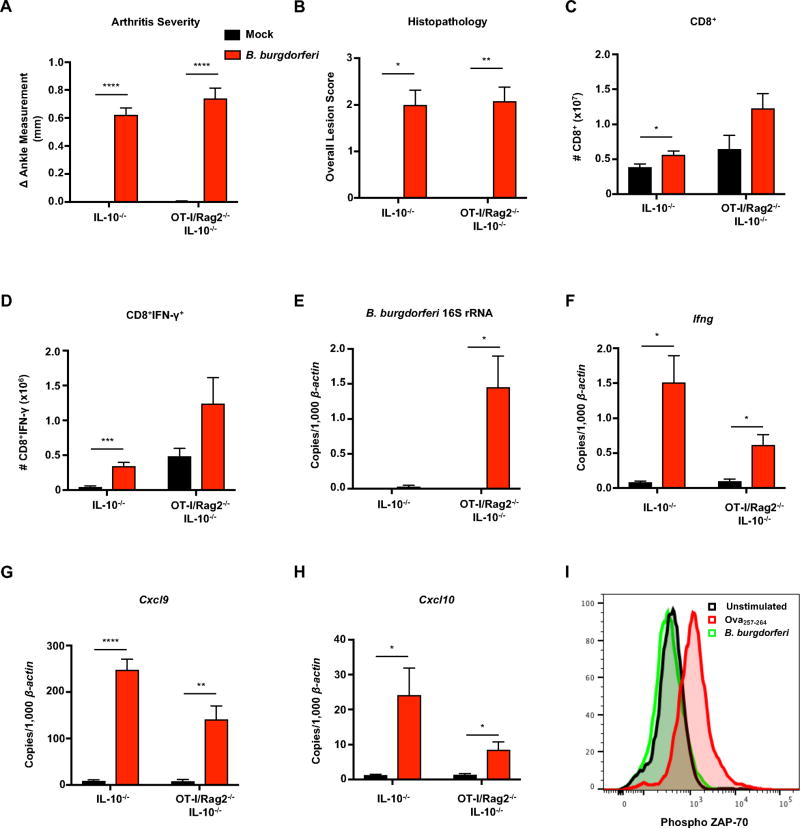
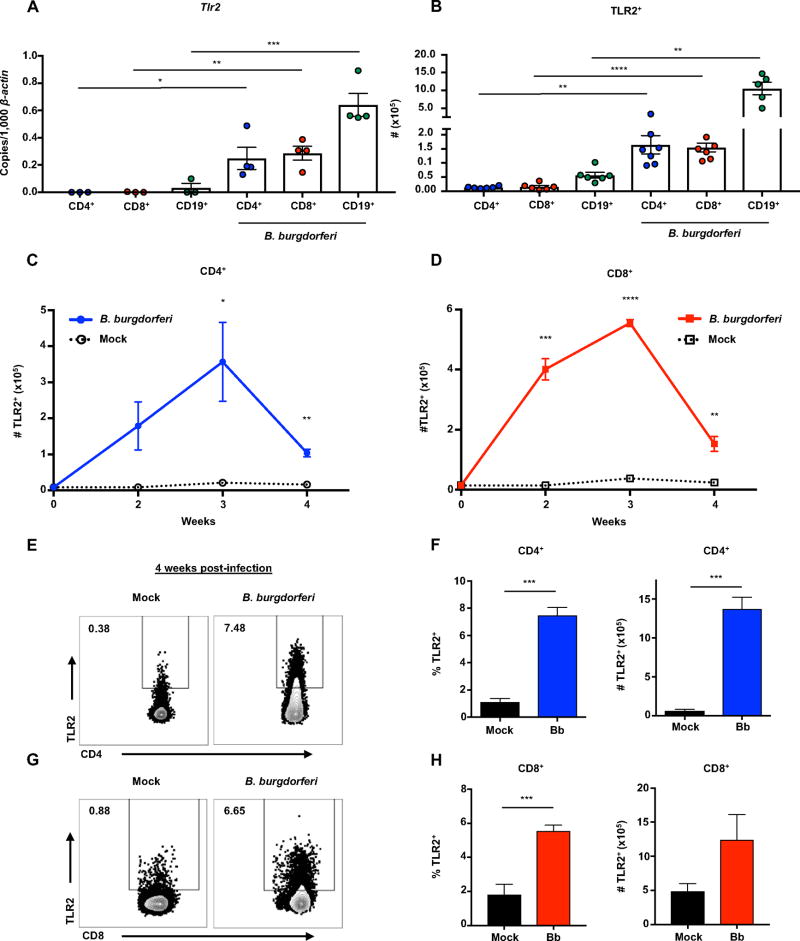
T cells predominate the immune responses in the synovial fluid of patients with persistent Lyme arthritis; however, their role in Lyme disease remains poorly defined. Using a murine model of persistent Lyme arthritis, we observed that bystander activation of CD4 and CD8 T cells leads to arthritis-promoting IFN-γ, similar to the inflammatory environment seen in the synovial tissue of patients with posttreatment Lyme disease. TCR transgenic mice containing monoclonal specificity toward non- epitopes confirmed that bystander T cell activation was responsible for disease development. The microbial pattern recognition receptor TLR2 was upregulated on T cells following infection, implicating it as marker of bystander T cell activation. In fact, T cell-intrinsic expression of TLR2 contributed to IFN-γ production and arthritis, providing a mechanism for microbial-induced bystander T cell activation during infection. The IL-10-deficient mouse reveals a novel TLR2-intrinsic role for T cells in Lyme arthritis, with potentially broad application to immune pathogenesis.
T 细胞在持续性莱姆关节炎患者的滑液中占主导地位的免疫反应;然而,它们在莱姆病中的作用仍未明确界定。在持续性莱姆关节炎的小鼠模型中,我们观察到 CD4 和 CD8 T 细胞的旁观者激活导致促关节炎 IFN-γ,类似于治疗后莱姆病患者的滑膜组织中所见的炎症环境。针对非表位的 TCR 转基因小鼠证实了旁观者 T 细胞的激活是疾病发展的原因。感染后 T 细胞上的微生物模式识别受体 TLR2 上调,表明其是旁观者 T 细胞激活的标志物。事实上,TLR2 在 T 细胞中的内在表达有助于 IFN-γ 的产生和关节炎,为感染期间微生物诱导的旁观者 T 细胞激活提供了一种机制。IL-10 缺陷型小鼠揭示了 TLR2 在莱姆关节炎中对 T 细胞的新的内在作用,这可能对免疫发病机制具有广泛的应用。