Yan Zexing, Yin Heyong, Nerlich Michael, Pfeifer Christian G, Docheva Denitsa
Laboratory of Experimental Trauma Surgery, Department of Trauma Surgery, University Regensburg Medical Centre, Franz-Josef-Strauss-Allee 11, 93053, Regensburg, Germany.
Director of Experimental Trauma Surgery, Department of Trauma Surgery, University Regensburg Medical Centre, Franz-Josef-Strauss-Allee 11, 93053, Regensburg, Germany.
J Exp Orthop. 2018 Jan 5;5(1):1. doi: 10.1186/s40634-017-0117-1.
Tendons are dense connective tissues and critical components for the integrity and function of the musculoskeletal system. Tendons connect bone to muscle and transmit forces on which locomotion entirely depends. Due to trauma, overuse and age-related degeneration, many people suffer from acute or chronic tendon injuries. Owing to their hypovascularity and hypocellularity, tendinopathies remain a substantial challenge for both clinicians and researchers. Surgical treatment includes suture or transplantation of autograft, allograft or xenograft, and these serve as the most common technique for rescuing tendon injuries. However, the therapeutic efficacies are limited by drawbacks including inevitable donor site morbidity, poor graft integration, adhesion formations and high rates of recurrent tearing. This review summarizes the literature of the past 10 y concerning scaffold-free and gel-based approaches for treating tendon injuries, with emphasis on specific advantages of such modes of application, as well as the obtained results regarding in vitro and in vivo tenogenesis.
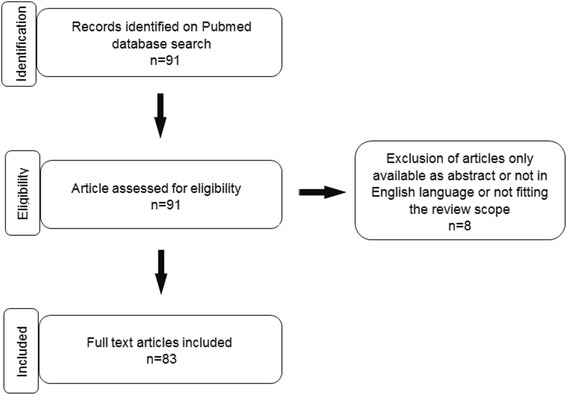
The search was focused on publications released after 2006 and 83 articles have been analysed. The main results are summarizing and discussing the clear advantages of scaffold-free and hydrogels carriers that can be functionalized with cells alone or in combination with growth factors.
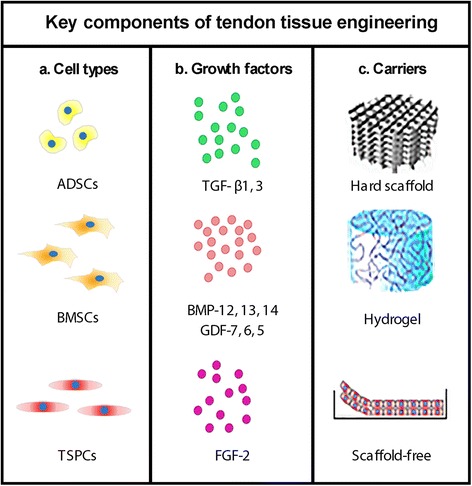
The improved understanding of tissue resident adult stem cells has made a significant progress in recent years as well as strategies to steer their fate toward tendon lineage, with the help of growth factors, have been identified. The field of tendon tissue engineering is exploring diverse models spanning from hard scaffolds to gel-based and scaffold-free approaches seeking easier cell delivery and integration in the site of injury. Still, the field needs to consider a multifactorial approach that is based on the combination and fine-tuning of chemical and biomechanical stimuli. Taken together, tendon tissue engineering has now excellent foundations and enters the period of precision and translation to models with clinical relevance on which better treatment options of tendon injuries can be shaped up.
肌腱是致密结缔组织,是肌肉骨骼系统完整性和功能的关键组成部分。肌腱连接骨骼和肌肉,并传递运动完全依赖的力量。由于创伤、过度使用和与年龄相关的退变,许多人患有急性或慢性肌腱损伤。由于其血管分布少和细胞含量低,肌腱病对临床医生和研究人员来说仍然是一个重大挑战。手术治疗包括自体移植物、同种异体移植物或异种移植物的缝合或移植,这些是挽救肌腱损伤最常用的技术。然而,治疗效果受到多种缺点的限制,包括不可避免的供体部位并发症、移植物整合不良、粘连形成和高复发撕裂率。本综述总结了过去10年关于无支架和基于凝胶的肌腱损伤治疗方法的文献,重点阐述了这些应用模式的具体优势,以及在体外和体内肌腱形成方面取得的成果。
检索集中在2006年后发表的文献,共分析了83篇文章。主要结果是总结并讨论了无支架和水凝胶载体的明显优势,这些载体可单独用细胞或与生长因子联合进行功能化处理。
近年来,对组织驻留成体干细胞的认识有了显著进展,并且已经确定了在生长因子帮助下引导其向肌腱谱系分化的策略。肌腱组织工程领域正在探索从硬支架到基于凝胶和无支架方法的多种模型,以寻求更简便的细胞递送和在损伤部位的整合。尽管如此,该领域仍需考虑基于化学和生物力学刺激的组合与微调的多因素方法。总体而言,肌腱组织工程现已具备良好基础,并进入精准和向具有临床相关性的模型转化的阶段,在此基础上可以形成更好的肌腱损伤治疗方案。