Papadopoulos Nikolaos, Argiana Vasiliki, Deutsch Melanie
1 Department of Internal Medicine, 417 Army Share Fund Hospital of Athens (Nikolaos Papadopoulos, Vasiliki Argiana), Greece.
2 Department of Internal Medicine, Hippokration General Hospital of Athens, Medical School of National & Kapodistrian University of Athens (Melanie Deutsch), Greece.
Ann Gastroenterol. 2018 Jan-Feb;31(1):35-41. doi: 10.20524/aog.2017.0204. Epub 2017 Oct 26.
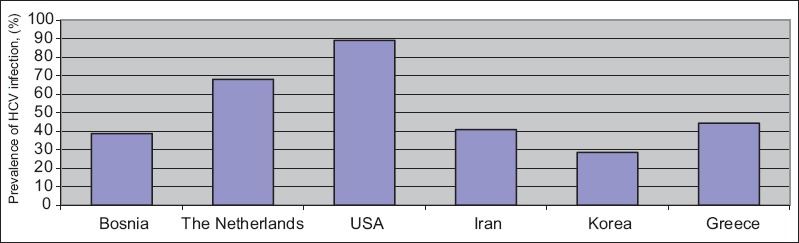
Hereditary bleeding disorders include a group of diseases with abnormalities of coagulation. Prior to 1990, infection with hepatitis C virus (HCV) was mainly transmitted via pooled plasma products as a treatment for hereditary bleeding disorders. Anti-HCV positivity in these patients may be as high as >70% in some areas, while some of them have also been coinfected with human immunodeficiency virus. Since about 20% of HCV-infected patients clear the infection naturally, chronic HCV infection represents a significant health problem in this group of patients. Mortality due to chronic HCV infection is estimated to be >10 times higher in patients with hemophilia than in the general population, and is mainly due to liver cirrhosis and hepatocellular carcinoma. The antiviral treatment of HCV in patients with hereditary bleeding disorders is not different from that of any other infected patients. Nevertheless, many patients with hereditary bleeding disorders have declined (Peg)interferon-based treatment because of side effects. In recent years, multiple orally administrated direct-acting antivirals (DAAs) have been approved for HCV treatment. Unfortunately, there is not much experience from treating these patients with DAA regimens, as major studies and real-life data did not include adequate numbers of patients with inherited hemorrhagic disorders. However, the available data indicate that DAAs have an excellent safety profile with a sustained virological response rate of >90%.
遗传性出血性疾病包括一组凝血功能异常的疾病。1990年以前,丙型肝炎病毒(HCV)感染主要通过作为遗传性出血性疾病治疗手段的混合血浆制品传播。在某些地区,这些患者的抗-HCV阳性率可能高达70%以上,其中一些患者还合并感染了人类免疫缺陷病毒。由于约20%的HCV感染患者可自然清除感染,慢性HCV感染在这组患者中是一个重大的健康问题。据估计,血友病患者因慢性HCV感染导致的死亡率比普通人群高10倍以上,主要原因是肝硬化和肝细胞癌。遗传性出血性疾病患者的HCV抗病毒治疗与其他感染患者并无不同。然而,许多遗传性出血性疾病患者因副作用而拒绝基于(聚乙二醇化)干扰素的治疗。近年来,多种口服直接抗病毒药物(DAA)已被批准用于HCV治疗。遗憾的是,用DAA方案治疗这些患者的经验不多,因为主要研究和实际数据中没有纳入足够数量的遗传性出血性疾病患者。然而,现有数据表明,DAA具有良好的安全性,持续病毒学应答率超过90%。