Tajika Amane, Nützel Alexander, Klug Christian
Paläontologisches Institut und Museum, Universität Zürich, Zürich, Switzerland.
SNSB-Bayerische Staatssammlung für Paläontologie und Geologie, Department of Earth and Environmental Sciences, Palaeontology & Geobiology, GeoBio-Center LMU, München, Germany.
PeerJ. 2018 Jan 9;6:e4219. doi: 10.7717/peerj.4219. eCollection 2018.
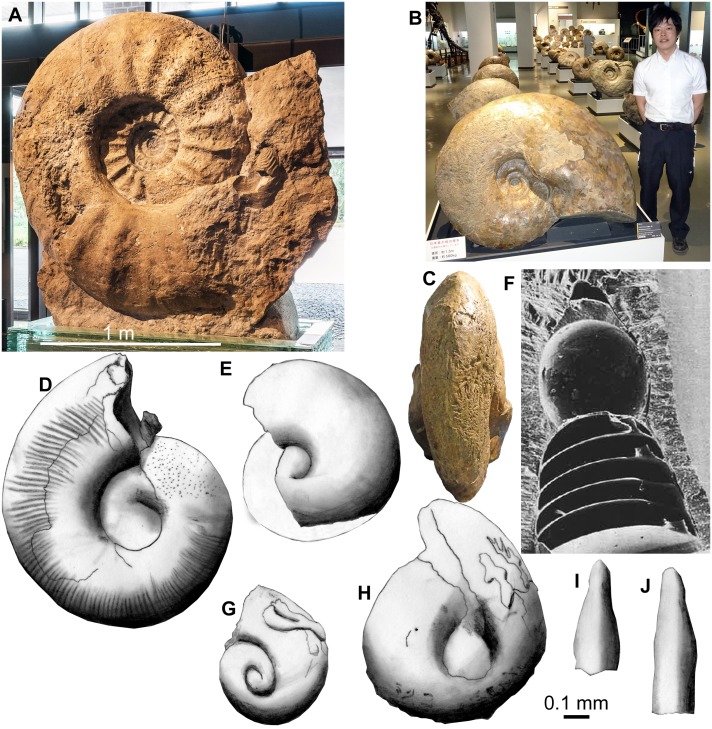
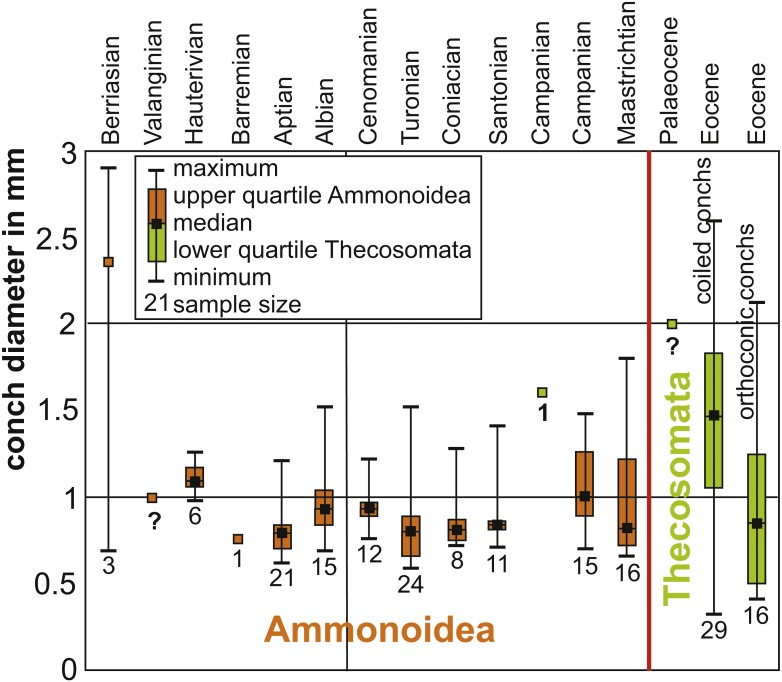
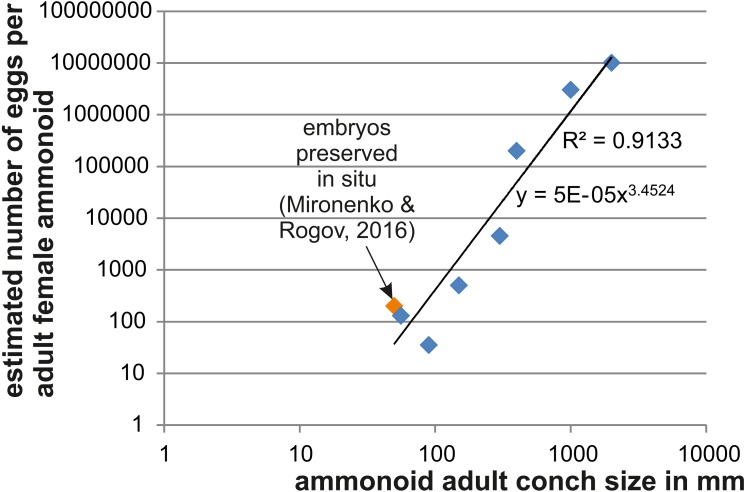
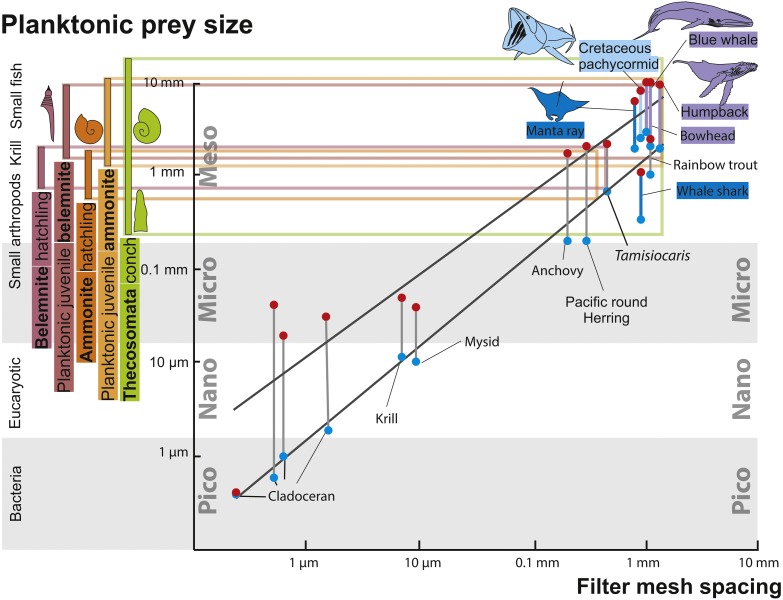
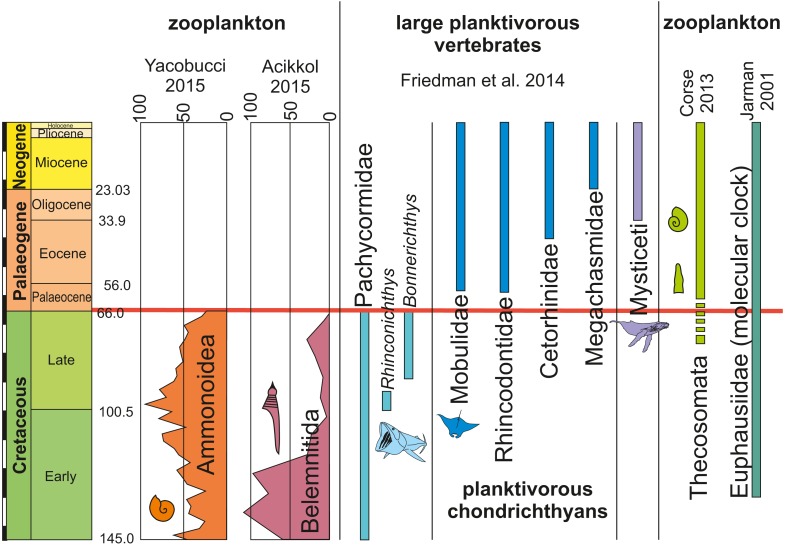
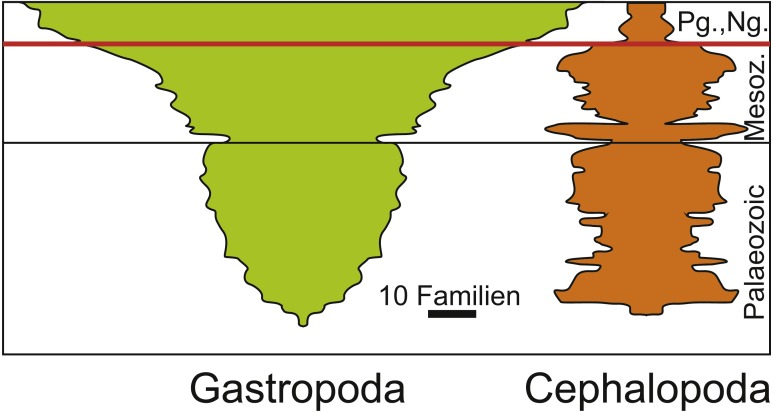
Owing to their great diversity and abundance, ammonites and belemnites represented key elements in Mesozoic food webs. Because of their extreme ontogenetic size increase by up to three orders of magnitude, their position in the food webs likely changed during ontogeny. Here, we reconstruct the number of eggs laid by large adult females of these cephalopods and discuss developmental shifts in their ecologic roles. Based on similarities in conch morphology, size, habitat and abundance, we suggest that similar niches occupied in the Cretaceous by juvenile ammonites and belemnites were vacated during the extinction and later partially filled by holoplanktonic gastropods. As primary consumers, these extinct cephalopod groups were important constituents of the plankton and a principal food source for planktivorous organisms. As victims or, respectively, profiteers of this case of ecological replacement, filter feeding chondrichthyans and cetaceans likely filled the niches formerly occupied by large pachycormid fishes during the Jurassic and Cretaceous.
由于菊石和箭石种类繁多、数量丰富,它们是中生代食物网的关键组成部分。由于它们在个体发育过程中体型极大增加,可达三个数量级,它们在食物网中的位置可能在个体发育过程中发生了变化。在这里,我们重建了这些头足类大型成年雌性产下的卵的数量,并讨论了它们生态角色的发育转变。基于螺壳形态、大小、栖息地和丰度的相似性,我们认为菊石和箭石幼体在白垩纪占据的相似生态位在灭绝期间被腾空,后来部分被全浮游腹足类动物填补。作为初级消费者,这些已灭绝的头足类动物群体是浮游生物的重要组成部分,也是食浮游生物生物的主要食物来源。作为这种生态替代情况的受害者或受益者,滤食性软骨鱼类和鲸类可能填补了侏罗纪和白垩纪期间大型厚茎鱼类曾经占据的生态位。