Beijing Institute of Basic Medical Sciences, 27 Taiping Road, Beijing, 100850, People's Republic of China.
Anhui Medical University, 81 Meishan Road, Hefei, 230032, People's Republic of China.
J Neuroinflammation. 2018 Jan 15;15(1):16. doi: 10.1186/s12974-018-1058-z.
Current options to treat clinical relapse in inflammatory central nervous system (CNS) conditions such as cerebral ischemia-reperfusion injury are limited, and agents that are more effective are required. Disruption of the blood-brain barrier is an early feature of lesion formation that correlates with clinical exacerbation and facilitates the entry of inflammatory medium and inflammatory cells. Interleukin-1 receptor antagonist (IL-1RA) is a naturally occurring anti-inflammatory antagonist of the interleukin-1 (IL-1) family. The broad-spectrum anti-inflammatory effects of IL-1RA have been investigated against various forms of neuroinflammation. However, the effect of IL-1RA on blood-brain barrier disruption following ischemia-reperfusion has not been reported.
In this study, we investigated the effects of IL-1RA and a novel protein (IL-1RA-PEP) that was fused to IL-1RA with a cell penetrating peptide, on blood-brain barrier integrity, in male rats subjected to transient middle cerebral artery occlusion.
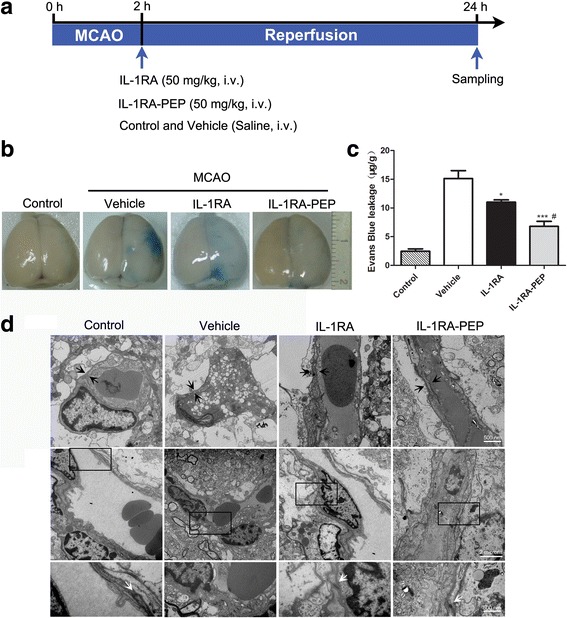
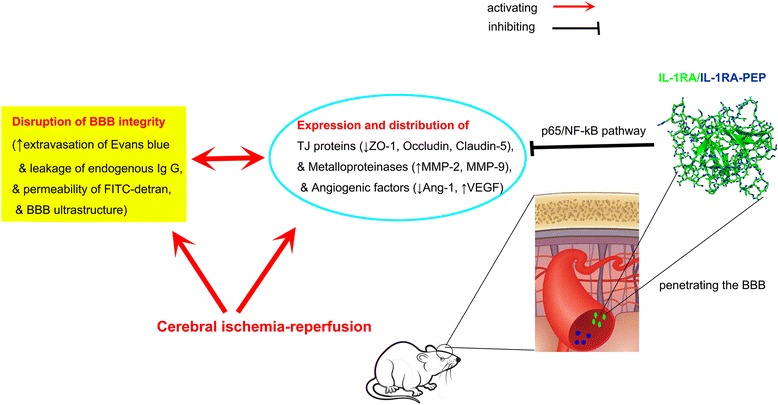
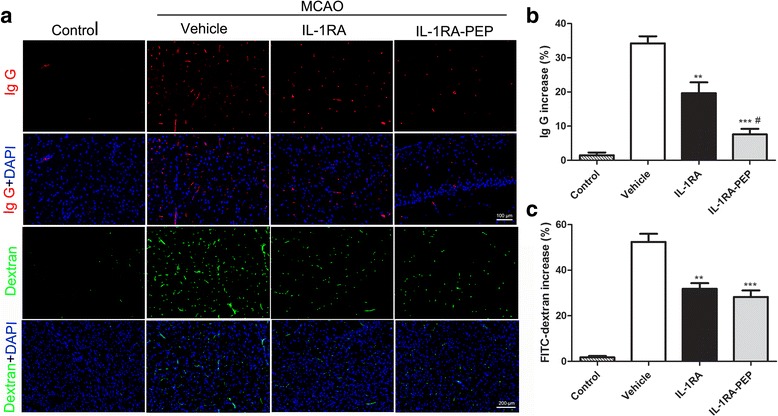
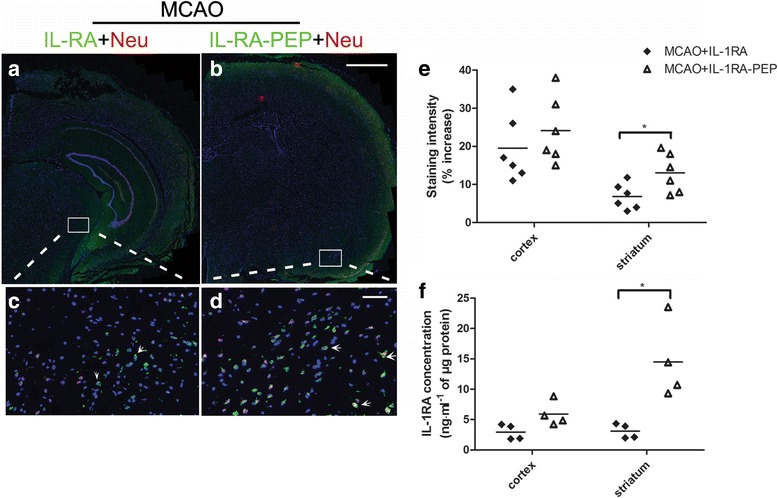
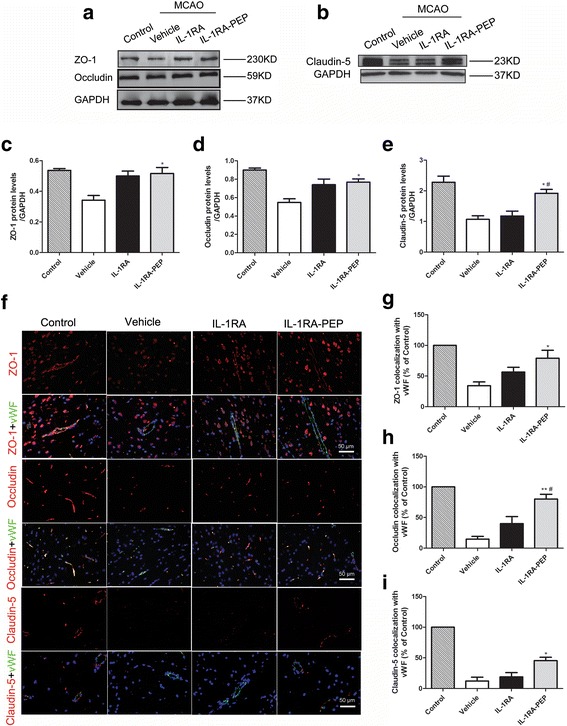
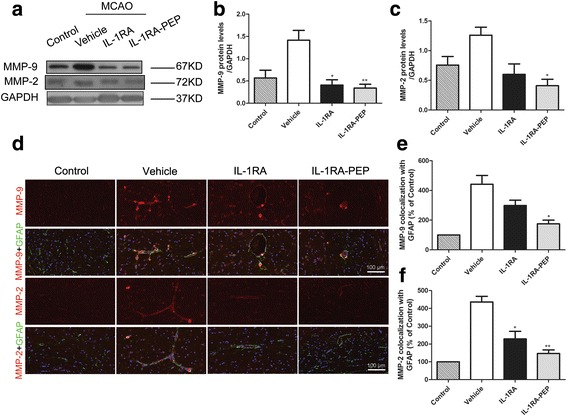
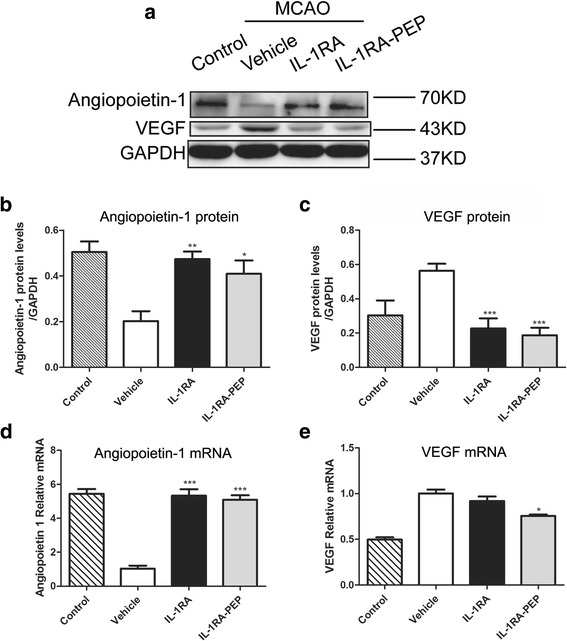
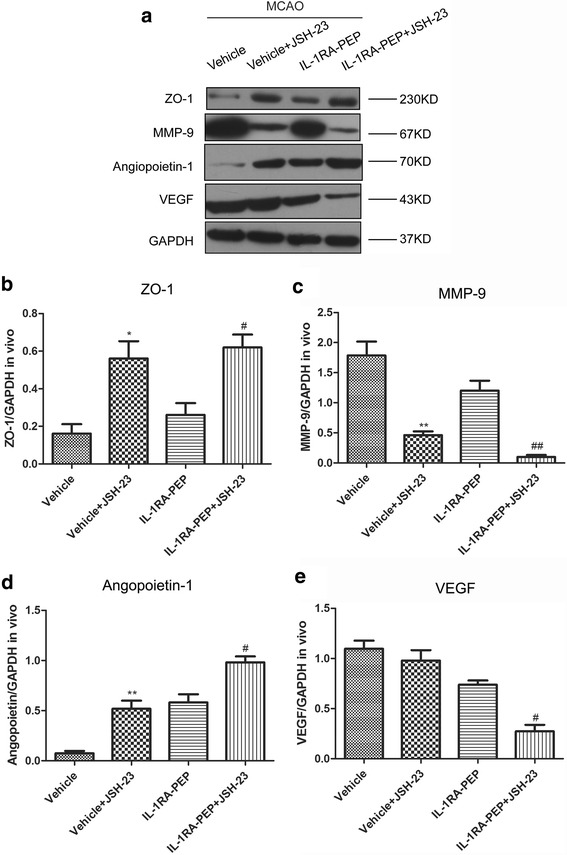
After intravenous administration, IL-1RA-PEP (50 mg/kg) penetrated cerebral tissues more effectively than IL-1RA. Moreover, it preserved blood-brain barrier integrity, attenuated changes in expression and localization of tight junction proteins and matrix metalloproteinases, and enhanced angiogenesis in ischemic brain tissue. Further study suggested that the effects of IL-1RA-PEP on preserving blood-brain barrier integrity might be closely correlated with the p65/NF-κB pathway, as evidenced by the effects of the inhibitor JSH-23.
Collectively, our results demonstrated that IL-1RA-PEP could effectively penetrate the brain of rats with middle cerebral artery occlusion and ameliorate blood-brain barrier disruption. This finding might represent its novel therapeutic potential in the treatment of the cerebral ischemia-reperfusion injury.
目前治疗炎症性中枢神经系统(CNS)疾病(如脑缺血再灌注损伤)的临床复发的选择有限,需要更有效的药物。血脑屏障的破坏是病变形成的早期特征,与临床恶化相关,并促进炎症介质和炎症细胞的进入。白细胞介素-1 受体拮抗剂(IL-1RA)是白细胞介素-1(IL-1)家族的天然抗炎拮抗剂。IL-1RA 的广谱抗炎作用已在各种形式的神经炎症中得到研究。然而,IL-1RA 对缺血再灌注后血脑屏障破坏的影响尚未报道。
在这项研究中,我们研究了 IL-1RA 和一种新型蛋白质(IL-1RA-PEP)对雄性大鼠短暂性大脑中动脉闭塞后血脑屏障完整性的影响,IL-1RA-PEP 通过细胞穿透肽与 IL-1RA 融合。
静脉给药后,IL-1RA-PEP(50mg/kg)比 IL-1RA 更有效地穿透脑组织。此外,它还能保持血脑屏障的完整性,减轻紧密连接蛋白和基质金属蛋白酶表达和定位的变化,并增强缺血脑组织中的血管生成。进一步的研究表明,IL-1RA-PEP 对保持血脑屏障完整性的作用可能与 p65/NF-κB 途径密切相关,这一点可以从抑制剂 JSH-23 的作用得到证明。
总之,我们的结果表明,IL-1RA-PEP 可以有效地穿透大脑中动脉闭塞大鼠的大脑,并改善血脑屏障的破坏。这一发现可能代表其在治疗脑缺血再灌注损伤方面的新的治疗潜力。