Division of Gastroenterology, Union Hospital, Tongji Medical College, Huazhong University of Science and Technology, Wuhan, Hubei 430022, P.R. China.
Int J Mol Med. 2018 Apr;41(4):1877-1886. doi: 10.3892/ijmm.2018.3389. Epub 2018 Jan 16.
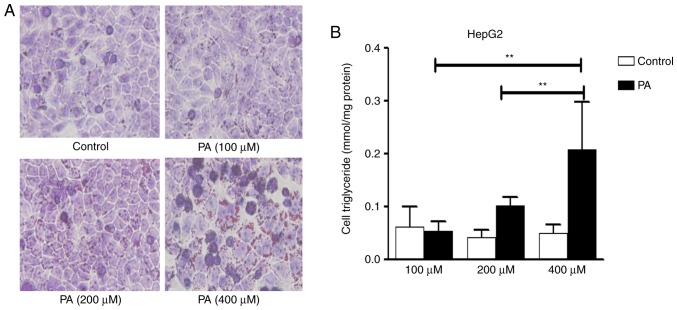
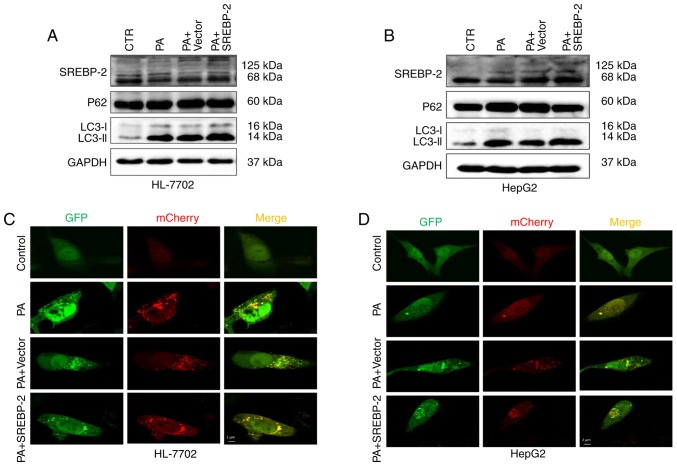
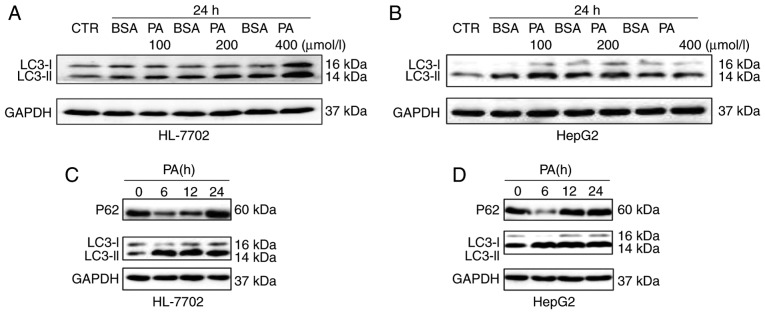
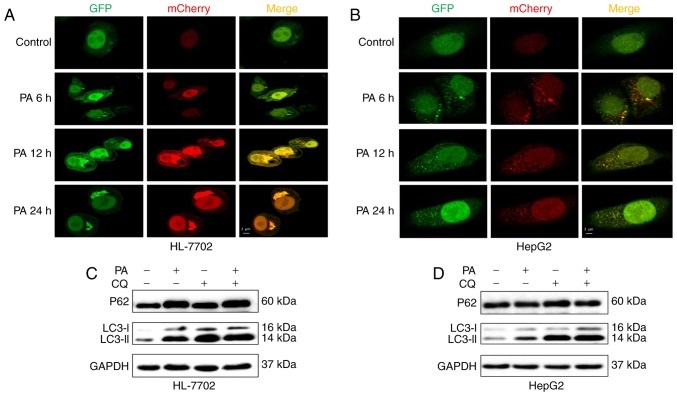
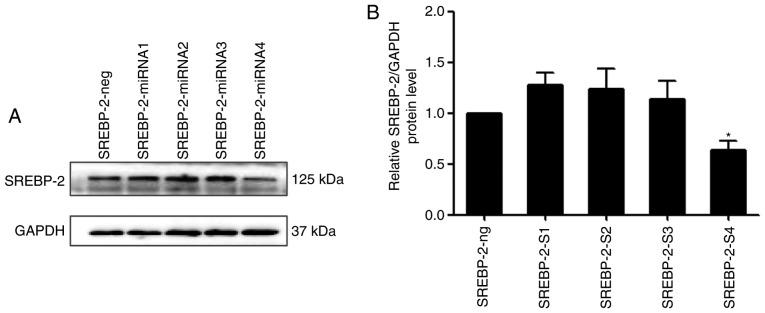
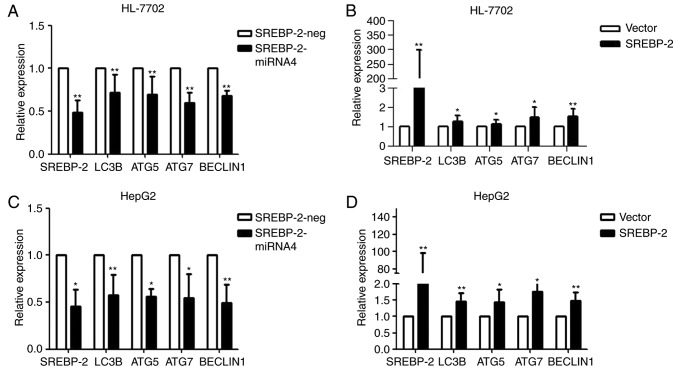
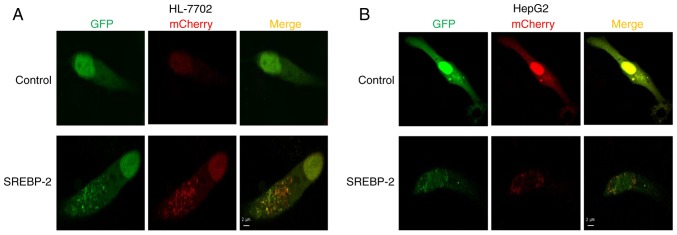
Sterol regulatory element binding protein‑2 (SREBP‑2) is an important transcription factor in lipid homeostasis. A previous study showed that SREBP‑2 also activated autophagic genes during cell‑sterol depletion. Alterations in autophagy are reported to be involved in the pathogenesis of nonalcoholic fatty liver disease (NAFLD). However, whether the regulation of SREBP‑2 restores dysfunctional autophagy in hepatocytes during NAFLD remains to be elucidated. In the present study, a steatosis model was established with palmitic acid (PA) treatment at the indicated times and concentrations. Autophagosomes in hepatocytes were visualized by confocal microscopy after transfection with a tandem GFP‑mCherry‑LC3 construct. Autophagy‑associated protein levels were analyzed by western blot analysis. Loss‑ and gain‑of‑function studies were performed to examine the role of SREBP‑2 in the regulation of hepatocyte autophagy. It was demonstrated that PA induced autophagy and enhanced autophagic flux at the early stage, whereas prolonged treatment with PA resulted in dysfunction of autophagy in the PA‑induced steatotic hepatocytes. In addition, different cellular models presented with differing dysfunctional autophagy in response to fatty acid overload. It was also confirmed that SREBP‑2 regulated autophagy‑related gene expression in hepatocytes, and it was shown that the overexpression of SREBP‑2 increased the expression of autophagy‑related genes, but did not affect the inhibition of the autophagic flux in lipid‑overloaded HL‑7702 cells. By contrast, increased SREBP‑2 partly restored the inhibited autophagic activity in lipid‑overloaded hepatoma HepG2 cells. Taken together, the present study demonstrated that autophagic function was impaired in lipid‑overloaded human hepatocytes, and the differential effect of PA on autophagy was associated with the duration of PA and the cell type. Under these conditions, the overexpression of SREBP‑2 alleviated the inhibited autophagic activity rather than the inhibition of autophagic flux. Consequently, the results indicated that restoration of autophagy dysfunction via the regulation of SREBP‑2 may be a potential therapeutic target for the treatment of NAFLD.
固醇调节元件结合蛋白-2(SREBP-2)是脂质稳态中的重要转录因子。先前的研究表明,SREBP-2 在细胞固醇耗竭期间也激活自噬基因。自噬的改变据报道与非酒精性脂肪性肝病(NAFLD)的发病机制有关。然而,SREBP-2 的调节是否在 NAFLD 期间恢复肝细胞中功能失调的自噬仍有待阐明。在本研究中,用棕榈酸(PA)在指定时间和浓度下处理建立脂肪变性模型。通过共聚焦显微镜转染串联 GFP-mCherry-LC3 构建体后观察肝细胞中的自噬体。通过 Western blot 分析分析自噬相关蛋白水平。进行失活和功能获得研究以检查 SREBP-2 在调节肝细胞自噬中的作用。结果表明,PA 诱导自噬并在早期增强自噬流,而长时间用 PA 处理导致 PA 诱导的脂肪变性肝细胞中的自噬功能障碍。此外,不同的细胞模型对脂肪酸过载表现出不同的功能失调的自噬。还证实 SREBP-2 调节肝细胞中的自噬相关基因表达,并且表明 SREBP-2 的过表达增加了自噬相关基因的表达,但不影响脂质超负荷 HL-7702 细胞中自噬流的抑制。相比之下,增加的 SREBP-2 部分恢复了脂质超负荷肝癌 HepG2 细胞中受抑制的自噬活性。总之,本研究表明,脂质超负荷的人肝细胞中自噬功能受损,PA 对自噬的不同作用与 PA 的持续时间和细胞类型有关。在这些条件下,SREBP-2 的过表达缓解了受抑制的自噬活性,而不是自噬流的抑制。因此,结果表明,通过调节 SREBP-2 恢复自噬功能障碍可能是治疗 NAFLD 的潜在治疗靶点。