Experimental Center for Medical Research, Weifang Medical University, Weifang 261053, China.
School of Clinical Medicine, Weifang Medical University, Weifang 261053, China.
Int J Mol Sci. 2018 Jan 16;19(1):257. doi: 10.3390/ijms19010257.
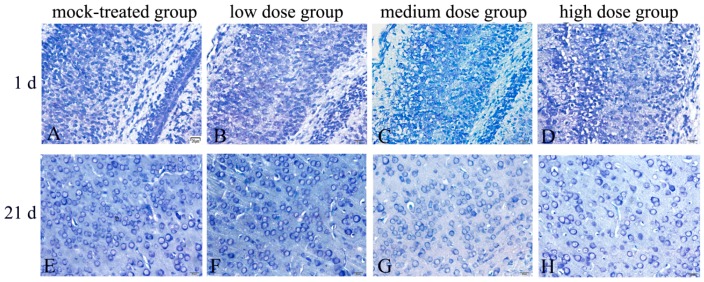
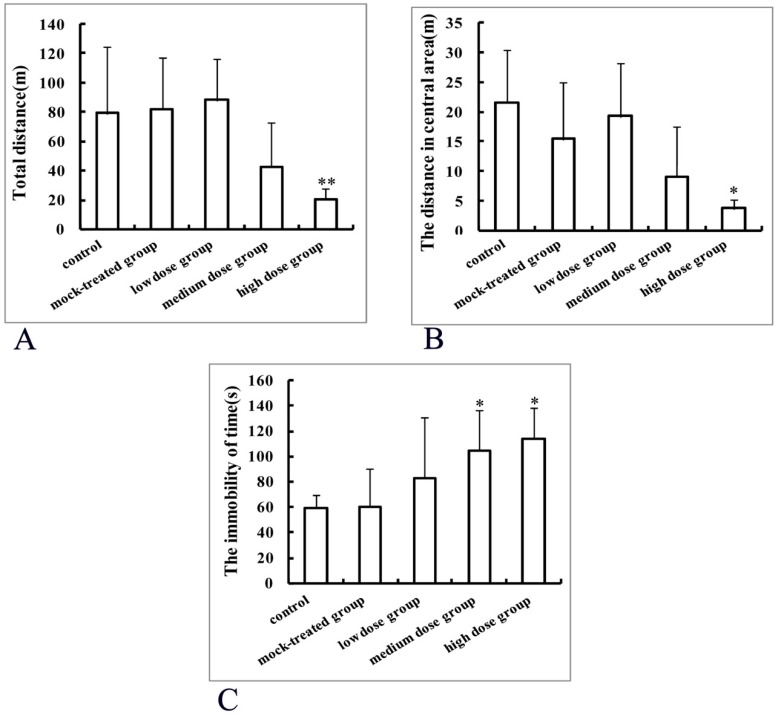
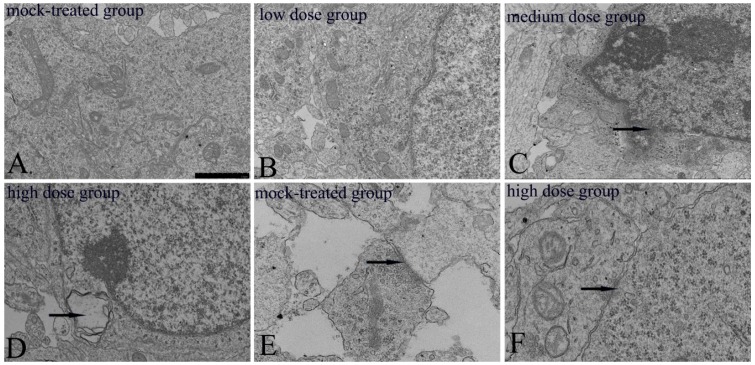
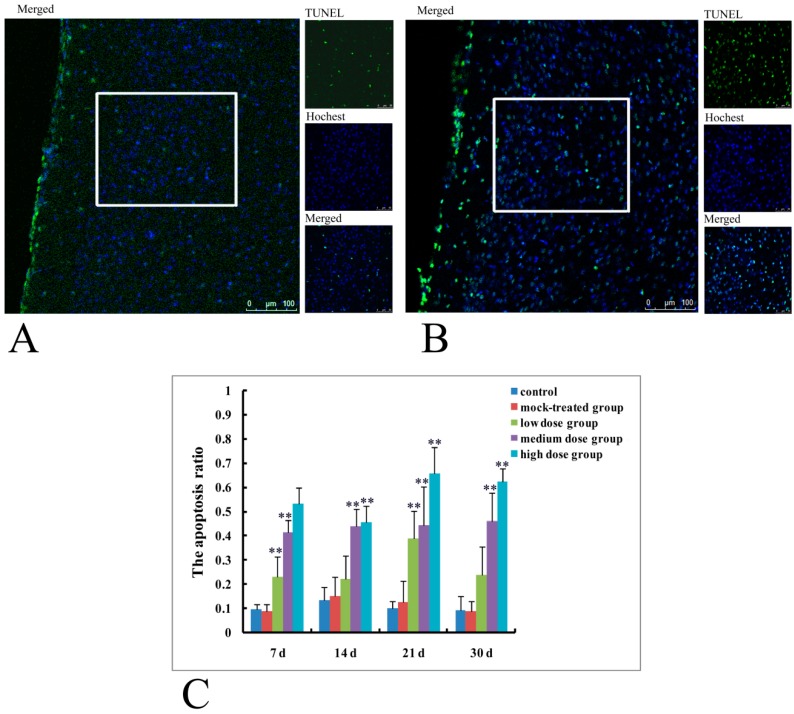
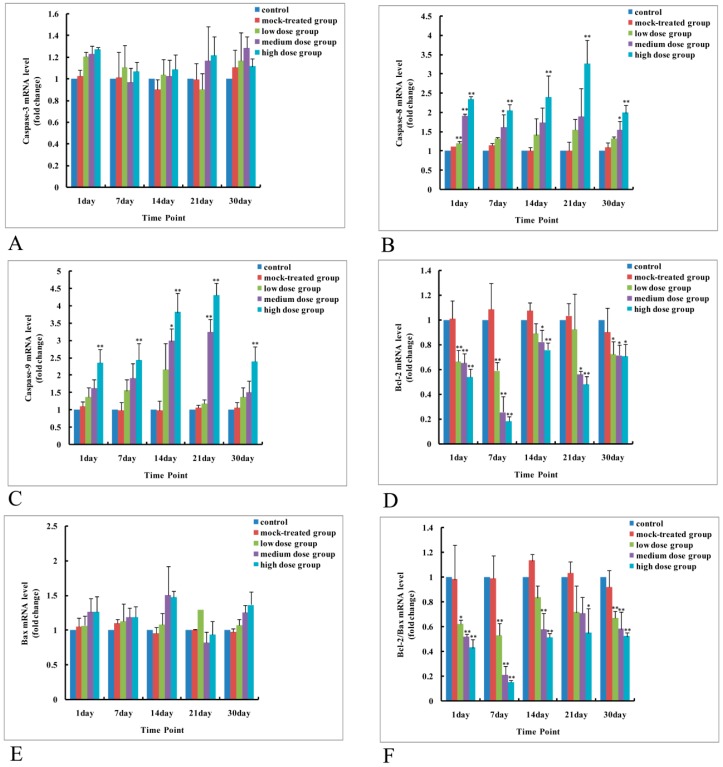
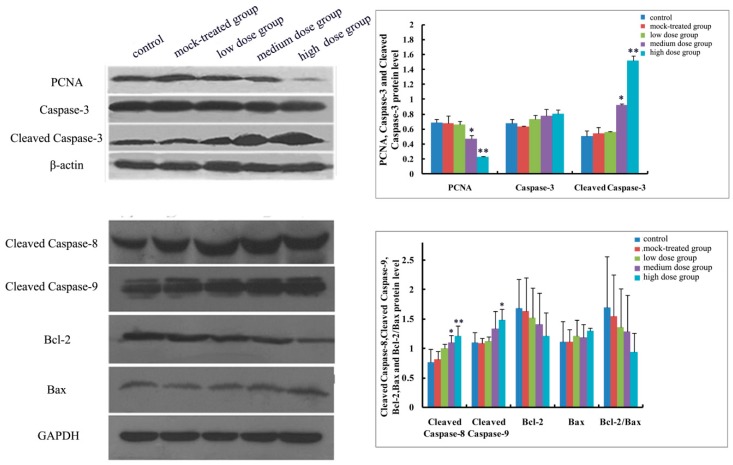
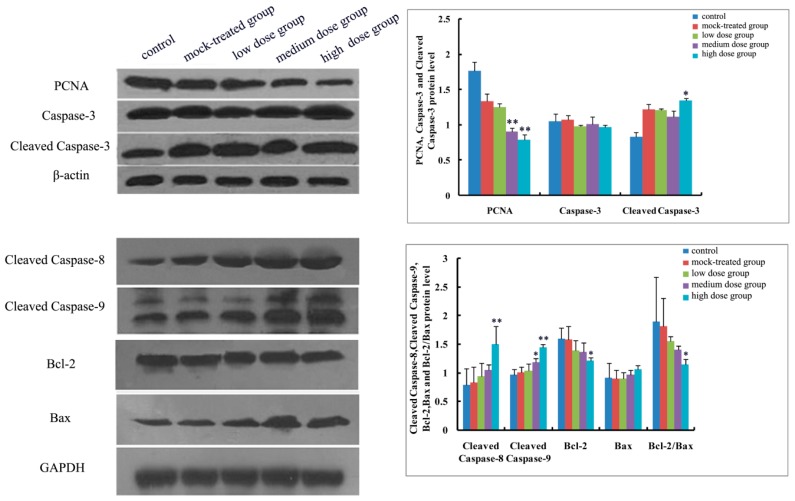
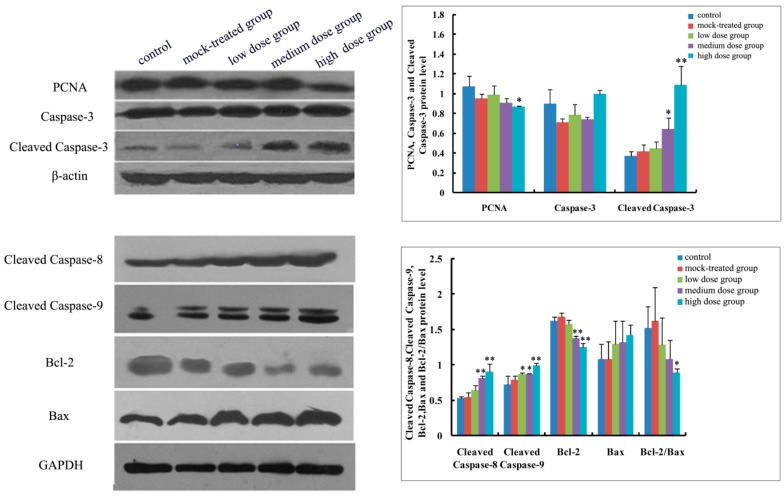
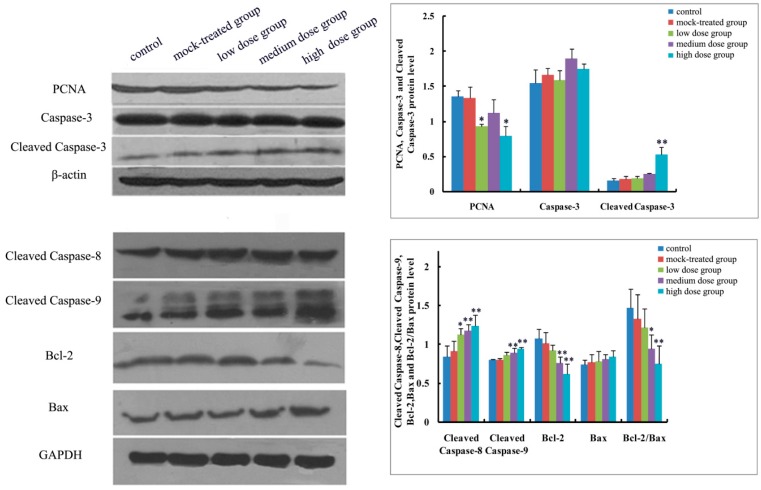
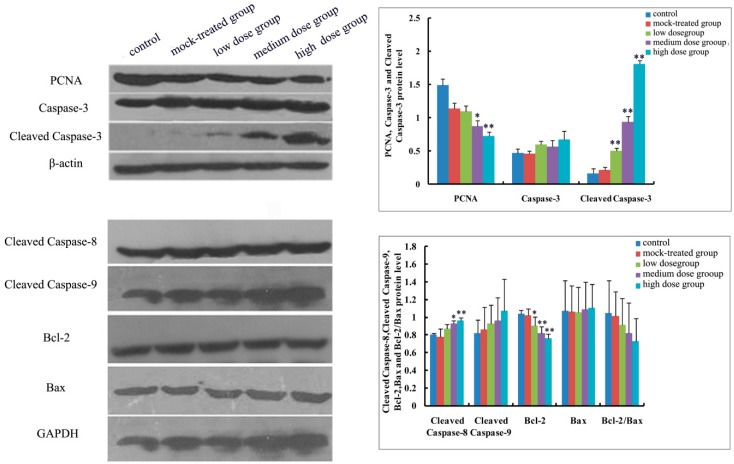
Air pollution is a serious environmental health problem closely related to the occurrence of central nervous system diseases. Exposure to particulate matter with an aerodynamic diameter less than or equal to 2.5 µm (PM) during pregnancy may affect the growth and development of infants. The present study was to investigate the effects of maternal exposure to PM during pregnancy on brain development in mice offspring. Pregnant mice were randomly divided into experimental groups of low-, medium-, or high-dosages of PM, a mock-treated group which was treated with the same amount of phosphate buffer solution (PBS), and acontrol group which was untreated. The ethology of offspring mice on postnatal days 1, 7, 14, 21, and 30, along with neuronal development and apoptosis in the cerebral cortex were investigated. Compared with the control, neuronal mitochondrial cristae fracture, changed autophagy characteristics, significantly increased terminal deoxynucleotidyl transferase dUTP nick end labeling (TUNEL) positive cell rate, and mRNA levels of apoptosis-related caspase-8 and caspase-9 were found in cerebral cortex of mice offspring from the treatment groups, with mRNA levels of Bcl-2 and ratio of Bcl-2 to Bax decreased. Treatment groups also demonstrated enhanced protein expressions of apoptosis-related cleaved caspase-3, cleaved caspase-8 and cleaved caspase-9, along with declined proliferating cell nuclear antigen (PCNA), Bcl-2, and ratio of Bcl-2 to Bax. Open field experiments and tail suspension experiments showed that exposure to high dosage of PM resulted in decreased spontaneous activities but increased static accumulation time in mice offspring, indicating anxiety, depression, and social behavioral changes. Our results suggested that maternal exposure to PM during pregnancy might interfere with cerebral cortex development in mice offspring by affecting cell apoptosis.
空气污染是一个与中枢神经系统疾病发生密切相关的严重环境健康问题。孕妇暴露于空气动力学直径小于或等于 2.5 µm(PM)的颗粒物中可能会影响婴儿的生长发育。本研究旨在探讨孕妇怀孕期间暴露于 PM 对小鼠后代大脑发育的影响。将怀孕的小鼠随机分为低剂量、中剂量、高剂量 PM 实验组、用等量磷酸盐缓冲液(PBS)处理的模拟处理组和未处理的对照组。检测了后代小鼠在出生后第 1、7、14、21 和 30 天的行为表现以及大脑皮层中的神经元发育和细胞凋亡。与对照组相比,实验组的神经元线粒体嵴断裂、自噬特征改变、末端脱氧核苷酸转移酶 dUTP 缺口末端标记(TUNEL)阳性细胞率显著增加,大脑皮层中凋亡相关的 caspase-8 和 caspase-9 的 mRNA 水平升高,Bcl-2mRNA 水平和 Bcl-2/Bax 比值降低。实验组还表现出凋亡相关的 cleaved caspase-3、cleaved caspase-8 和 cleaved caspase-9 蛋白表达增加,增殖细胞核抗原(PCNA)、Bcl-2 和 Bcl-2/Bax 比值降低。旷场实验和悬尾实验表明,高剂量 PM 暴露导致小鼠后代自发活动减少,但静止累积时间增加,表明焦虑、抑郁和社交行为发生变化。我们的结果表明,孕妇怀孕期间暴露于 PM 可能通过影响细胞凋亡干扰小鼠后代大脑皮层的发育。