a Center for Proteomics and Metabolomics, State Key Laboratory of Biocontrol, Guangdong Province Key Laboratory for Pharmaceutical Functional Genes , School of Life Sciences, Sun Yat-sen University, University City , Guangzhou , People's Republic of China.
b Tibet Vocational Technical College , Lhasha , People's Republic of China.
Virulence. 2018 Jan 1;9(1):634-644. doi: 10.1080/21505594.2017.1423188.
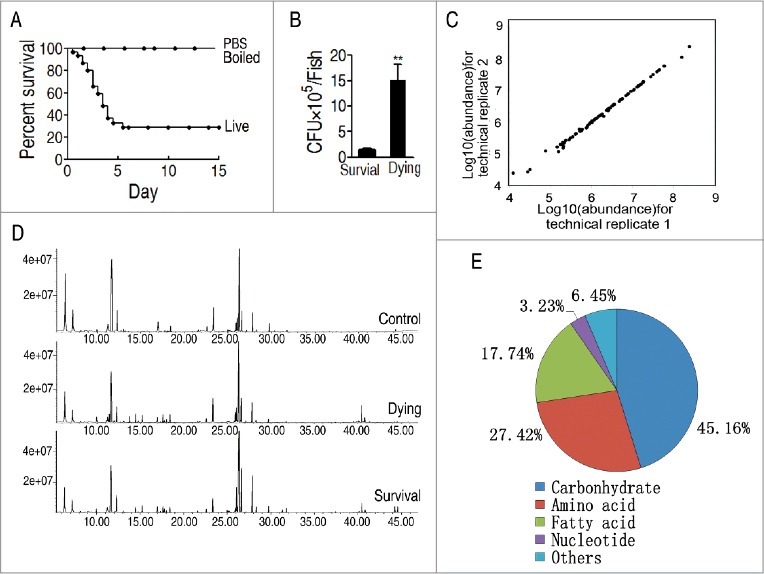
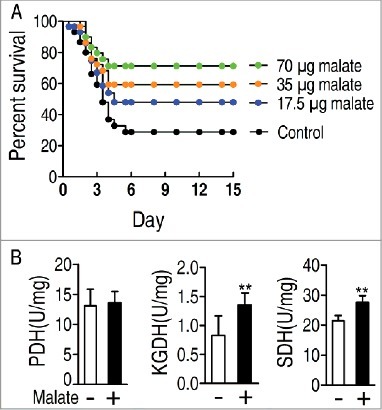
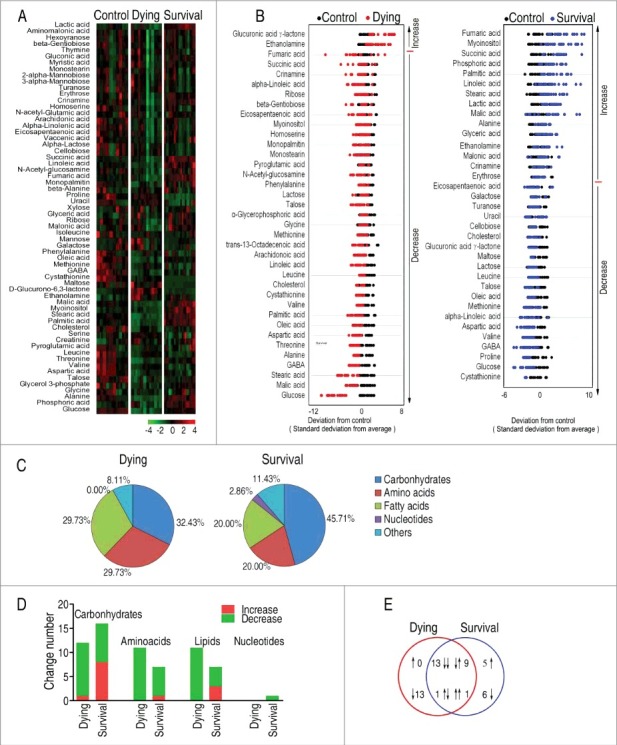
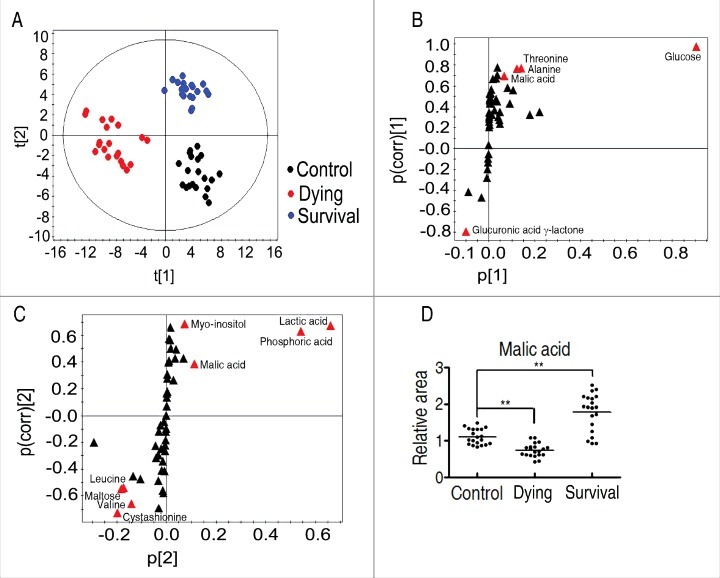
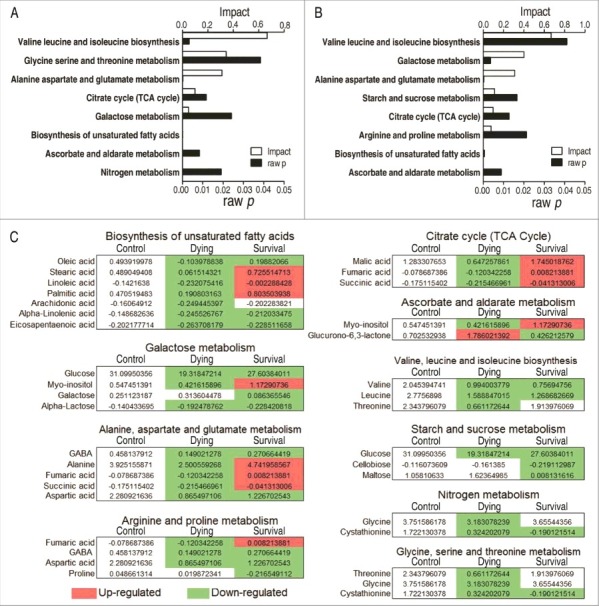
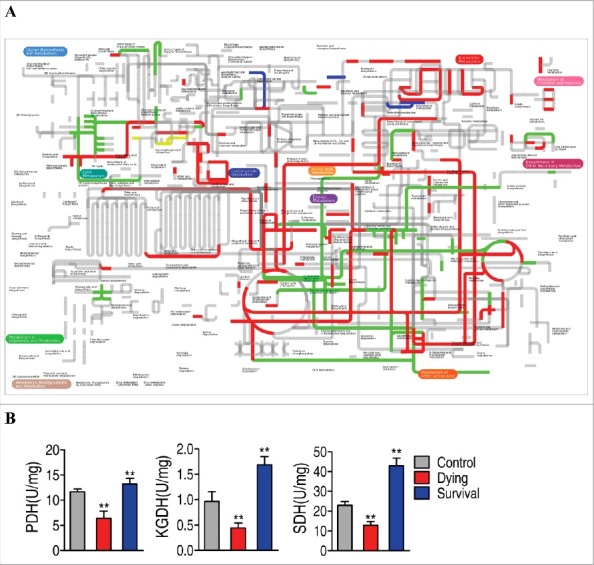
Vibrio alginolyticus is a waterborne pathogen that infects a wide variety of hosts including fish and human, and the outbreak of this pathogen can cause a huge economic loss in aquaculture. Thus, enhancing host's capability to survive from V. alginolyticus infection is key to fighting infection and this remains still unexplored. In the present study, we established a V. alginolyticus-zebrafish interaction model by which we explored how zebrafish survived from V. alginolyticus infection. We used GC-MS based metabolomic approaches to characterize differential metabolomes between survival and dying zebrafish upon infection. Pattern recognition analysis identified the TCA cycle as the most impacted pathway. The metabolites in the TCA cycle were decreased in the dying host, whereas the metabolites were increased in the survival host. Furthermore, the enzymatic activities of the TCA cycle including pyruvate dehydrogenase (PDH), α-ketoglutaric dehydrogenase (KGDH) and succinate dehydrogenase (SDH) also supported this conclusion. Among the increased metabolites in the TCA cycle, malic acid was the most crucial biomarker for fish survival. Indeed, exogenous malate promoted zebrafish survival in a dose-dependent manner. The corresponding activities of KGDH and SDH were also increased. These results indicate that the TCA cycle is a key pathway responsible for the survival or death in response to infection caused by V. alginolyticus, and highlight the way on development of metabolic modulation to control the infection.
解藻弧菌是一种水生病原体,可感染包括鱼类和人类在内的多种宿主,该病原体的爆发会给水产养殖业造成巨大的经济损失。因此,提高宿主对解藻弧菌感染的生存能力是抗感染的关键,而这一点仍有待探索。在本研究中,我们建立了一个解藻弧菌-斑马鱼相互作用模型,通过该模型我们探索了斑马鱼如何在解藻弧菌感染中存活下来。我们使用基于 GC-MS 的代谢组学方法来描述感染后存活和死亡的斑马鱼之间的差异代谢组。模式识别分析确定三羧酸 (TCA) 循环是受影响最大的途径。TCA 循环中的代谢物在死亡的宿主中减少,而在存活的宿主中增加。此外,TCA 循环的酶活性,包括丙酮酸脱氢酶(PDH)、α-酮戊二酸脱氢酶(KGDH)和琥珀酸脱氢酶(SDH)也支持了这一结论。在 TCA 循环中增加的代谢物中,苹果酸是鱼类存活的最关键生物标志物。事实上,外源性苹果酸以剂量依赖的方式促进了斑马鱼的存活。KGDH 和 SDH 的相应活性也增加了。这些结果表明,TCA 循环是对解藻弧菌感染导致的存活或死亡的关键途径,并强调了通过代谢调节来控制感染的方法。