Waikato Hospital, Hamilton, New Zealand.
Faculty of Medicine and Health Sciences, University of Auckland, Auckland, New Zealand.
Malar J. 2018 Jan 16;17(1):35. doi: 10.1186/s12936-018-2180-1.
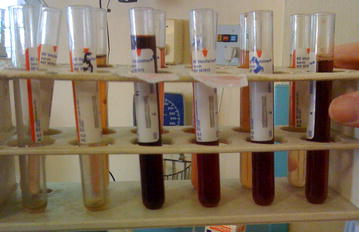
Blackwater fever is a complication of malaria infection consisting of a syndrome of febrile intra-vascular haemolysis with severe anaemia and intermittent passage of dark-red to black colour urine. Despite numerous reports and studies of this condition, its pathogenesis remains incompletely understood.
This report describes a case of classic blackwater fever in a returning traveller, without prior history of malaria infection nor usage of anti-malarial prophylaxis, treated with two courses of oral artemether-lumefantrine combination therapy. Unusual persistence of submicroscopic Plasmodium falciparum parasitaemia was detected by PCR for 18 days after initiation of treatment.
To the authors' knowledge this is the first reported occurrence of a case of blackwater fever associated with prolonged submicroscopic parasitaemia. This unusual case challenges the current knowledge of the pathogenesis of this condition and opens questions that may have important diagnostic and treatment implications.
黑水热是疟疾感染的一种并发症,其特征为发热性血管内溶血性贫血伴有严重贫血和间歇性排出暗红色至黑色尿液。尽管对这种病症有大量的报道和研究,但它的发病机制仍不完全清楚。
本报告描述了一例典型的返回旅行者的黑水热病例,该患者无疟疾感染史,也未使用抗疟预防药物,经两疗程口服青蒿琥酯-咯萘啶联合疗法治疗。在开始治疗 18 天后,通过 PCR 检测到异常持久的疟原虫亚显微寄生虫血症。
据作者所知,这是首例与长时间亚显微寄生虫血症相关的黑水热病例报告。这种不寻常的病例挑战了目前对该病症发病机制的认识,并提出了一些可能具有重要诊断和治疗意义的问题。