Chavatte Jean-Marc, Tan Sarah Bee Hui, Snounou Georges, Lin Raymond Tzer Pin Valentine
Malaria Reference Centre - National Public Health Laboratory, Ministry of Health, Singapore, 3 Biopolis Drive, Synapse #05-14/16, 138623, Singapore, Singapore.
Sorbonne Universités, UPMC Université Paris 06, UPMC UMRS CR7, 75005, Paris, France.
Malar J. 2015 Nov 14;14:454. doi: 10.1186/s12936-015-0985-8.
Plasmodium ovale, considered the rarest of the malaria parasites of humans, consists of two morphologically identical but genetically distinct sympatric species, Plasmodium ovale curtisi and Plasmodium ovale wallikeri. These parasites resemble morphologically to Plasmodium vivax with which they also share a tertian periodicity and the ability to cause relapses, making them easily misidentified as P. vivax. Plasmodium ovale infections are rarely reported, but given the likelihood of misidentification, their prevalence might be underestimated.
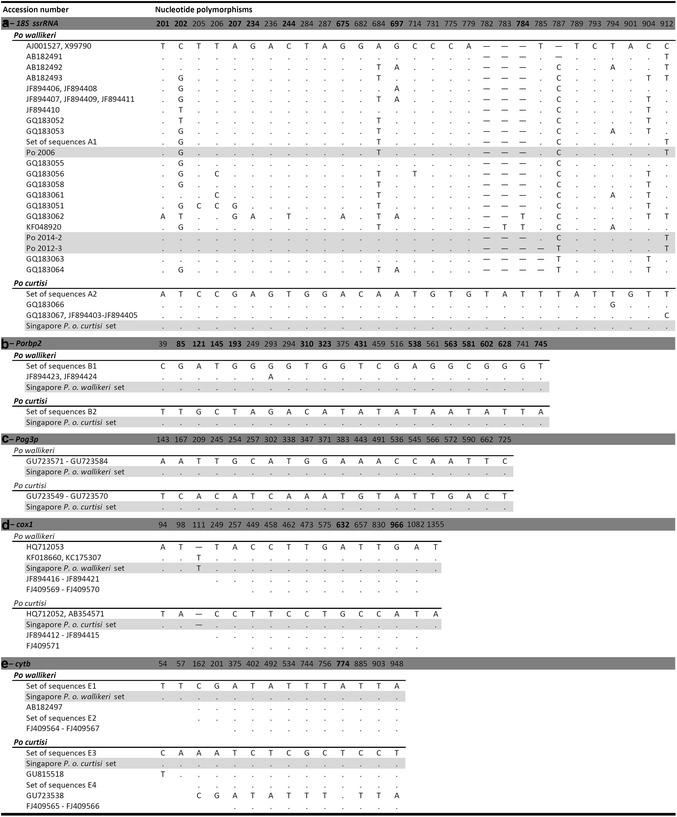
Morphological and molecular analysis of confirmed malaria cases admitted in Singapore in 2012-2014 detected nine imported P. ovale cases that had been misidentified as P. vivax. Since P. ovale had not been previously officially reported in Singapore, a retrospective analysis of available, frozen, archival blood samples was performed and returned two additional misidentified P. ovale cases in 2003 and 2006. These eleven P. ovale samples were characterized with respect to seven molecular markers (ssrRNA, Potra, Porbp2, Pog3p, dhfr-ts, cytb, cox1) used in recent studies to distinguish between the two sympatric species, and to a further three genes (tufa, clpC and asl).
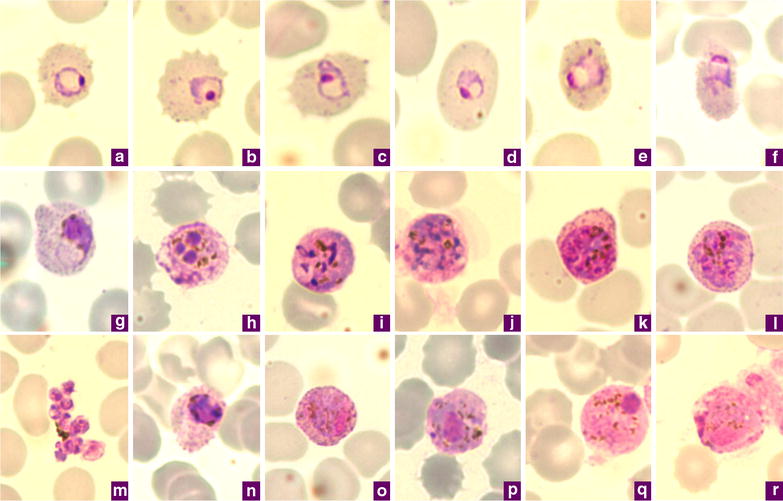
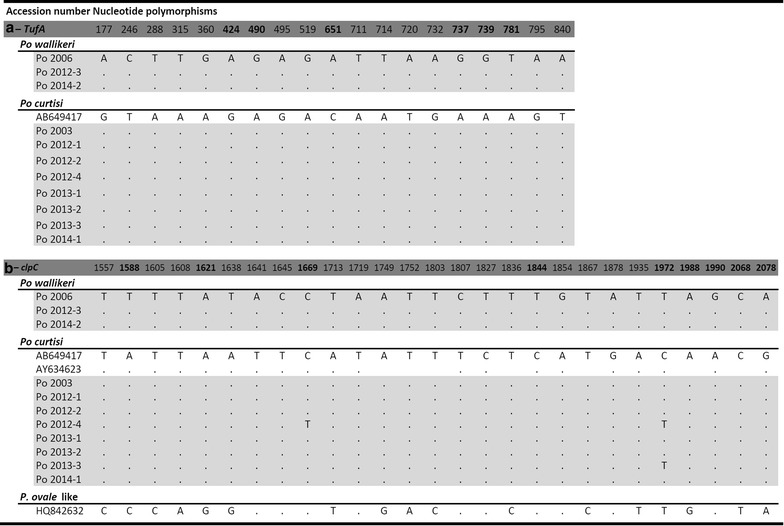
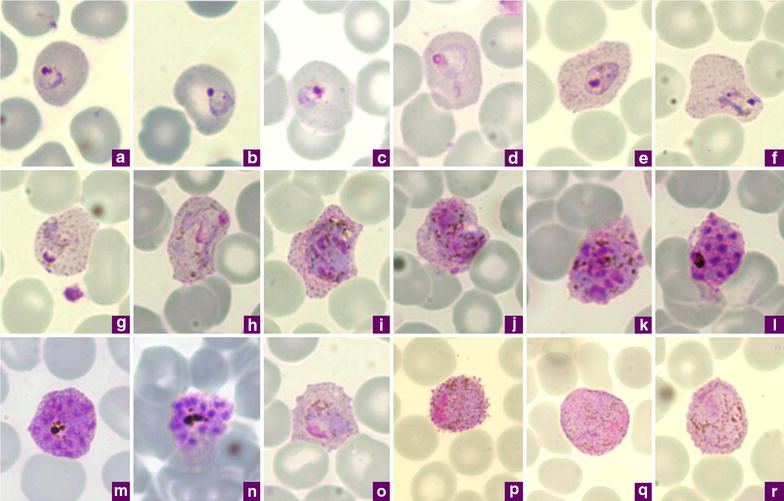
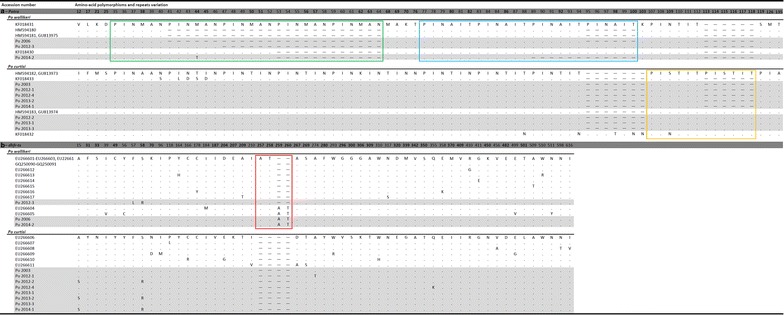
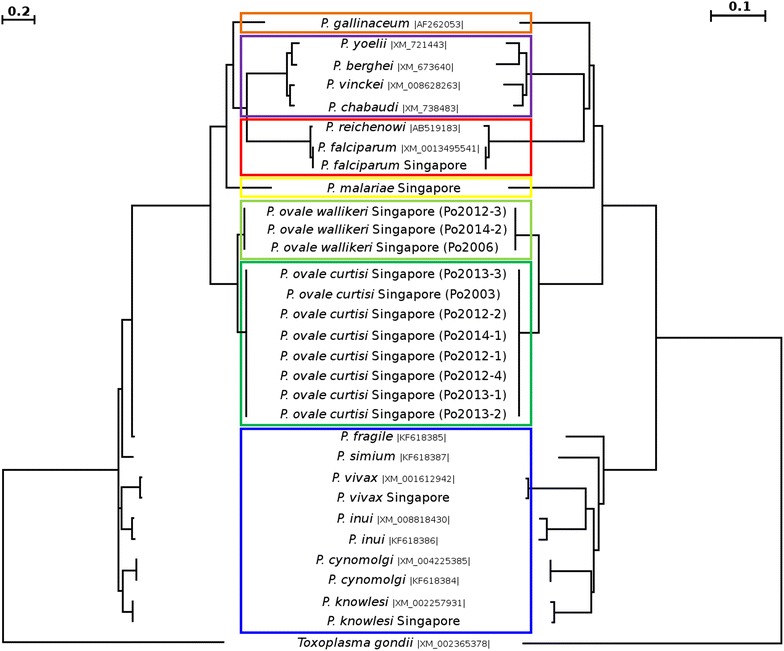
The morphological features of P. ovale and the differential diagnosis with P. vivax were reviewed and illustrated by microphotographs. The genetic dimorphism between P. ovale curtisi and P. ovale wallikeri was assessed by ten molecular markers distributed across the three genomes of the parasite (Genbank KP050361-KP050470). The data obtained for seven of these markers were compared with those published and confirmed that both P. ovale species were present. This dimorphism was also confirmed for the first time on: (1) two genes from the apicoplast genome (tufA and clpC genes); and, (2) the asl gene that was used for phylogenetic analyses of other Plasmodium species, and that was found to harbour the highest number of dimorphic loci between the two P. ovale species.
Misidentified P. ovale infections are reported for the first time among imported malaria cases in Singapore. Genetic dimorphism between P. ovale curtisi and P. ovale wallikeri was confirmed using markers from the parasites' three genomes. The apparent increase of imported P. ovale since 2012 (with yearly detection of cases) is puzzling. Given decrease in the overall number of malaria cases recorded in Singapore since 2010 the 'resurgence' of this neglected species raises public health concerns.
卵形疟原虫被认为是人类疟疾寄生虫中最罕见的,它由两个形态相同但基因不同的同域物种组成,即柯氏卵形疟原虫和沃氏卵形疟原虫。这些寄生虫在形态上与间日疟原虫相似,它们也具有间日热周期和引起复发的能力,这使得它们很容易被误诊为间日疟原虫。卵形疟原虫感染的报告很少,但鉴于存在误诊的可能性,其流行率可能被低估。
对2012 - 2014年在新加坡确诊的疟疾病例进行形态学和分子分析,检测出9例被误诊为间日疟原虫的输入性卵形疟原虫病例。由于此前新加坡尚未正式报告过卵形疟原虫,因此对现有的冷冻存档血样进行了回顾性分析,又发现了2003年和2006年另外2例被误诊的卵形疟原虫病例。对这11份卵形疟原虫样本进行了7种分子标记(小亚基核糖体RNA、Potra、Porbp2、Pog3p、二氢叶酸还原酶 - 胸苷酸合成酶、细胞色素b、细胞色素c氧化酶亚基1)的特征分析,这些分子标记在最近的研究中用于区分这两个同域物种,还分析了另外3个基因(tufa、clpC和asl)。
通过显微照片对卵形疟原虫的形态特征以及与间日疟原虫的鉴别诊断进行了回顾和说明。利用分布在该寄生虫三个基因组中的10种分子标记(Genbank KP050361 - KP050470)评估了柯氏卵形疟原虫和沃氏卵形疟原虫之间的遗传二态性。将其中7种标记获得的数据与已发表的数据进行比较,证实两种卵形疟原虫物种均存在。首次在以下方面也证实了这种二态性:(1)来自质体基因组的两个基因(tufA和clpC基因);(2)用于其他疟原虫物种系统发育分析的asl基因,发现该基因在两种卵形疟原虫物种之间具有最多的二态性位点。
在新加坡的输入性疟疾病例中首次报告了被误诊的卵形疟原虫感染。使用来自寄生虫三个基因组的标记证实了柯氏卵形疟原虫和沃氏卵形疟原虫之间的遗传二态性。自2012年以来输入性卵形疟原虫明显增加(每年都有病例检出),这令人费解。鉴于自2010年以来新加坡记录的疟疾病例总数有所下降,这种被忽视物种的“复苏”引发了公共卫生方面的担忧。