Dept. of Mathematics, Statistics, and Computer Science, St. Francis Xavier University, P.O Box 5000, Antigonish, NS, B2G 2W5, Canada.
Sci Rep. 2018 Jan 16;8(1):808. doi: 10.1038/s41598-017-18539-9.
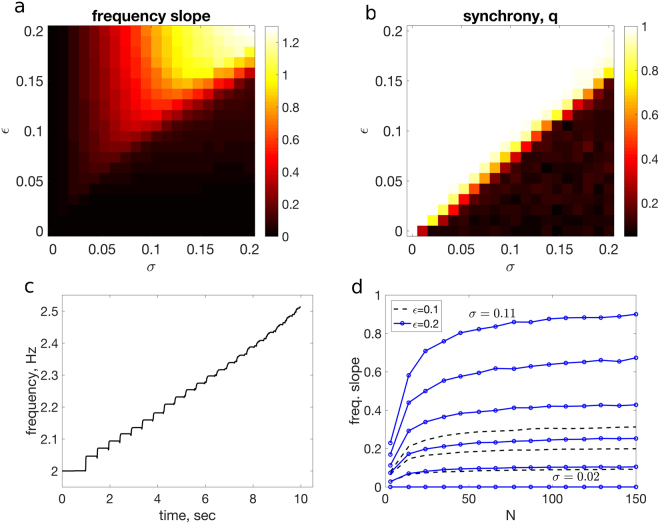
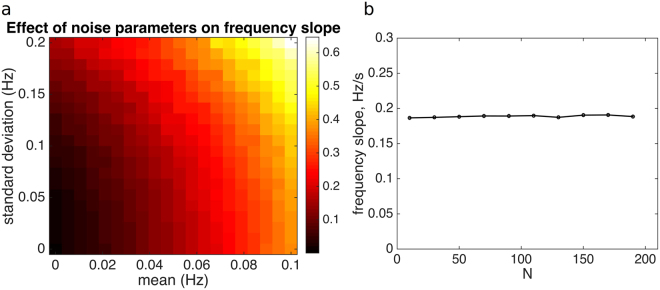
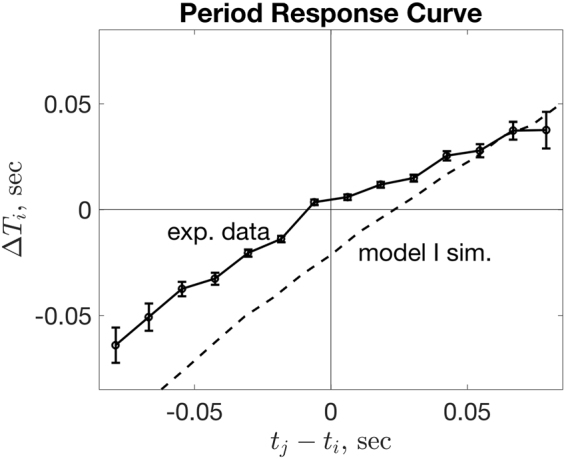
Humans clapping together in unison is a familiar and robust example of emergent synchrony. We find that in experiments, such groups (from two to a few hundred) always increase clapping frequency, and larger groups increase more quickly. Based on single-person experiments and modeling, an individual tendency to rush is ruled out as an explanation. Instead, an asymmetric sensitivity in aural interactions explains the frequency increase, whereby individuals correct more strongly to match neighbour claps that precede their own clap, than those that follow it. A simple conceptual coupled oscillator model based on this interaction recovers the main features observed in experiments, and shows that the collective frequency increase is driven by the small timing errors in individuals, and the resulting inter-individual interactions that occur to maintain unison.
人类齐声鼓掌是一种熟悉且强大的涌现同步现象。我们在实验中发现,这样的群体(从两个人到几百个人)总是会增加鼓掌的频率,而且更大的群体增加得更快。基于单人实验和建模,个人的匆忙倾向被排除作为一种解释。相反,听觉相互作用的不对称敏感性解释了频率的增加,即个体更强烈地纠正与自己的鼓掌相匹配的邻居鼓掌,而不是与自己的鼓掌相匹配的邻居鼓掌。一个简单的基于这种相互作用的概念耦合振荡器模型再现了实验中观察到的主要特征,并表明集体频率的增加是由个体中的小时间误差以及为保持一致而发生的个体间相互作用驱动的。