State Key Laboratory of Crop Biology, Shandong Agricultural University, Taian, Shandong, 271018, People's Republic of China.
College of Forestry, Shandong Agricultural University, Taian, Shandong, 271018, People's Republic of China.
Sci Rep. 2018 Jan 16;8(1):812. doi: 10.1038/s41598-018-19210-7.
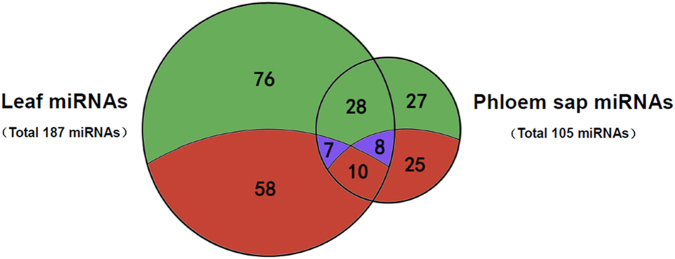
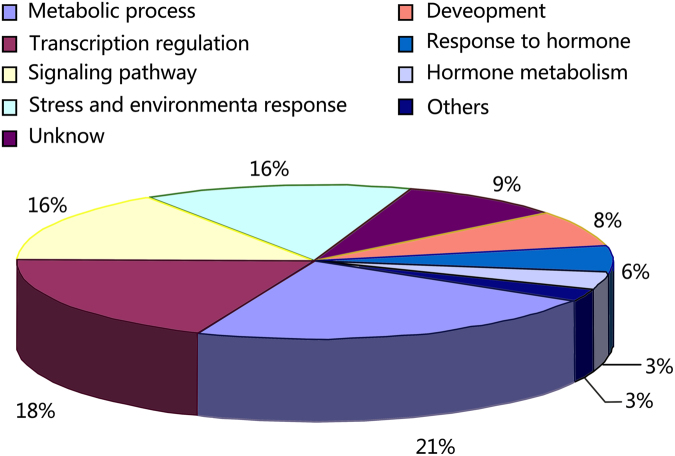
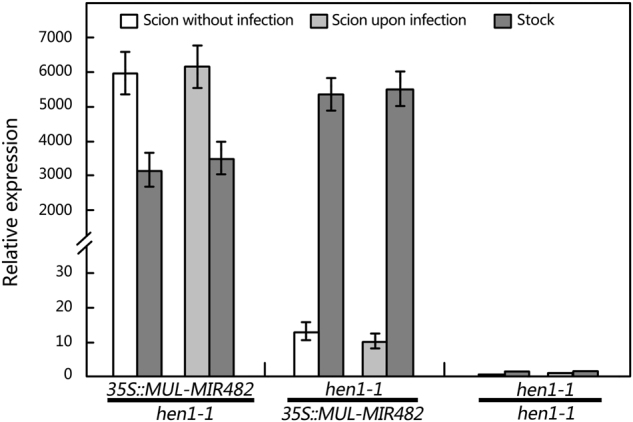
A wide range of miRNAs have been identified as phloem-mobile molecules that play important roles in coordinating plant development and physiology. Phytoplasmas are associated with hundreds of plant diseases, and the pathogenesis involved in the interactions between phytoplasmas and plants is still poorly understood. To analyse the molecular mechanisms of phytoplasma pathogenicity, the miRNAs profiles in mulberry phloem saps were examined in response to phytoplasma infection. A total of 86 conserved miRNAs and 19 novel miRNAs were identified, and 30 conserved miRNAs and 13 novel miRNAs were differentially expressed upon infection with phytoplasmas. The target genes of the differentially expressed miRNAs are involved in diverse signalling pathways showing the complex interactions between mulberry and phytoplasma. Interestingly, we found that mul-miR482a-5p was up-regulated in the infected phloem saps, and grafting experiments showed that it can be transported from scions to rootstock. Based on the results, the complexity and roles of the miRNAs in phloem sap and the potential molecular mechanisms of their changes were discussed. It is likely that the phytoplasma-responsive miRNAs in the phloem sap modulate multiple pathways and work cooperatively in response to phytoplasma infection, and their expression changes may be responsible for some symptoms in the infected plants.
大量的 miRNA 已被鉴定为韧皮部移动分子,它们在协调植物发育和生理方面发挥着重要作用。植原体与数百种植物病害有关,而植原体与植物相互作用的发病机制仍知之甚少。为了分析植原体致病性的分子机制,研究了受植原体感染后桑树韧皮部汁液中的 miRNA 谱。共鉴定出 86 个保守 miRNA 和 19 个新 miRNA,感染植原体后有 30 个保守 miRNA 和 13 个新 miRNA 表达差异。差异表达 miRNA 的靶基因参与多种信号通路,显示出桑树与植原体之间的复杂相互作用。有趣的是,我们发现感染韧皮部汁液中的 mul-miR482a-5p 上调,嫁接实验表明它可以从接穗运到砧木。基于这些结果,讨论了 miRNA 在韧皮部汁液中的复杂性和作用,以及它们变化的潜在分子机制。可能是韧皮部汁液中的植原体响应 miRNA 调节多个途径,并在植原体感染时协同工作,它们的表达变化可能是感染植物某些症状的原因。