Huang Yen-Sung, Fu Shin-Huei, Lu Kuo-Cheng, Chen Jin-Shuen, Hsieh Hsin-Yi, Sytwu Huey-Kang, Wu Chia-Chao
Institute of Biomedical Sciences, Academia Sinica, Taipei, Taiwan.
Graduate Institute of Microbiology and Immunology, National Defense Medical Center, Taipei, Taiwan.
Oncotarget. 2017 Dec 4;8(67):111631-111641. doi: 10.18632/oncotarget.22881. eCollection 2017 Dec 19.
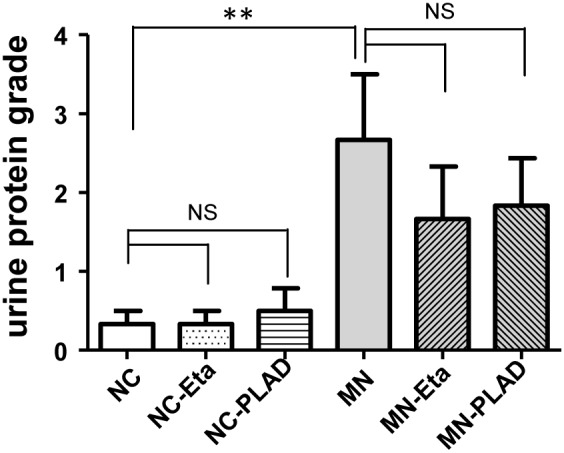
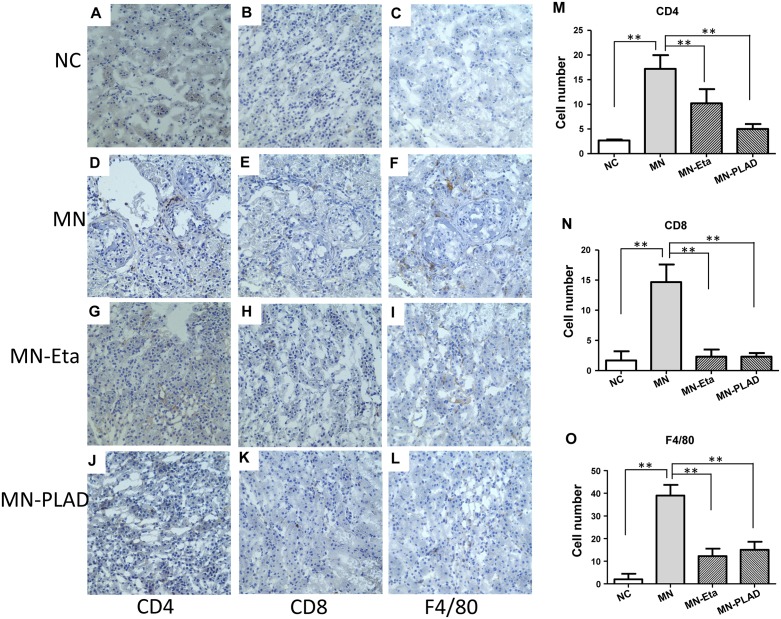
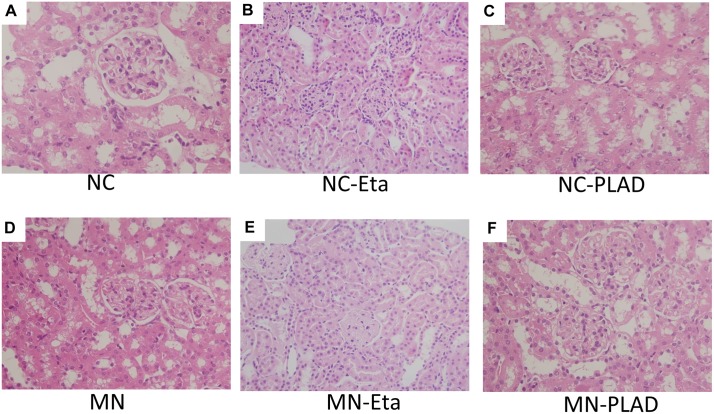
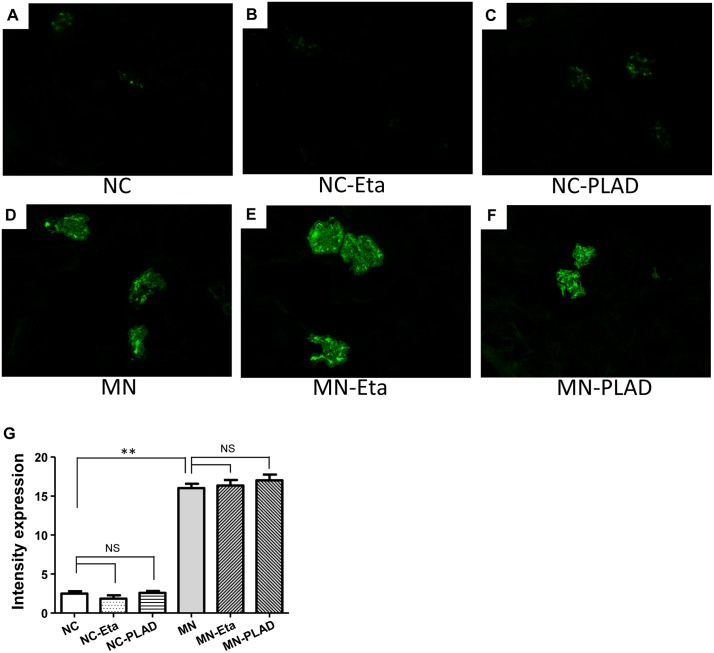
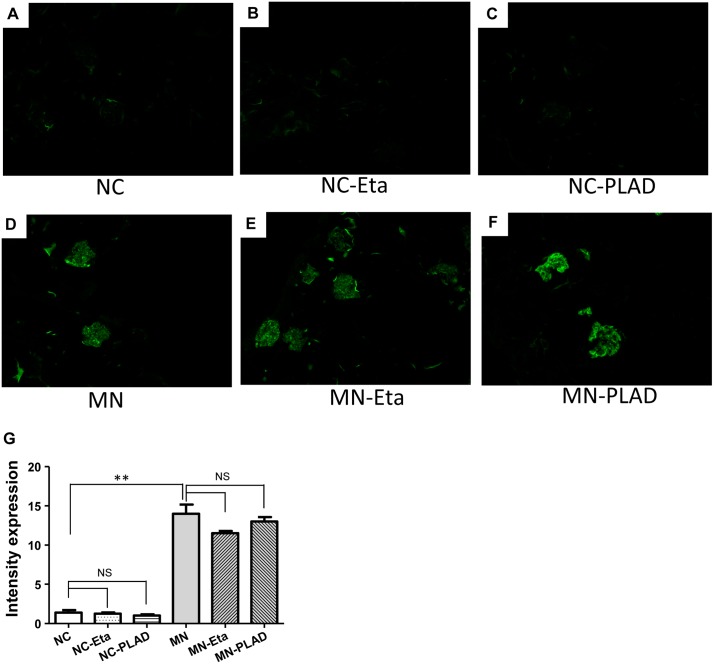
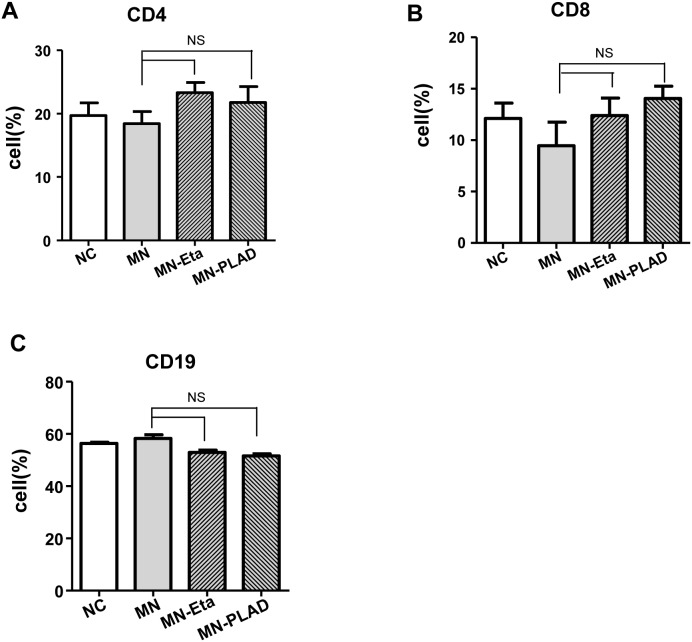
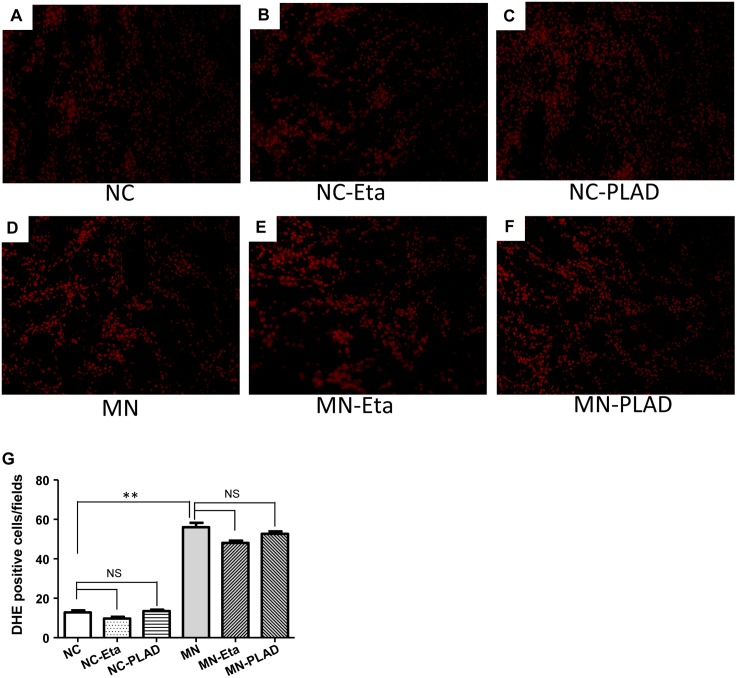
Idiopathic membranous nephropathy (MN) is an autoimmune-mediated glomerulonephritis and the most common cause of idiopathic nephrotic syndrome in adult humans. A tumor necrosis factor α (TNF-α)-mediated inflammatory response via TNF receptor 1 (TNFR1) and TNFR2 has been proposed as a pathogenic factor. In this study, we assessed the therapeutic response to blocking TNF signaling in experimental MN. Murine MN was induced experimentally by cationic bovine serum albumin (cBSA); phosphate-buffered saline was used in control mice. In MN mice, TNF was inhibited by etanercept blocking of TNFR1/TNFR2 or the preligand assembly domain fusion protein (PLAD.Fc), a small fusion protein that can preferentially block TNFR1 signaling. Disease severity and possible mechanisms were assessed by analyzing the metabolic and histopathology profiles, lymphocyte subsets, immunoglobulin production, oxidative stress, and apoptosis. cBSA-induced MN mice exhibited typical nephrotic syndrome and renal histopathology. MN mice given etanercept or PLAD.Fc did not exhibit significant reduction of proteinuria, amelioration of glomerular lesions, or attenuation of immune complex deposition. Immune cell subsets, serum immunoglobulin levels, production of reactive oxygen species, and cell apoptosis in the kidney were not altered by TNF inhibition. By contrast, MN mice receiving etanercept or PLAD.Fc exhibited significantly decreased infiltration of immune cells into the kidney. These results show that the therapeutic effects of blocking TNFR1 and/or TNFR2 signaling in experimental MN are not clinically effective. However, TNF signaling inhibition significantly attenuated renal immune cell infiltration in experimental MN.
特发性膜性肾病(MN)是一种自身免疫介导的肾小球肾炎,也是成人特发性肾病综合征最常见的病因。肿瘤坏死因子α(TNF-α)通过肿瘤坏死因子受体1(TNFR1)和肿瘤坏死因子受体2(TNFR2)介导的炎症反应被认为是一个致病因素。在本研究中,我们评估了在实验性MN中阻断TNF信号通路的治疗反应。通过阳离子牛血清白蛋白(cBSA)实验性诱导小鼠MN;对照小鼠使用磷酸盐缓冲盐水。在MN小鼠中,通过依那西普阻断TNFR1/TNFR2或前配体组装域融合蛋白(PLAD.Fc)来抑制TNF,PLAD.Fc是一种能优先阻断TNFR1信号的小融合蛋白。通过分析代谢和组织病理学特征、淋巴细胞亚群、免疫球蛋白产生、氧化应激和细胞凋亡来评估疾病严重程度和可能的机制。cBSA诱导的MN小鼠表现出典型的肾病综合征和肾脏组织病理学特征。给予依那西普或PLAD.Fc的MN小鼠蛋白尿没有显著减少,肾小球病变没有改善,免疫复合物沉积也没有减轻。TNF抑制并没有改变肾脏中的免疫细胞亚群、血清免疫球蛋白水平、活性氧的产生和细胞凋亡。相比之下,接受依那西普或PLAD.Fc的MN小鼠肾脏中免疫细胞的浸润显著减少。这些结果表明,在实验性MN中阻断TNFR1和/或TNFR2信号通路的治疗效果在临床上并不有效。然而,TNF信号通路抑制在实验性MN中显著减轻了肾脏免疫细胞浸润。