Sanscrainte Neil D, Arimoto Hanayo, Waits Christy M, Li Lucy Y, Johnson Dana, Geden Chris, Becnel James J, Estep Alden S
USDA/ARS Center for Medical, Agricultural, and Veterinary Entomology, Gainesville, Florida, United States of America.
Naval Medical Research Unit No. 3, Cairo, Egypt.
PLoS One. 2018 Jan 17;13(1):e0187353. doi: 10.1371/journal.pone.0187353. eCollection 2018.
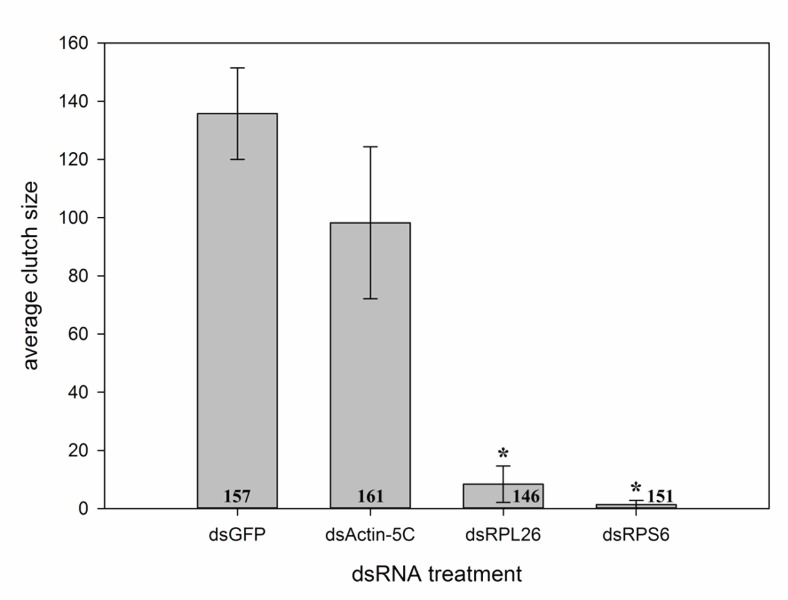
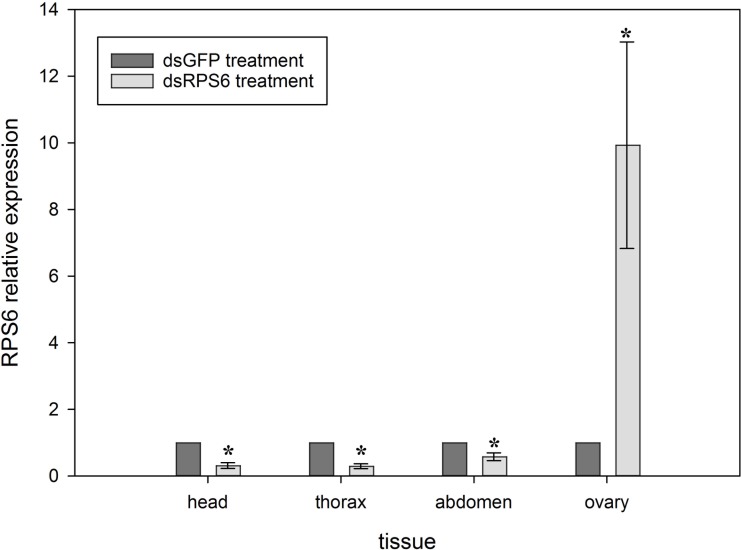
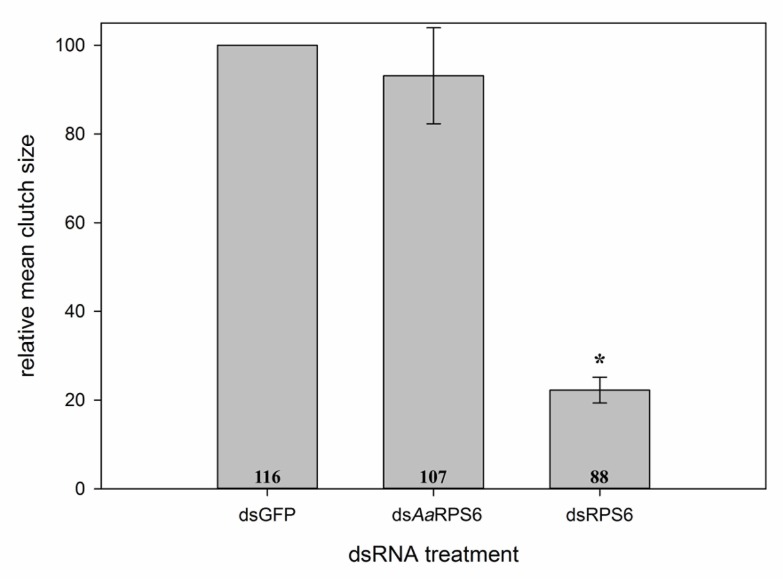
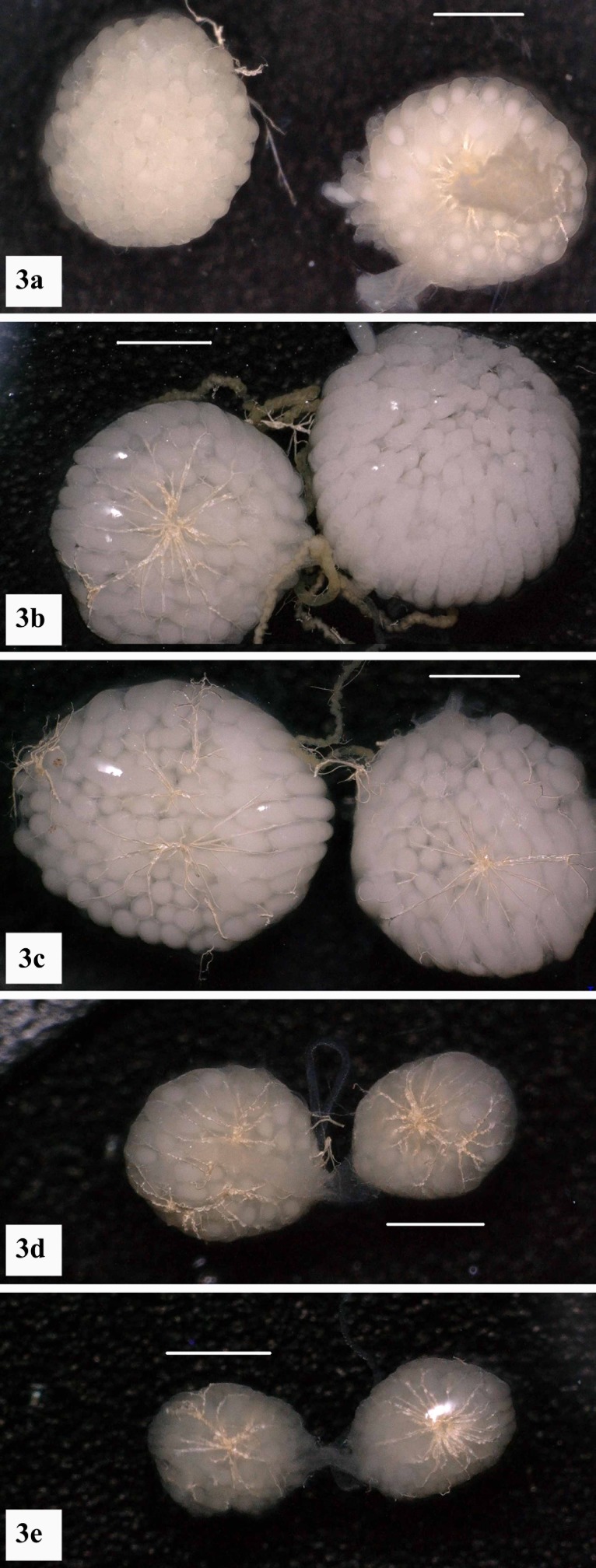
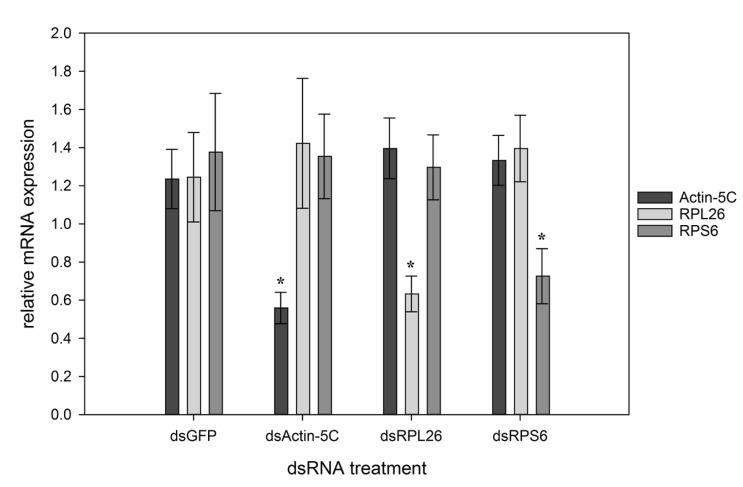
House flies (Musca domestica) are worldwide agricultural pests with estimated control costs at $375 million annually in the U.S. Non-target effects and widespread resistance challenge the efficacy of traditional chemical control. Double stranded RNA (dsRNA) has been suggested as a biopesticide for M. domestica but a phenotypic response due to the induction of the RNAi pathway has not been demonstrated in adults. In this study female house flies were injected with dsRNA targeting actin-5C or ribosomal protein (RP) transcripts RPL26 and RPS6. Ovaries showed highly reduced provisioning and clutch reductions of 94-99% in RP dsRNA treated flies but not in actin-5C or GFP treated flies. Gene expression levels were significantly and specifically reduced in dsRNA injected groups but remained unchanged in the control dsGFP treated group. Furthermore, injections with an Aedes aegypti conspecific dsRNA designed against RPS6 did not impact fecundity, demonstrating species specificity of the RNAi response. Analysis of M. domestica tissues following RPS6 dsRNA injection showed significant reduction of transcript levels in the head, thorax, and abdomen but increased expression in ovarian tissues. This study demonstrates that exogenous dsRNA is specifically effective and has potential efficacy as a highly specific biocontrol intervention in adult house flies. Further work is required to develop effective methods for delivery of dsRNA to adult flies.
家蝇(Musca domestica)是全球范围内的农业害虫,在美国,其每年的防治成本估计为3.75亿美元。非靶标效应和广泛的抗性对传统化学防治的效果构成了挑战。双链RNA(dsRNA)已被提议作为家蝇的生物杀虫剂,但RNAi途径诱导导致的表型反应在成虫中尚未得到证实。在本研究中,向雌性家蝇注射靶向肌动蛋白-5C或核糖体蛋白(RP)转录本RPL26和RPS6的dsRNA。在注射RP dsRNA的家蝇中,卵巢显示出高度减少的营养供应,产卵量减少了94%-99%,而在注射肌动蛋白-5C或绿色荧光蛋白(GFP)dsRNA的家蝇中则没有这种情况。在注射dsRNA的组中,基因表达水平显著且特异性降低,但在注射对照dsGFP的组中保持不变。此外,注射针对RPS6设计的埃及伊蚊同种dsRNA对繁殖力没有影响,这证明了RNAi反应的物种特异性。注射RPS6 dsRNA后对家蝇组织的分析表明,头部、胸部和腹部的转录本水平显著降低,但卵巢组织中的表达增加。本研究表明,外源性dsRNA具有特异性效果,作为一种高度特异性的生物防治干预措施,对成年家蝇具有潜在的防治效果。还需要进一步开展工作,以开发将dsRNA递送至成年家蝇的有效方法。