Center for Infectious Medicine, Department of Medicine, Karolinska Institutet, 141 86 Stockholm, Sweden.
Champalimaud Research, Champalimaud Centre for the Unknown, 1400-038 Lisboa, Portugal.
Immunity. 2018 Jan 16;48(1):120-132.e8. doi: 10.1016/j.immuni.2017.11.020.
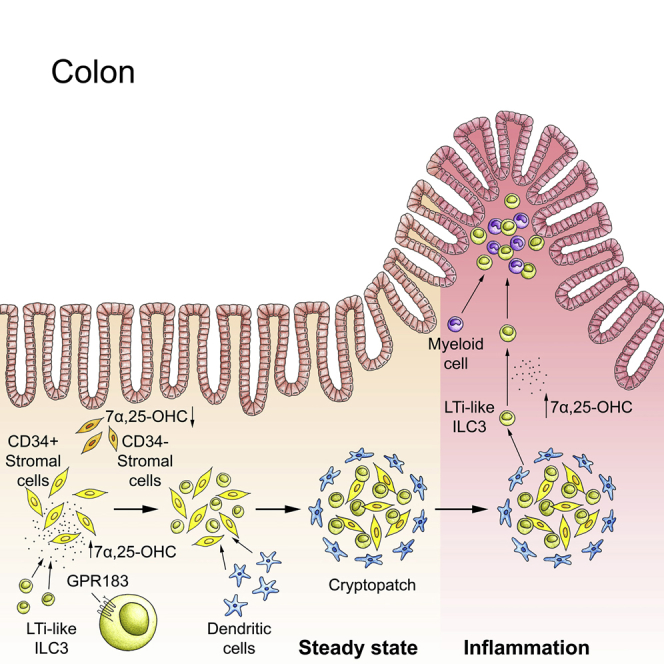
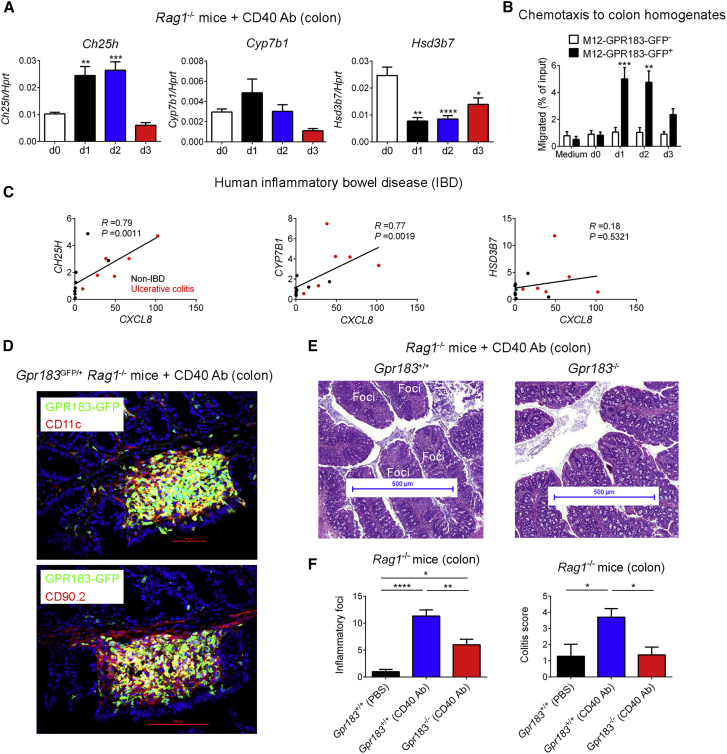
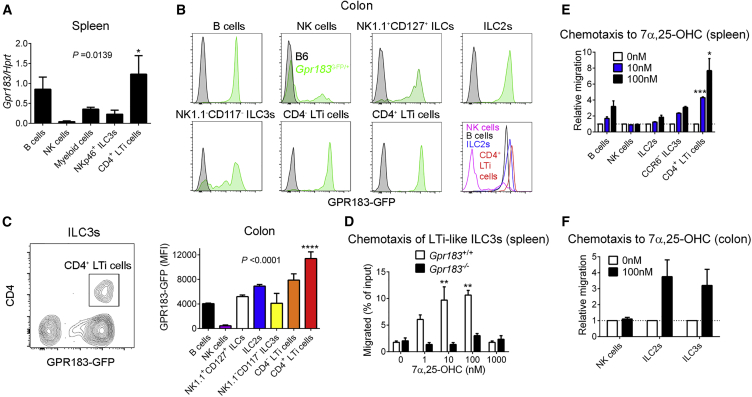
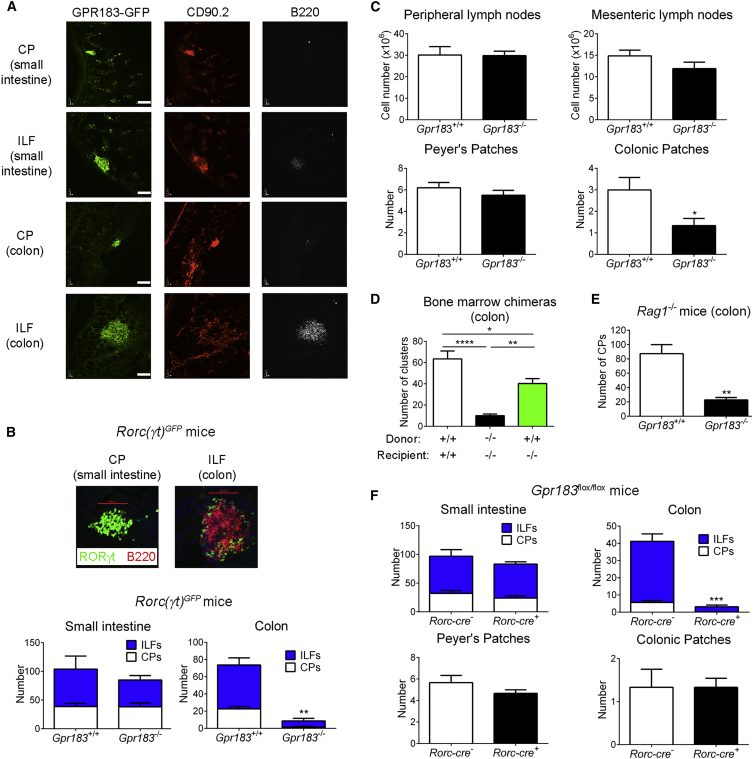
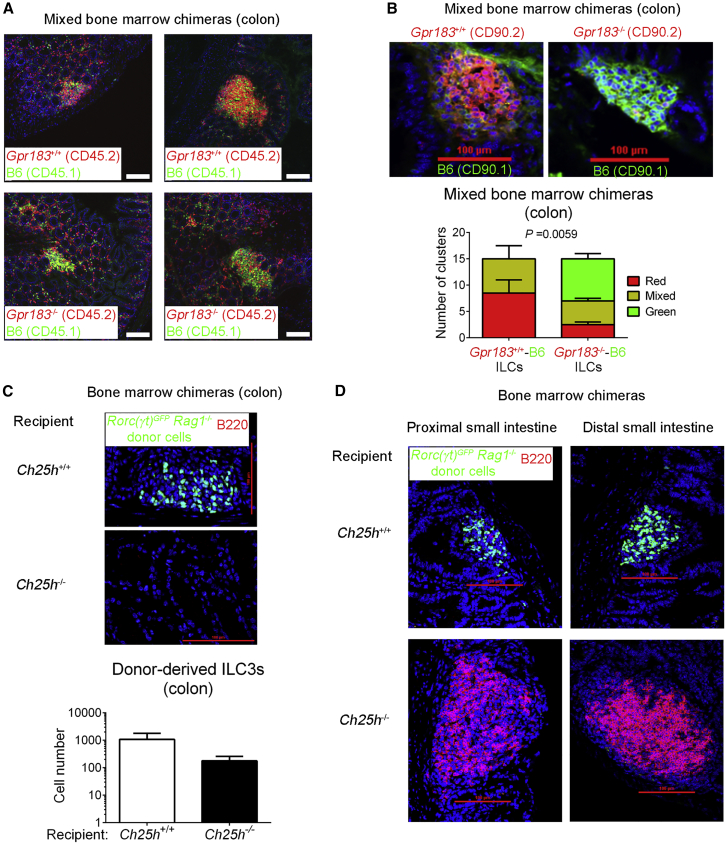
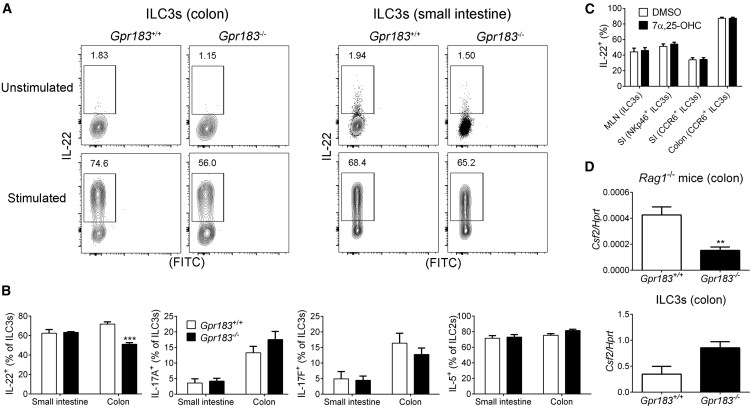
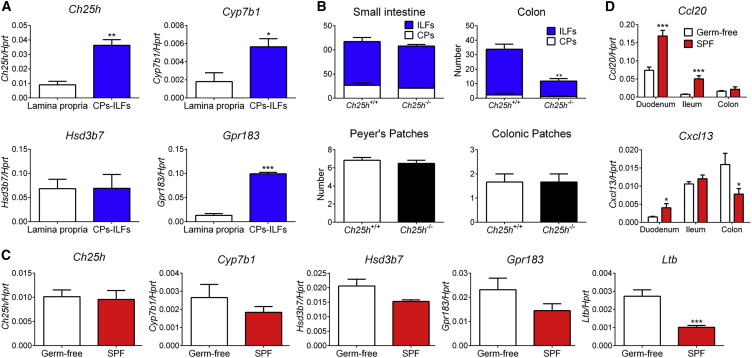
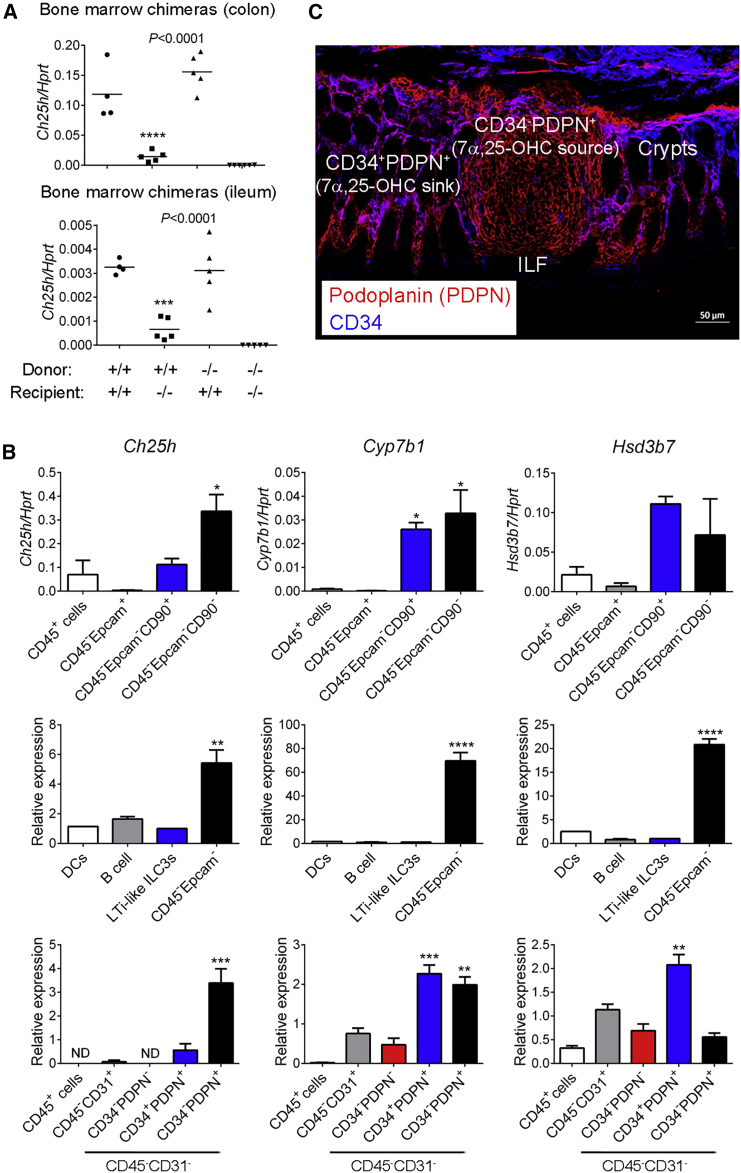
Group 3 innate lymphoid cells (ILC3s) sense environmental signals and are critical for tissue integrity in the intestine. Yet, which signals are sensed and what receptors control ILC3 function remain poorly understood. Here, we show that ILC3s with a lymphoid-tissue-inducer (LTi) phenotype expressed G-protein-coupled receptor 183 (GPR183) and migrated to its oxysterol ligand 7α,25-hydroxycholesterol (7α,25-OHC). In mice lacking Gpr183 or 7α,25-OHC, ILC3s failed to localize to cryptopatches (CPs) and isolated lymphoid follicles (ILFs). Gpr183 deficiency in ILC3s caused a defect in CP and ILF formation in the colon, but not in the small intestine. Localized oxysterol production by fibroblastic stromal cells provided an essential signal for colonic lymphoid tissue development, and inflammation-induced increased oxysterol production caused colitis through GPR183-mediated cell recruitment. Our findings show that GPR183 promotes lymphoid organ development and indicate that oxysterol-GPR183-dependent positioning within tissues controls ILC3 activity and intestinal homeostasis.
第三组固有淋巴细胞 (ILC3) 感知环境信号,对于肠道组织完整性至关重要。然而,目前对于哪些信号被感知以及哪些受体控制 ILC3 功能仍知之甚少。在这里,我们发现具有淋巴组织诱导 (LTi) 表型的 ILC3 表达 G 蛋白偶联受体 183 (GPR183),并迁移到其氧化固醇配体 7α,25-羟基胆固醇 (7α,25-OHC)。在缺乏 Gpr183 或 7α,25-OHC 的小鼠中,ILC3 无法定位到隐窝斑 (CP) 和孤立淋巴滤泡 (ILF)。ILC3 中 Gpr183 的缺失导致结肠 CP 和 ILF 形成缺陷,但小肠不受影响。成纤维细胞基质细胞局部产生的氧化固醇为结肠淋巴组织的发育提供了一个必要的信号,炎症诱导的氧化固醇产生增加通过 GPR183 介导的细胞募集导致结肠炎。我们的研究结果表明,GPR183 促进了淋巴器官的发育,并表明氧化固醇-GPR183 依赖性定位控制了 ILC3 的活性和肠道内稳态。