Li Yumei, Zhang Chunmei, Cai Danfeng, Chen Congde, Mu Dongmei
Department of Pediatric Surgery, The Second Affiliated Hospital and Yuying Children's Hospital of Wenzhou Medical University, Wenzhou, Zhejiang 325027, P.R. China.
Department of Nursing, The Second Affiliated Hospital and Yuying Children's Hospital of Wenzhou Medical University, Wenzhou, Zhejiang 325027, P.R. China.
Oncol Lett. 2017 Dec;14(6):8035-8041. doi: 10.3892/ol.2017.7246. Epub 2017 Oct 20.
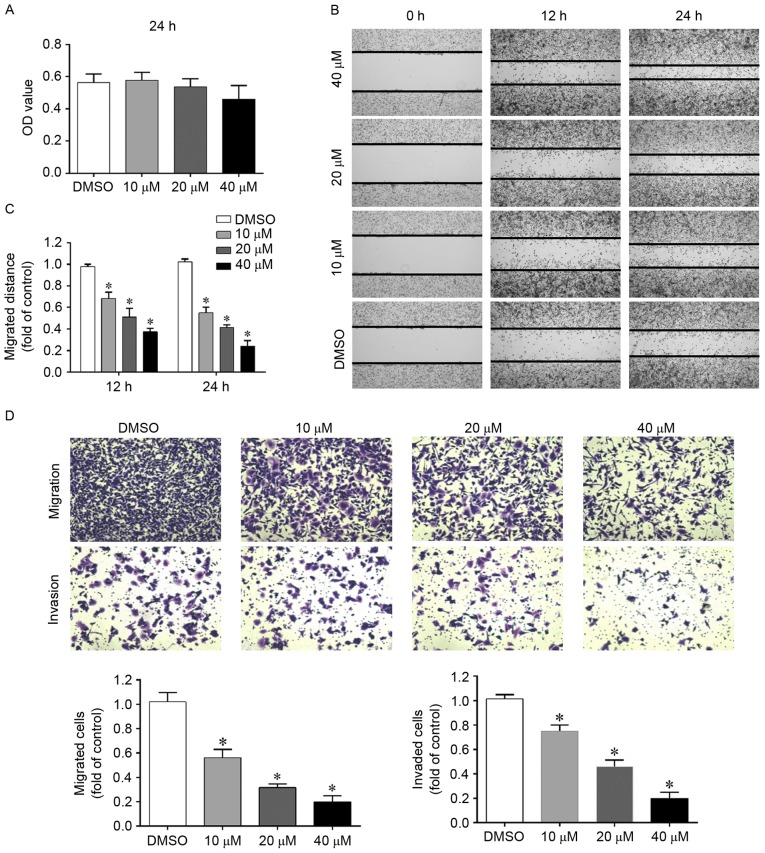
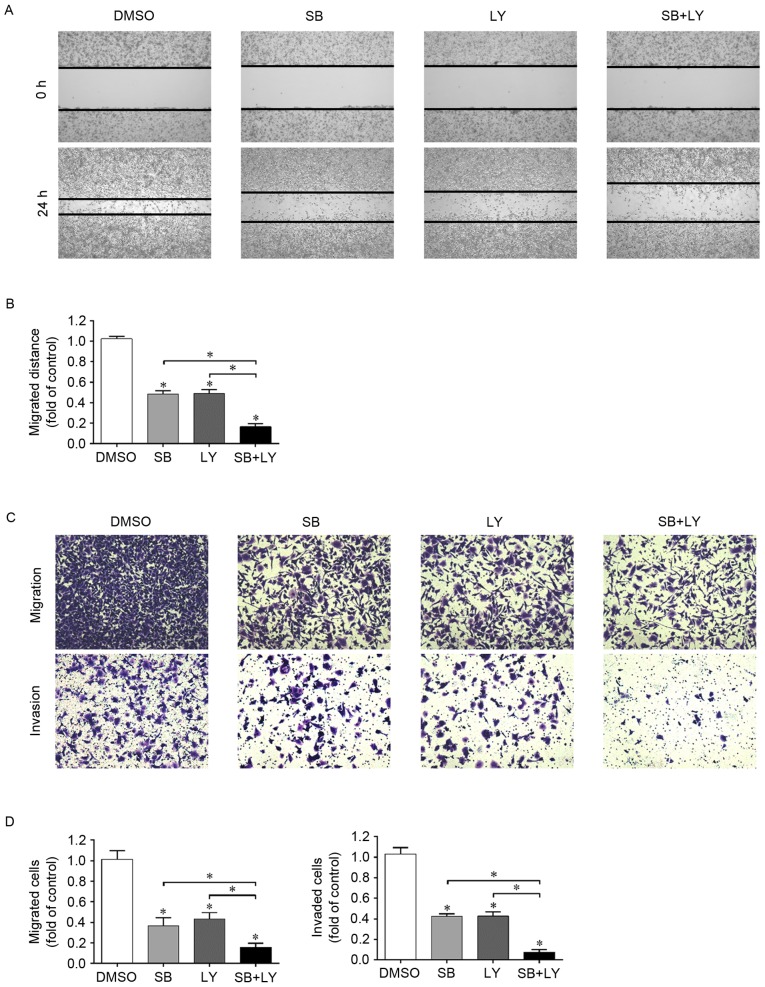
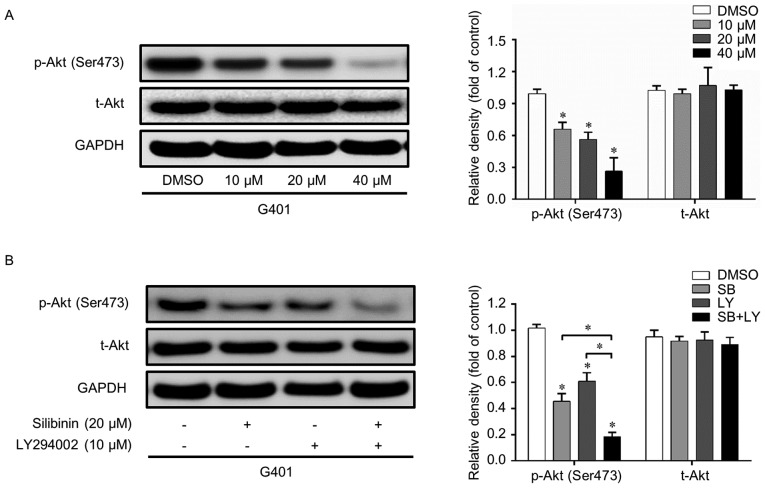
Rhabdoid tumors, which tend to occur prior to the age of 2 years, are one of the most aggressive malignancies and have a poor prognosis due to the frequency of metastasis. Silibinin, a natural extract, has been approved as a potential tumor suppressor in various studies, however, whether or not it also exerts its antitumor capacity in rhabdoid tumors, particularly with regards to tumor migration and invasion, is unclear. The rhabdoid tumor G401 cell line was used in the present study. An MTT assay was used to assess the cytotoxicity of silibinin on G401 cells, cell migration was studied using a wound healing assay and a Transwell migration assay, and cell invasion was determined using a Transwell invasion assay. The underlying mechanism in silibinin inhibited cell migration and invasion was investigated by western blot analysis and further confirmed using a specific inhibitor. Experimental results demonstrated that high doses of silibinin suppressed cell viability, and that low doses of silibinin inhibited cell migration and invasion without affecting cell proliferation. The phosphatidylinositol 3-kinase/protein kinase B (PI3K/Akt) signaling pathway was involved in the silibinin-induced inhibition of metastasis. Silibinin inactivated the PI3K/Akt pathway, and inhibited cell migration and invasion, an effect that was further enhanced when LY294002, a classic PI3K inhibitor, was used concurrently. In general, silibinin inhibits migration and invasion of the rhabdoid tumor G401 cell line via inactivation of the PI3K/Akt signaling pathway and may be a potential chemotherapeutic drug to combat rhabdoid tumors in the future.
横纹肌肉瘤多发生于2岁之前,是最具侵袭性的恶性肿瘤之一,由于转移频繁,预后较差。水飞蓟宾是一种天然提取物,在各项研究中已被认可为一种潜在的肿瘤抑制因子,然而,其是否也能在横纹肌肉瘤中发挥抗肿瘤作用,尤其是在肿瘤迁移和侵袭方面,尚不清楚。本研究使用了横纹肌肉瘤G401细胞系。采用MTT法评估水飞蓟宾对G401细胞的细胞毒性,通过伤口愈合试验和Transwell迁移试验研究细胞迁移,使用Transwell侵袭试验测定细胞侵袭。通过蛋白质印迹分析研究水飞蓟宾抑制细胞迁移和侵袭的潜在机制,并使用特异性抑制剂进一步证实。实验结果表明,高剂量的水飞蓟宾可抑制细胞活力,低剂量的水飞蓟宾可抑制细胞迁移和侵袭,而不影响细胞增殖。磷脂酰肌醇3-激酶/蛋白激酶B(PI3K/Akt)信号通路参与了水飞蓟宾诱导的转移抑制。水飞蓟宾使PI3K/Akt通路失活,抑制细胞迁移和侵袭,当同时使用经典PI3K抑制剂LY294002时,这种作用进一步增强。总体而言,水飞蓟宾通过使PI3K/Akt信号通路失活来抑制横纹肌肉瘤G401细胞系的迁移和侵袭,未来可能是一种对抗横纹肌肉瘤的潜在化疗药物。