Tajima Jesse Yu, Futamura Manabu, Gaowa Siqin, Mori Ryutaro, Tanahashi Toshiyuki, Tanaka Yoshihiro, Matsuhashi Nobuhisa, Takahashi Takao, Yamaguchi Kazuya, Miyazaki Tatsuhiko, Yoshida Kazuhiro
Department of Surgical Oncology, Graduate School of Medicine, Gifu University, Gifu, Japan.
Division of Pathology, Gifu University Hospital, Gifu, Japan.
J Cancer. 2018 Jan 1;9(2):358-366. doi: 10.7150/jca.20266. eCollection 2018.
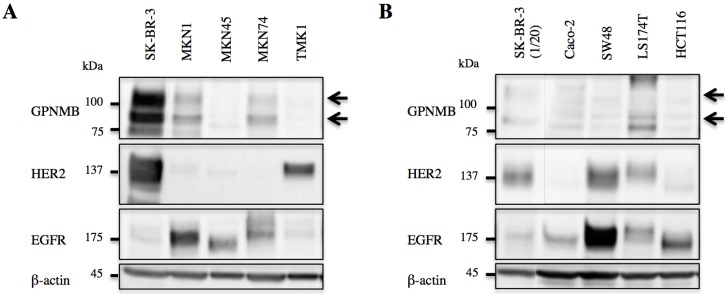
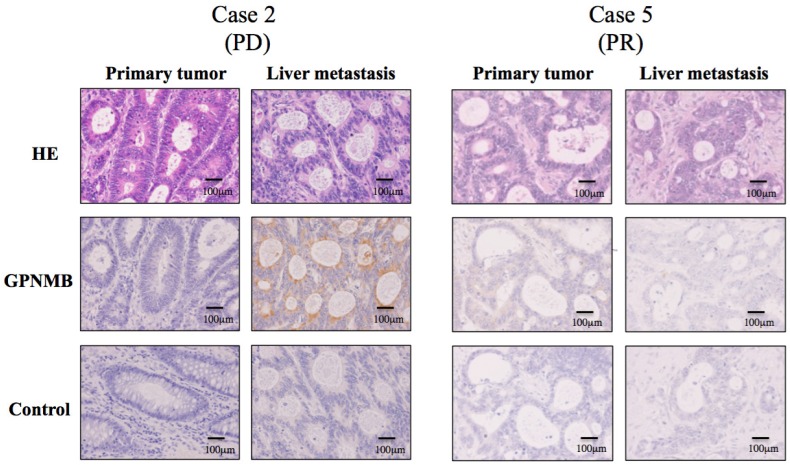
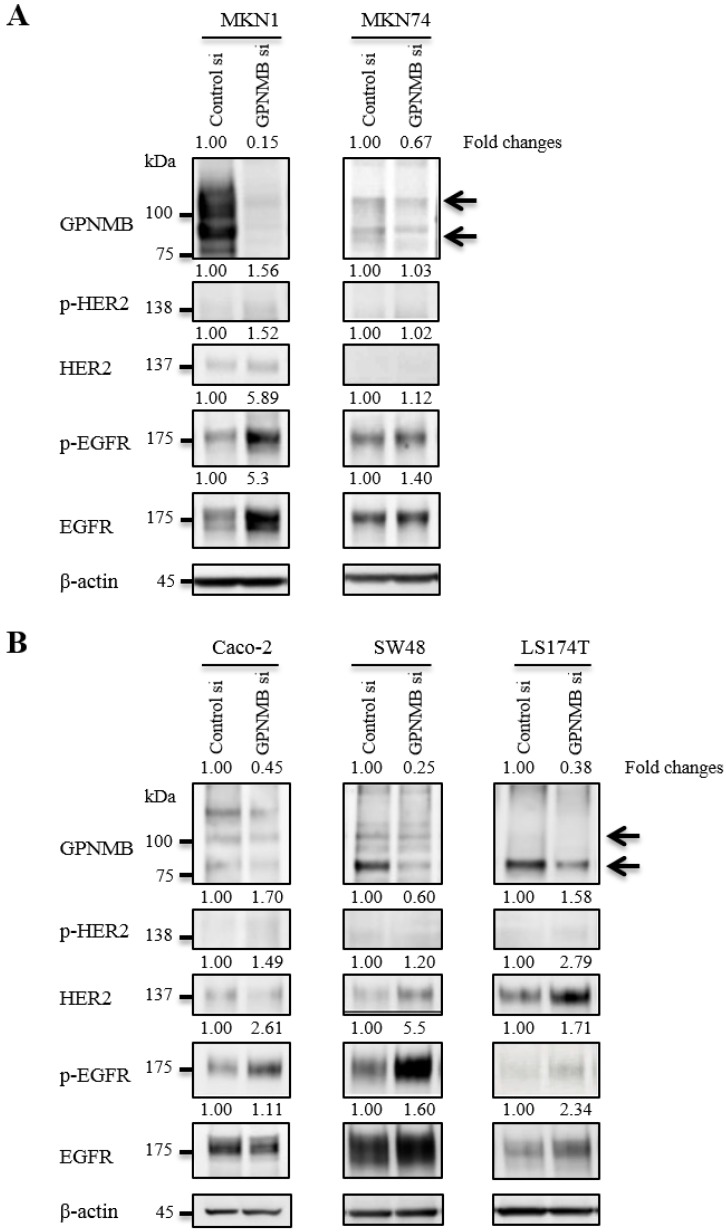
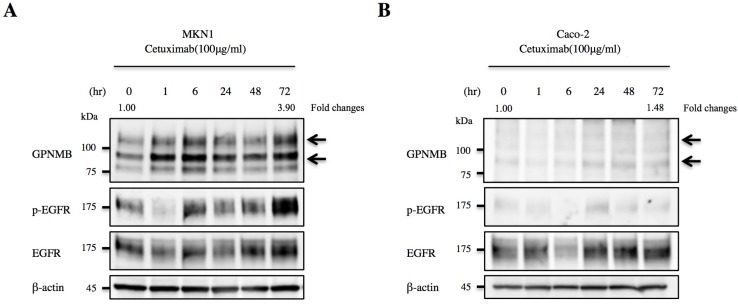
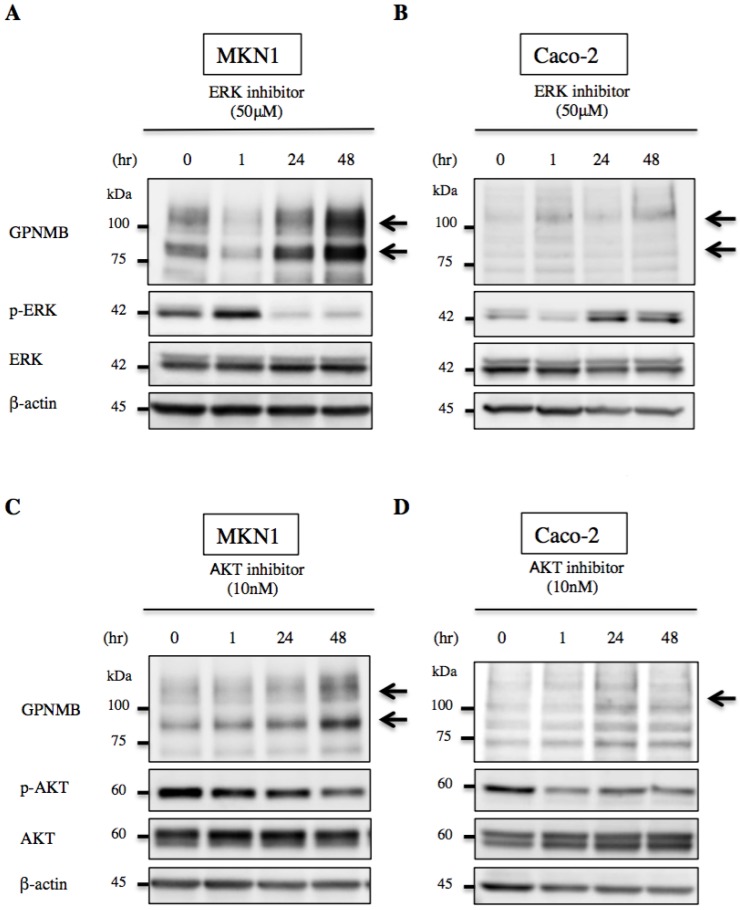
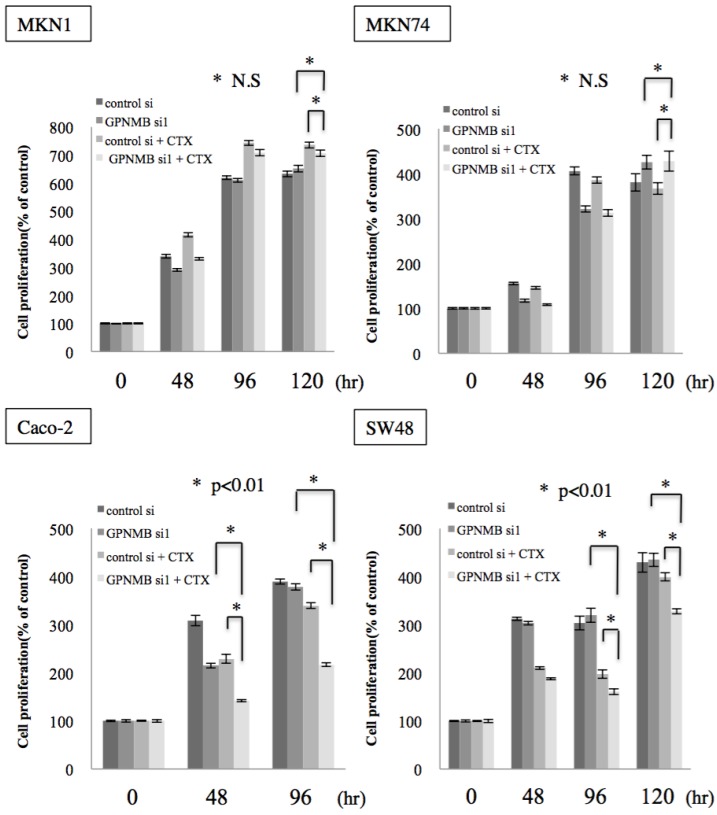
Glycoprotein non-metastatic B (GPNMB), a type I transmembrane glycoprotein, is overexpressed in melanoma and breast cancer and promotes cancer-cell invasion and motility. We previously reported cross-talk between GPNMB and human epidermal growth factor receptor 2 (HER2) in breast cancer, suggesting that GPNMB might play an important role in resistance to anti-HER2 therapy in breast cancer. Here, we clarified the association between GPNMB and HER-family proteins in gastrointestinal cancer by examining their relationships using gastric and colorectal cancer cell lines. We found that GPNMB depletion of by small-interfering RNA increased epidermal growth factor receptor (EGFR) expression and phosphorylation through AKT8 virus oncogene cellular homolog (AKT) and mitogen-activated protein kinase (MAPK) pathways. Additionally, treatment with cetuximab (CTX) also increased GPNMB expression, and combination therapy consisting of GPNMB depletion and CTX treatment significantly suppressed cell growth in colorectal cancer cell lines, but not in gastric cancer cell lines. Furthermore, we also evaluated changes in GPNMB expression , with immunohistochemistry detecting GPNMB overexpression in a colorectal cancer patient following anti-EGFR therapy. These results suggested possible cross-talk between GPNMB and EGFR, and that GPNMB might play an important role in resistance to anti-EGFR therapy in gastrointestinal cancer.
糖蛋白非转移性B(GPNMB)是一种I型跨膜糖蛋白,在黑色素瘤和乳腺癌中过表达,促进癌细胞的侵袭和迁移。我们之前报道了乳腺癌中GPNMB与人类表皮生长因子受体2(HER2)之间的相互作用,提示GPNMB可能在乳腺癌抗HER2治疗耐药中发挥重要作用。在此,我们通过使用胃癌和结肠癌细胞系研究它们之间的关系,阐明了胃肠道癌中GPNMB与HER家族蛋白之间的关联。我们发现,通过小干扰RNA敲低GPNMB可通过AKT8病毒癌基因细胞同源物(AKT)和丝裂原活化蛋白激酶(MAPK)途径增加表皮生长因子受体(EGFR)的表达和磷酸化。此外,西妥昔单抗(CTX)治疗也会增加GPNMB的表达,由敲低GPNMB和CTX治疗组成的联合疗法可显著抑制结肠癌细胞系中的细胞生长,但对胃癌细胞系无效。此外,我们还评估了GPNMB表达的变化,免疫组织化学检测到一名接受抗EGFR治疗的结肠癌患者中GPNMB过表达。这些结果提示GPNMB与EGFR之间可能存在相互作用,并且GPNMB可能在胃肠道癌抗EGFR治疗耐药中发挥重要作用。