Bond Andrew R, Iacobazzi Dominga, Abdul-Ghani Safa, Ghorbel Mohammed, Heesom Kate, Wilson Mariangela, Gillett Christopher, George Sarah J, Caputo Massimo, Suleiman Saadeh, Tulloh Robert M R
Clinical Sciences, Bristol Heart Institute, Bristol Royal Infirmary, Bristol, UK.
Proteomics Facility, University of Bristol, Bristol, UK.
Open Heart. 2018 Jan 3;5(1):e000716. doi: 10.1136/openhrt-2017-000716. eCollection 2018.
The right ventricle (RV) is not designed to sustain high pressure leading to failure. There are no current medications to help RV contraction, so further information is required on adaption of the RV to such hypertension.
The Right Ventricle in Children (RVENCH) study assessed infants with congenital heart disease undergoing cardiac surgery with hypertensive RV. Clinical and echocardiographic data were recorded, and samples of RV were taken from matched infants, analysed for proteomics and compared between pathologies and with clinical and echocardiographic outcome data.
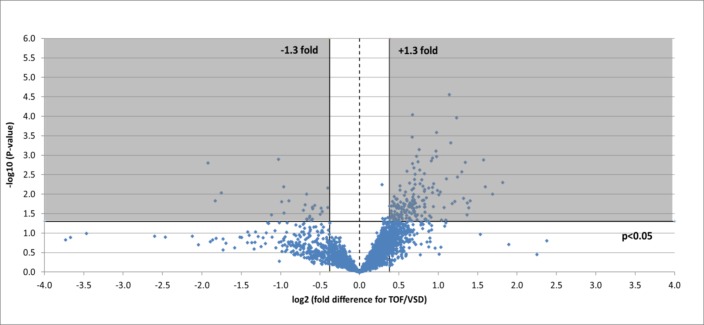
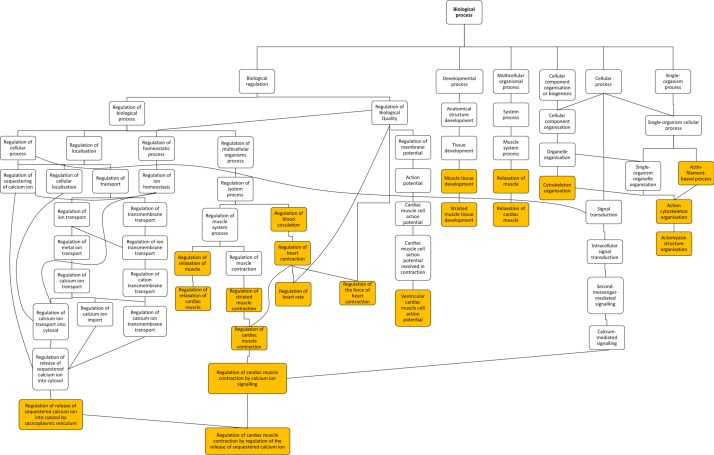
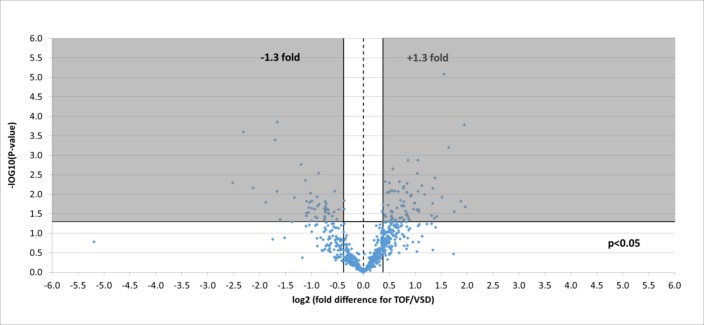
Those with tetralogy of Fallot (TOF) were significantly more cyanosed than those with ventricular septal defect (median oxygen saturation 83% vs 98%, P=0.0038), had significantly stiffer RV (tricuspid E wave/A wave ratio 1.95 vs 0.84, P=0.009) and had most had restrictive physiology. Gene ontology in TOF, with enrichment analysis, demonstrated significant increase in proteins of contractile mechanisms and those of calmodulin, actin binding and others associated with contractility than inventricular septal defect. Structural proteins were also found to be higher in association with sarcomeric function: Z-disc, M-Band and thin-filament proteins. Remaining proteins associated with actin binding, calcium signalling and myocyte cytoskeletal development. Phosphopeptide enrichment led to higher levels of calcium signalling proteins in TOF.
This is the first demonstration that those with an RV, which is stiff and hypertensive in TOF, have a range of altered proteins, often in calcium signalling pathways. Information about these alterations might guide treatment options both in terms of individualised therapy or inotropic support for the Right ventricle when hypertensive due to pulmoanry hypertension or congenital heart disease.
右心室(RV)并不适于承受导致衰竭的高压。目前尚无有助于右心室收缩的药物,因此需要进一步了解右心室对这种高血压的适应性。
儿童右心室(RVENCH)研究评估了患有先天性心脏病并接受心脏手术且右心室高血压的婴儿。记录临床和超声心动图数据,并从匹配的婴儿中采集右心室样本,进行蛋白质组学分析,并在不同病理情况下进行比较,并与临床和超声心动图结果数据进行比较。
法洛四联症(TOF)患者的发绀明显比室间隔缺损患者更严重(中位血氧饱和度83%对98%,P = 0.0038),右心室明显更僵硬(三尖瓣E波/A波比值1.95对0.84,P = 0.009),且大多数具有限制性生理学特征。对TOF进行基因本体论及富集分析,结果显示与室间隔缺损相比,收缩机制蛋白、钙调蛋白、肌动蛋白结合蛋白及其他与收缩性相关的蛋白显著增加。还发现与肌节功能相关的结构蛋白含量更高:Z盘、M带和细肌丝蛋白。其余蛋白与肌动蛋白结合、钙信号传导和心肌细胞细胞骨架发育有关。磷酸肽富集导致TOF中钙信号蛋白水平升高。
这是首次证明,在TOF中右心室僵硬且高血压的患者存在一系列蛋白质改变,这些改变通常发生在钙信号通路中。这些改变的信息可能会在因肺动脉高压或先天性心脏病导致高血压时,为右心室的个体化治疗或正性肌力支持方面的治疗选择提供指导。