Touma Zahi, Gladman Dafna D
Centre for Prognosis Studies in the Rheumatic Diseases, University of Toronto, Lupus Clinic, Toronto Western Hospital, University Health Network, Toronto, Ontario, Canada.
Lupus Sci Med. 2017 Dec 17;4(1):e000239. doi: 10.1136/lupus-2017-000239. eCollection 2017.
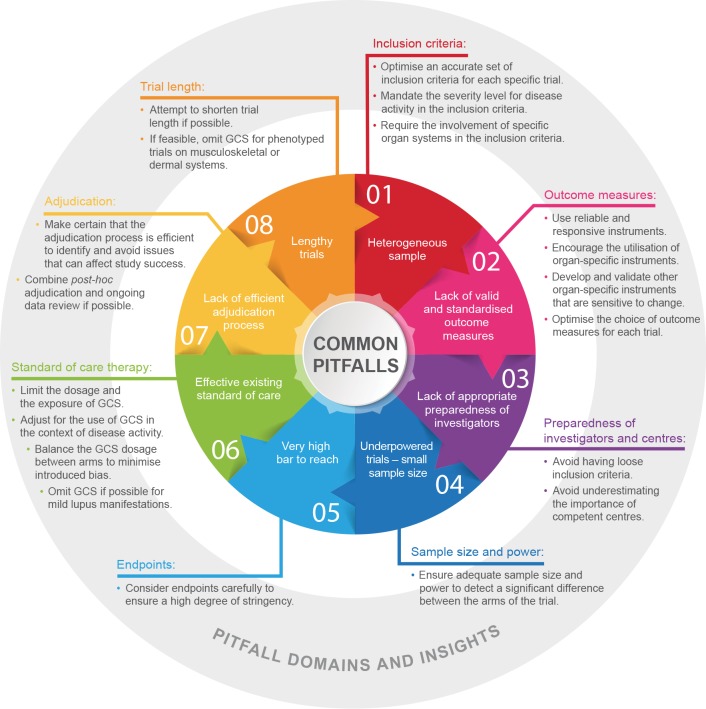
SLE is a serious, debilitating autoimmune disease that affects various organs and body systems. Of all the heterogeneous autoimmune diseases, SLE is perhaps the most heterogeneous. Patients with SLE, who are primarily female, have diverse disease manifestations and severity. SLE is characterised by substantial concentrations of autoantibodies against nuclear antigens, which are thought to be caused by immune cell dysregulation. Until recently, several immunosuppressant agents were used to treat this disease. Efforts to develop drugs against targets potentially involved in disease mechanisms have resulted in the identification and use of BAFF (B-cell activating factor)/APRIL (a proliferation-inducing ligand) inhibitors to treat SLE. Drugs in late-stage development that focus on pathways that are dysregulated in SLE include those that target the interferon pathway, T-cell signalling and B-cell signalling. New therapeutic agents are still necessary because of the unmet medical needs associated with this disease, including insufficient disease control, poor health-related quality of life, comorbidities, toxicity of the majority of therapies and diminished survival. Despite the substantial long-term investment of research, clinical activity and resources for identifying new treatments for this disease, only one new therapy, the biological belimumab, has been approved in the past 50 years. Efforts to develop drugs to address these needs are challenged by problems associated with disease heterogeneity, variable disease mechanisms and trial design. This review provides an overview of current and future treatments, discusses challenges in the SLE drug development process and offers recommendations for overcoming these challenges.
系统性红斑狼疮(SLE)是一种严重的、使人衰弱的自身免疫性疾病,会影响多个器官和身体系统。在所有异质性自身免疫性疾病中,SLE可能是最具异质性的。SLE患者以女性为主,有多种疾病表现和严重程度。SLE的特征是存在大量针对核抗原的自身抗体,这被认为是由免疫细胞失调引起的。直到最近,几种免疫抑制剂被用于治疗这种疾病。针对可能参与疾病机制的靶点开发药物的努力,已导致鉴定和使用B细胞活化因子(BAFF)/增殖诱导配体(APRIL)抑制剂来治疗SLE。处于后期开发阶段、专注于SLE中失调通路的药物包括那些靶向干扰素通路、T细胞信号传导和B细胞信号传导的药物。由于与这种疾病相关的未满足医疗需求,包括疾病控制不足、健康相关生活质量差、合并症、大多数疗法的毒性以及生存率降低,新的治疗药物仍然是必要的。尽管在识别这种疾病的新治疗方法方面投入了大量的长期研究、临床活动和资源,但在过去50年中只有一种新疗法——生物制剂贝利尤单抗获得批准。开发药物以满足这些需求的努力受到与疾病异质性、可变疾病机制和试验设计相关问题的挑战。本综述概述了当前和未来的治疗方法,讨论了SLE药物开发过程中的挑战,并提出了克服这些挑战的建议。