Chen Jianjun, OuYang Hui, An Xuemei, Liu Shixi
Department of E.N.T., West China Hospital, Sichuan University, Chengdu, China.
Department of E.N.T., the First People's Hospital of Neijiang, Neijiang, China.
PLoS One. 2018 Jan 18;13(1):e0191325. doi: 10.1371/journal.pone.0191325. eCollection 2018.
Vault is the largest nonicosahedral cytosolic nucleoprotein particle, which is widely involved in induction of chemoresistance and lead to failure in long-term chemotherapy. Vault contains three different major vault proteins (MVPs) and four vault RNAs paralogues (vtRNAs, vtRNA1-1, vtRNA1-2, vtRNA1-3 and vtRNA2-1). Disruption of the MVPs do not induce hypersensitivity while expression of vtRNAs contributes to cells' drug resistance, indicates that vtRNAs, but not MVPs play an important role in causing drug resistance. Polypyrimidine tract binding protein associated splicing factor (PSF) contributes to cell sensitivity to chemotherapy by its transcriptional activity, promotes us to figure out its potential association with vtRNAs.
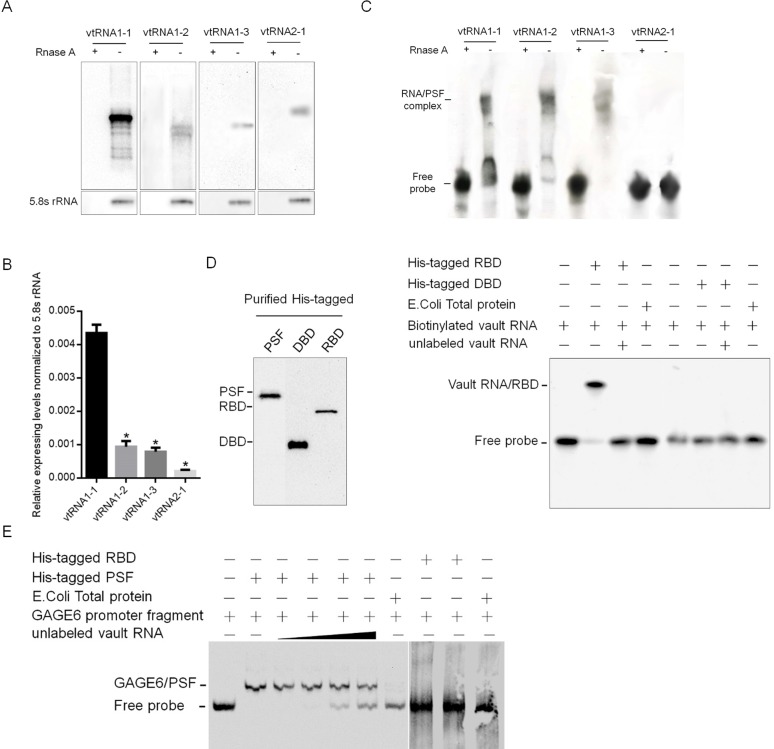
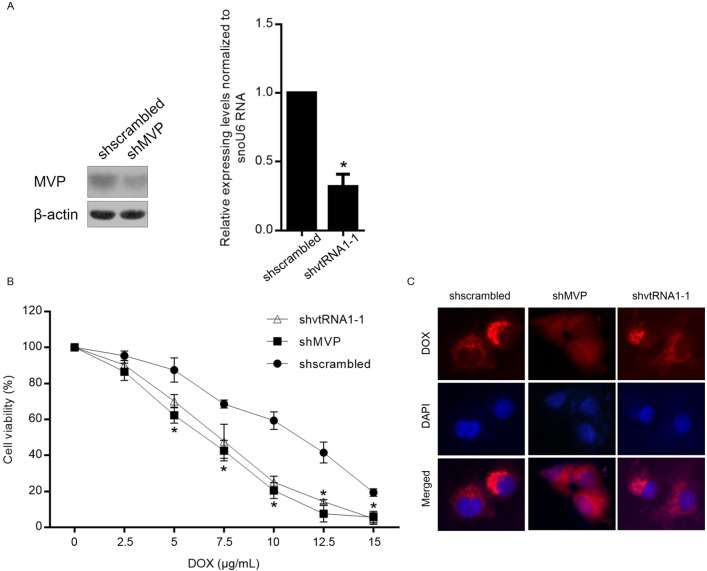
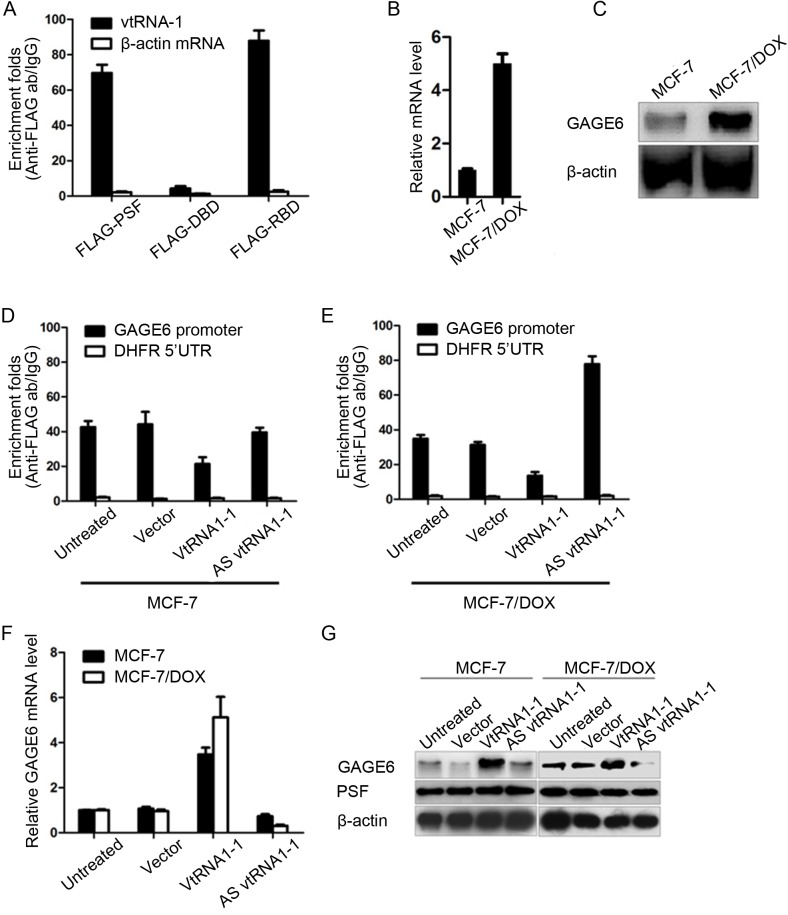
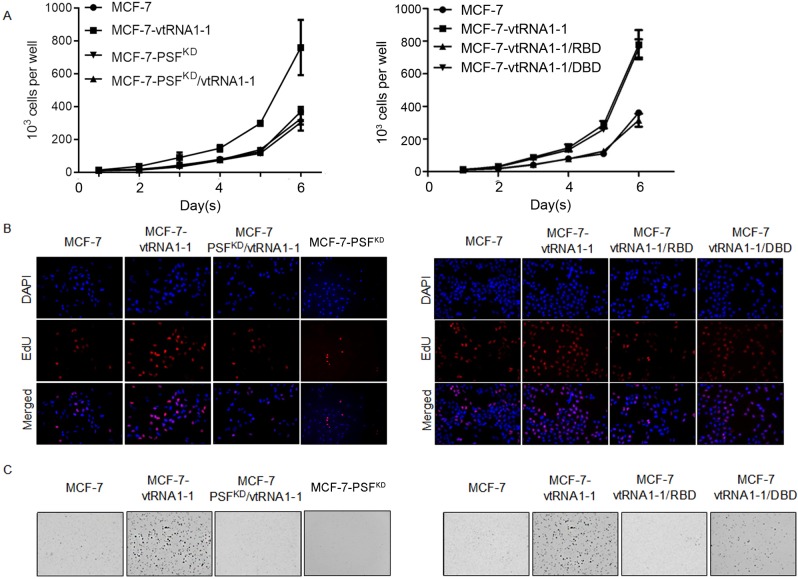
We investigate the interaction between PSF and vtRNAs by electrophoretic mobility shift assays (EMSA) and RNA-immunoprecipitation (IP), and showed the binding between PSF and vtRNAs. Chromatin Immunoprecipitation (ChIP) was performed to detect the effects of vtRNAs on the interaction of PSF with GAGE6 promoter. The role of vtRNAs on chemoresistance in MCF-7 was detected by CCK-8 and EdU staining. The independent role of vtRNAs with MVP is detected by MVP or vtRNAs knockdown.
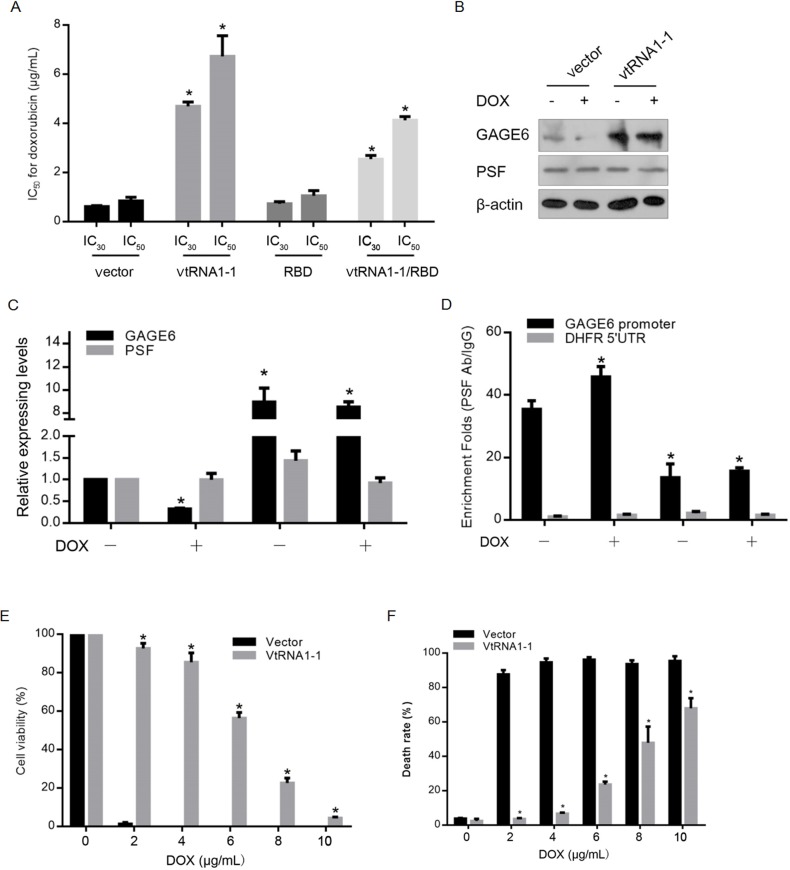
The complex with vtRNA1-1 releases PSF, allowing transcription of GAGE6 to proceed. Then we showed that induction of GAGE6 caused drug resistance by promoting cell proliferation and colony formation in soft agar. Ectopic expression of shRNA targets to vtRNA1-1 further confirmed the role of vtRNA1-1 in regulating PSF transcriptional activity independent with the expression of MVP. By vtRNA1-1 or MVP knockdown, it is revealed that vtRNA1-1 caused chemoresistance independent of MVP. Furthermore, knockdown of GAGE6 does not cause drug resistance, indicates the GAGE6 is directly involved in cell proliferation, but not the drug resistance.
These results suggest that vtRNAs regulates cell proliferation, drug resistance, and possibly other physiological processes of humans, by complex formation with PSF.
穹窿体是最大的非二十面体胞质核蛋白颗粒,广泛参与化疗耐药的诱导并导致长期化疗失败。穹窿体包含三种不同的主要穹窿蛋白(MVPs)和四种穹窿RNA旁系同源物(vtRNAs,vtRNA1-1、vtRNA1-2、vtRNA1-3和vtRNA2-1)。MVPs的破坏不会诱导超敏反应,而vtRNAs的表达有助于细胞产生耐药性,这表明在导致耐药性方面起重要作用的是vtRNAs而非MVPs。多嘧啶序列结合蛋白相关剪接因子(PSF)通过其转录活性影响细胞对化疗的敏感性,促使我们探究其与vtRNAs的潜在关联。
我们通过电泳迁移率变动分析(EMSA)和RNA免疫沉淀(IP)研究PSF与vtRNAs之间的相互作用,并证明了PSF与vtRNAs之间的结合。进行染色质免疫沉淀(ChIP)以检测vtRNAs对PSF与GAGE6启动子相互作用的影响。通过CCK-8和EdU染色检测vtRNAs在MCF-7细胞化疗耐药中的作用。通过敲低MVP或vtRNAs检测vtRNAs与MVP各自独立的作用。
与vtRNA1-1形成的复合物释放PSF,使GAGE6的转录得以进行。然后我们证明,GAGE6的诱导通过促进细胞增殖和软琼脂中的集落形成导致耐药性。靶向vtRNA1-1的shRNA的异位表达进一步证实了vtRNA1-1在独立于MVP表达的情况下调节PSF转录活性的作用。通过敲低vtRNA1-1或MVP,发现vtRNA1-1导致的耐药性独立于MVP。此外,敲低GAGE6不会导致耐药性,这表明GAGE6直接参与细胞增殖,但不参与耐药性。
这些结果表明,vtRNAs通过与PSF形成复合物来调节细胞增殖、耐药性以及可能的人类其他生理过程。