Department of Intensive Care Unit, Yijishan Hospital, Wannan Medical College, Wuhu, 241001, Anhui, China.
Sci Rep. 2018 Jan 18;8(1):1055. doi: 10.1038/s41598-018-19573-x.
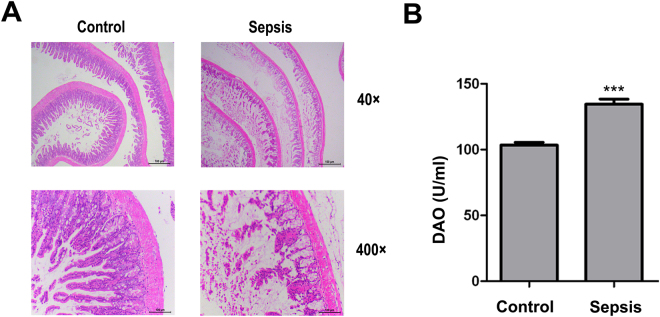
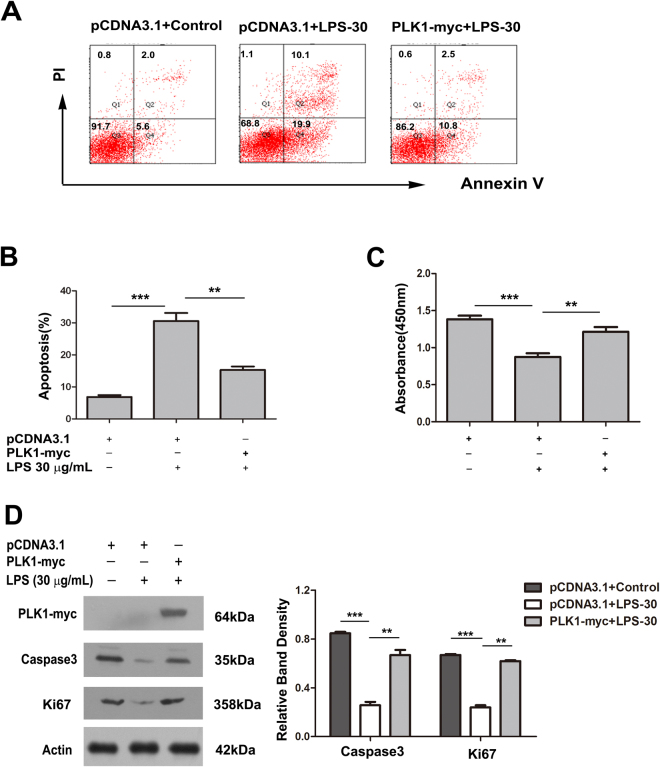
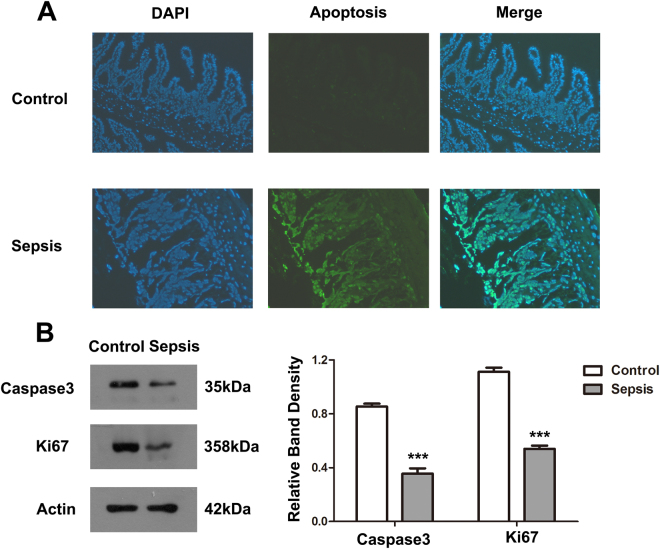
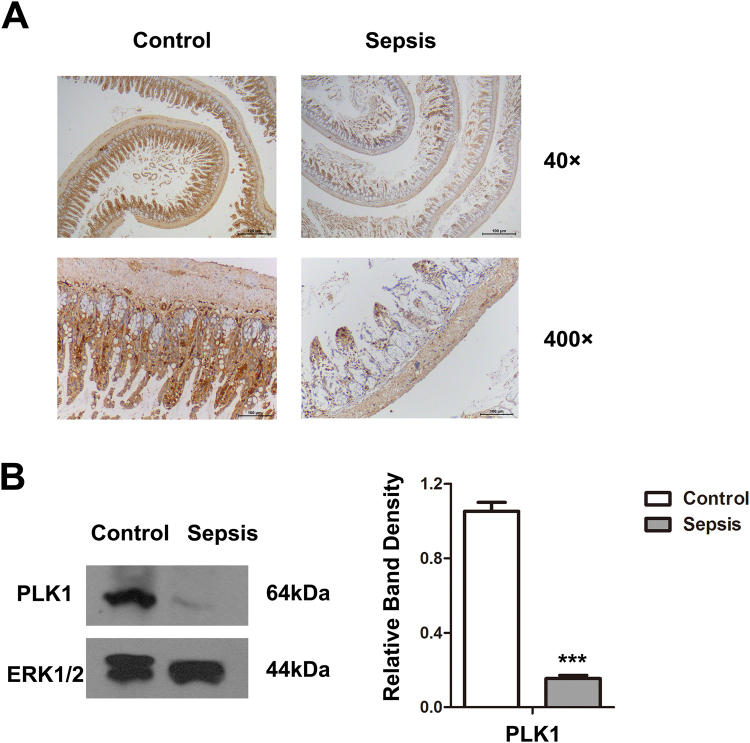
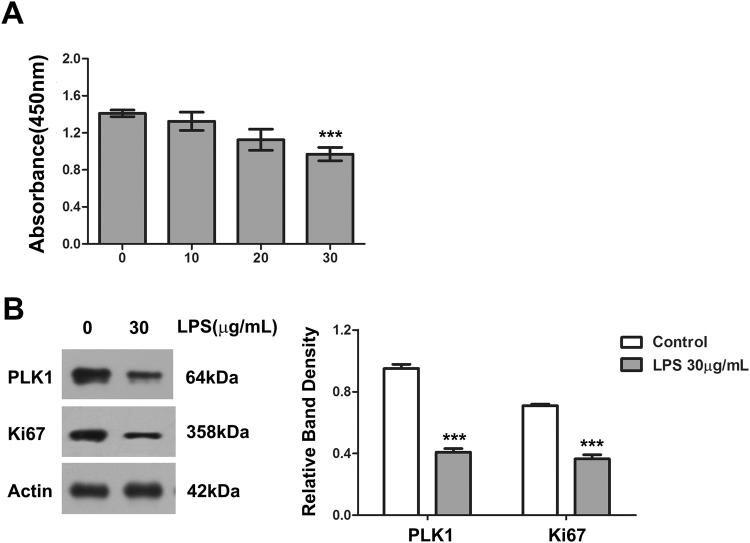
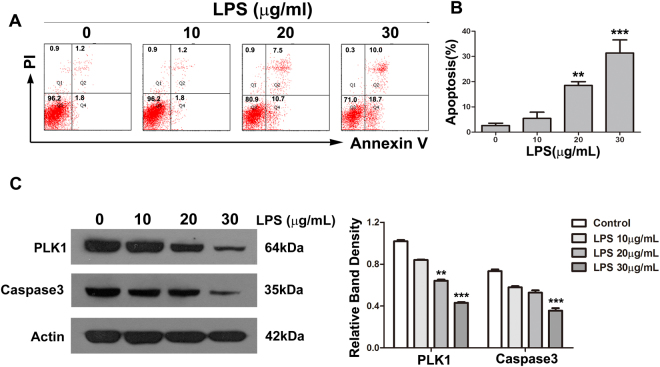
Sepsis and sepsis-associated intestinal barrier dysfunction are common in intensive care units, with high mortality. The aim of this study is to investigate whether Polo-like kinase 1 (PLK1) ameliorates sepsis-induced intestinal barrier dysfunction in the intestinal epithelium. The mouse intestinal barrier was disrupted after Lipopolysaccharide (LPS) injection due to intestinal epithelial cell apoptosis and proliferation inhibition, accompanied by decreased PLK1. In HT-29 intestinal epithelial cells, LPS stimulation induced cell apoptosis and inhibited cell proliferation. Overexpression of PLK1 partly rescued the apoptosis and proliferation inhibition in HT29 cells caused by LPS. Finally, LPS stimulation promoted the reduction of PLK1, resulting in apoptosis and proliferation inhibition in intestinal epithelial cells, disrupting the intestinal epithelial barrier. These findings indicate that PLK1 might be a potential therapeutic target for the treatment of sepsis-induced intestinal barrier dysfunction.
脓毒症和脓毒症相关的肠道屏障功能障碍在重症监护病房很常见,死亡率很高。本研究旨在探讨 Polo 样激酶 1 (PLK1) 是否能改善肠道上皮细胞中的脓毒症引起的肠道屏障功能障碍。脂多糖 (LPS) 注射后,小鼠肠道屏障因肠上皮细胞凋亡和增殖抑制而被破坏,同时 PLK1 减少。在 HT-29 肠上皮细胞中,LPS 刺激诱导细胞凋亡并抑制细胞增殖。PLK1 的过表达部分挽救了 LPS 引起的 HT29 细胞的凋亡和增殖抑制。最后,LPS 刺激促进 PLK1 的减少,导致肠上皮细胞凋亡和增殖抑制,破坏肠道上皮屏障。这些发现表明,PLK1 可能是治疗脓毒症引起的肠道屏障功能障碍的潜在治疗靶点。