Emerg Infect Dis. 2018 Feb;24(2):210-220. doi: 10.3201/eid2402.160122.
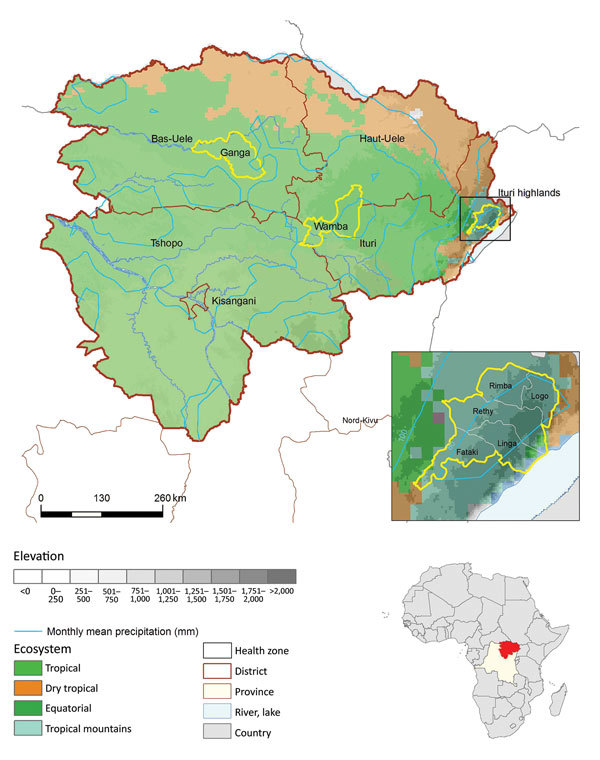
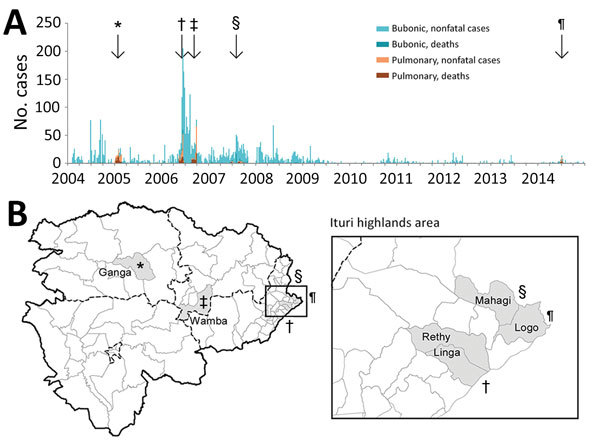
During 2004-2014, the Democratic Republic of the Congo (DRC) declared 54% of plague cases worldwide. Using national data, we characterized the epidemiology of human plague in DRC for this period. All 4,630 suspected human plague cases and 349 deaths recorded in DRC came from Orientale Province. Pneumonic plague cases (8.8% of total) occurred during 2 major outbreaks in mining camps in the equatorial forest, and some limited outbreaks occurred in the Ituri highlands. Epidemics originated in 5 health zones clustered in Ituri, where sporadic bubonic cases were recorded throughout every year. Classification and regression tree characterized this cluster by the dominance of ecosystem 40 (mountain tropical climate). In conclusion, a small, stable, endemic focus of plague in the highlands of the Ituri tropical region persisted, acting as a source of outbreaks in DRC.
2004 年至 2014 年期间,刚果民主共和国(DRC)宣布全球 54%的鼠疫病例。我们利用国家数据,对该地区在此期间人类鼠疫的流行病学特征进行了描述。在刚果民主共和国记录的所有 4630 例疑似人间鼠疫病例和 349 例死亡病例均来自东方省。肺鼠疫病例(占总数的 8.8%)发生在赤道森林矿区的 2 次大暴发期间,伊图里高地也发生了一些有限的暴发。疫情起源于聚集在伊图里的 5 个卫生区,每年都有散发性腺鼠疫病例记录。分类和回归树将这一集群的特征描述为生态系统 40(山地热带气候)占主导地位。总之,伊图里热带地区高地的小规模、稳定的地方性鼠疫流行持续存在,成为刚果民主共和国暴发疫情的源头。