Theoretical Biology and Biophysics, Los Alamos National Laboratory, Los Alamos, United States.
New Mexico Consortium, Los Alamos, United States.
Elife. 2018 Jan 19;7:e31805. doi: 10.7554/eLife.31805.
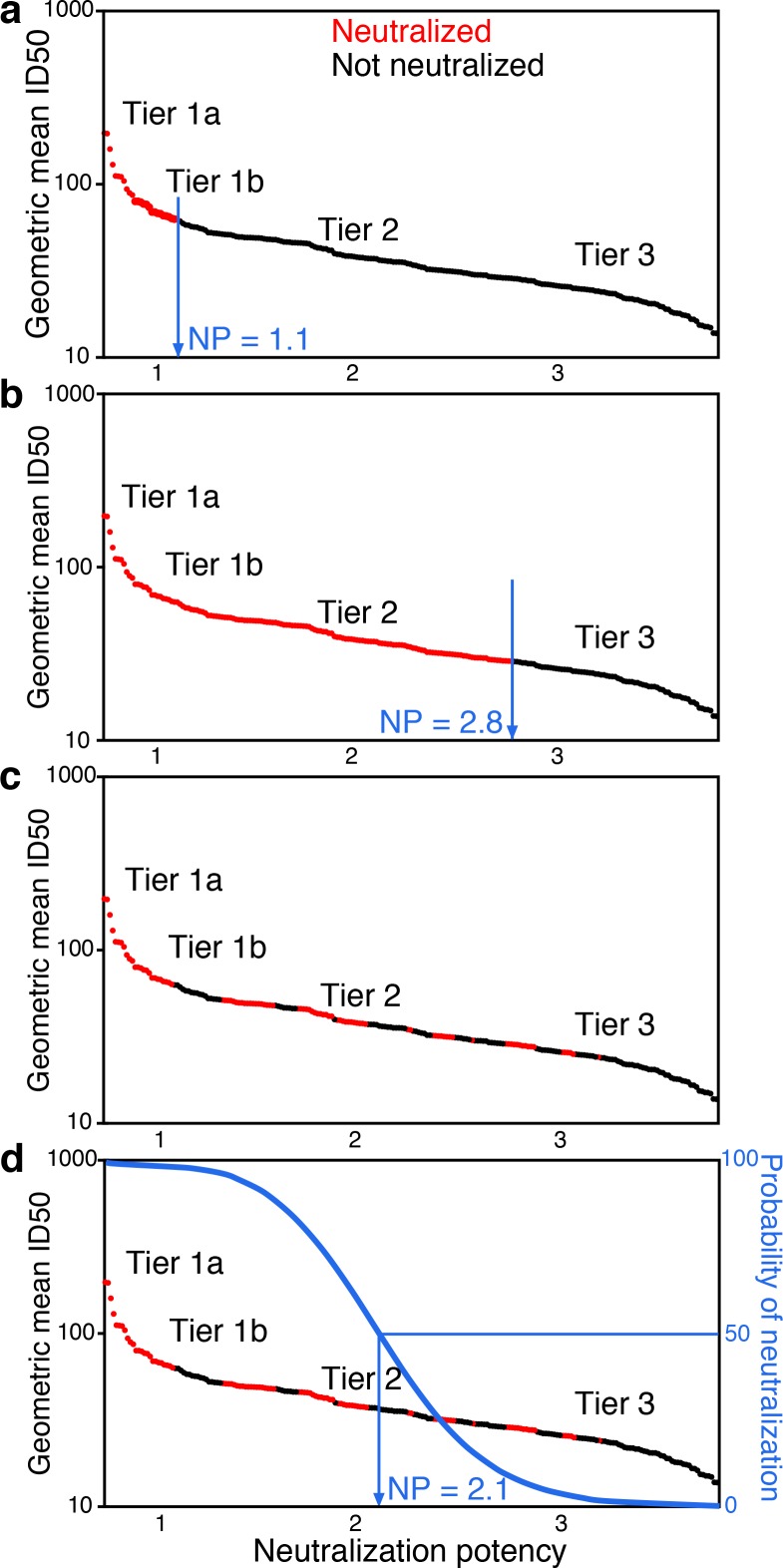
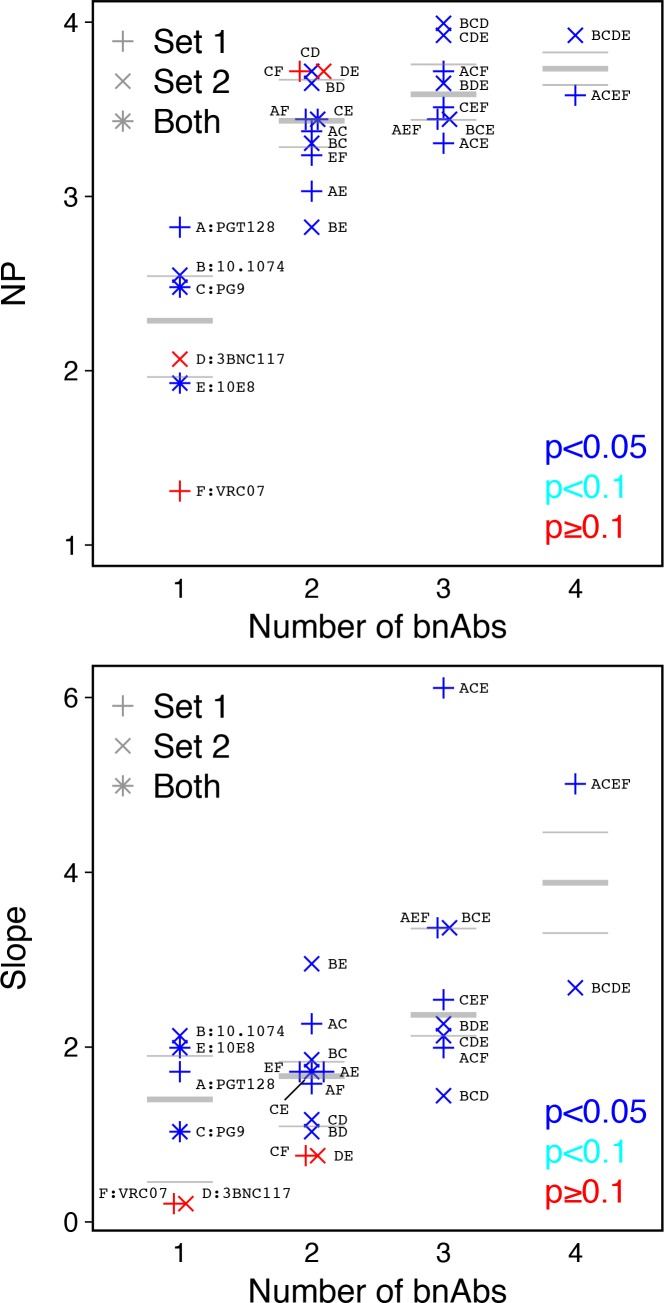
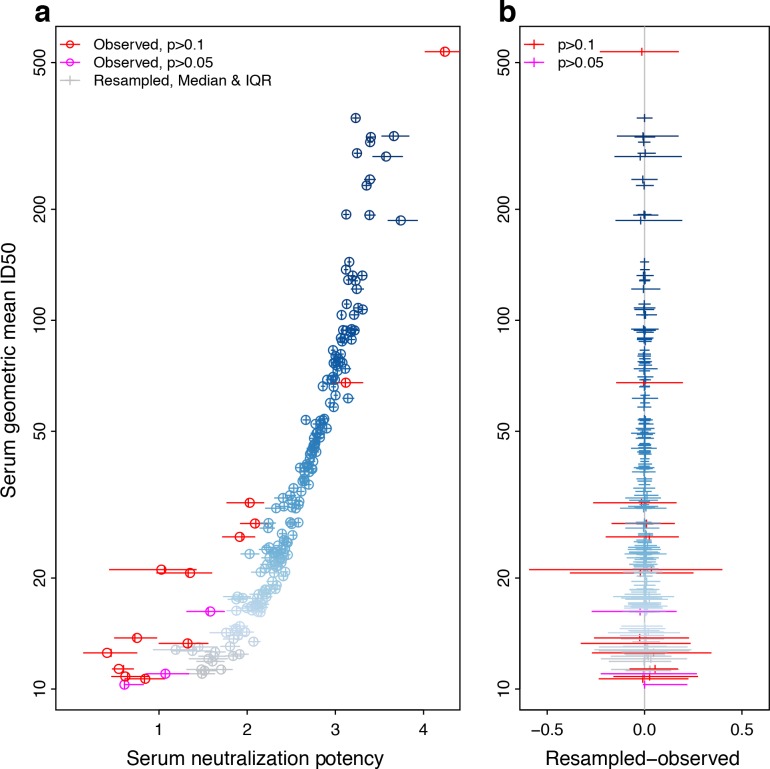
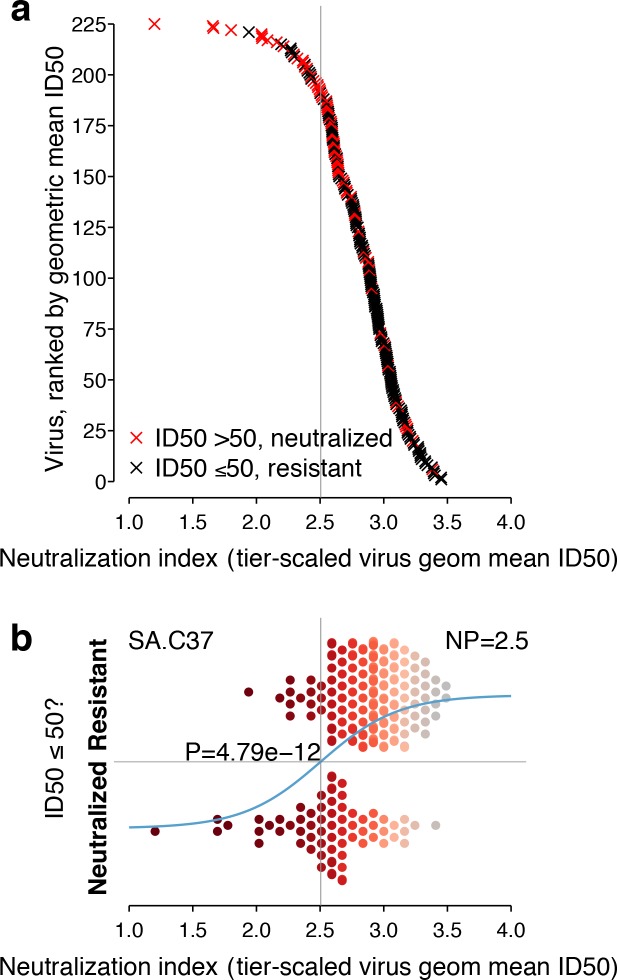
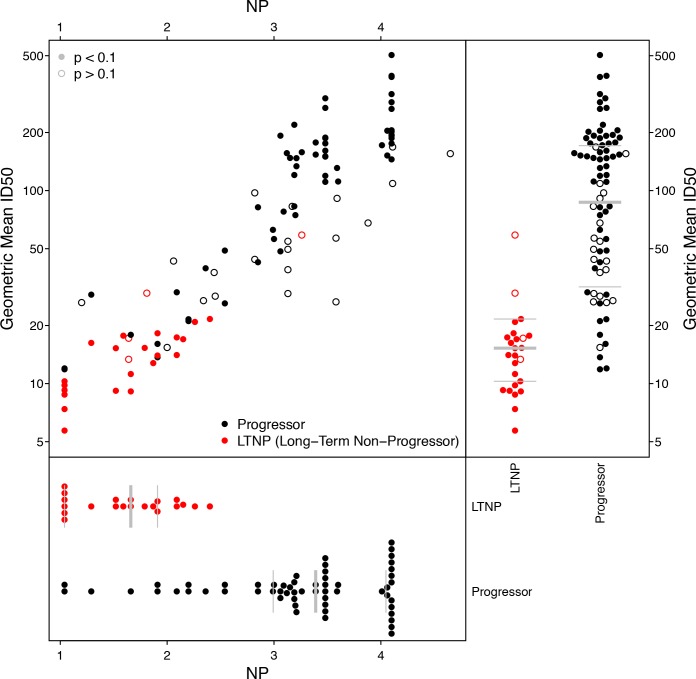
HIV-1 Envelope (Env) variants are grouped into tiers by their neutralization-sensitivity phenotype. This helped to recognize that tier 1 neutralization responses can be elicited readily, but do not protect against new infections. Tier 3 viruses are the least sensitive to neutralization. Because most circulating viruses are tier 2, vaccines that elicit neutralization responses against them are needed. While tier classification is widely used for viruses, a way to rate serum or antibody neutralization responses in comparable terms is needed. Logistic regression of neutralization outcomes summarizes serum or antibody potency on a continuous, tier-like scale. It also tests significance of the neutralization score, to indicate cases where serum response does not depend on virus tiers. The method can standardize results from different virus panels, and could lead to high-throughput assays, which evaluate a single serum dilution, rather than a dilution series, for more efficient use of limited resources to screen samples from vaccinees.
HIV-1 包膜 (Env) 变体根据其中和敏感性表型分为不同的等级。这有助于认识到,第 1 级中和反应很容易被引发,但不能预防新的感染。第 3 级病毒对中和作用最不敏感。由于大多数循环病毒属于第 2 级,因此需要能够引发针对它们的中和反应的疫苗。虽然分层分类被广泛用于病毒,但需要一种能够以可比的方式评估血清或抗体中和反应的方法。中和结果的逻辑回归将血清或抗体效力概括为连续的、类似于分层的尺度。它还测试中和评分的显著性,以指示血清反应不依赖于病毒分层的情况。该方法可以标准化来自不同病毒面板的结果,并可能导致高通量测定,评估单个血清稀释度,而不是稀释系列,以更有效地利用有限的资源来筛选疫苗接种者的样本。