Jockey Club School of Public Health and Primary Care, Chinese University of Hong Kong, Hong Kong SAR, China.
Department of Civil and Environmental Engineering, Hong Kong University of Science and Technology, Hong Kong SAR, China
Environ Health Perspect. 2018 Jan 18;126(1):017008. doi: 10.1289/EHP2466.
Long-term exposure to particulate matter (PM) air pollution may increase blood pressure and the risk of hypertension. However, epidemiological evidence is scarce and inconsistent.
We investigated the associations between long-term exposure to PM with an aerodynamic diameter <2.5μm (PM), blood pressure, and incident hypertension in a large Taiwanese cohort.
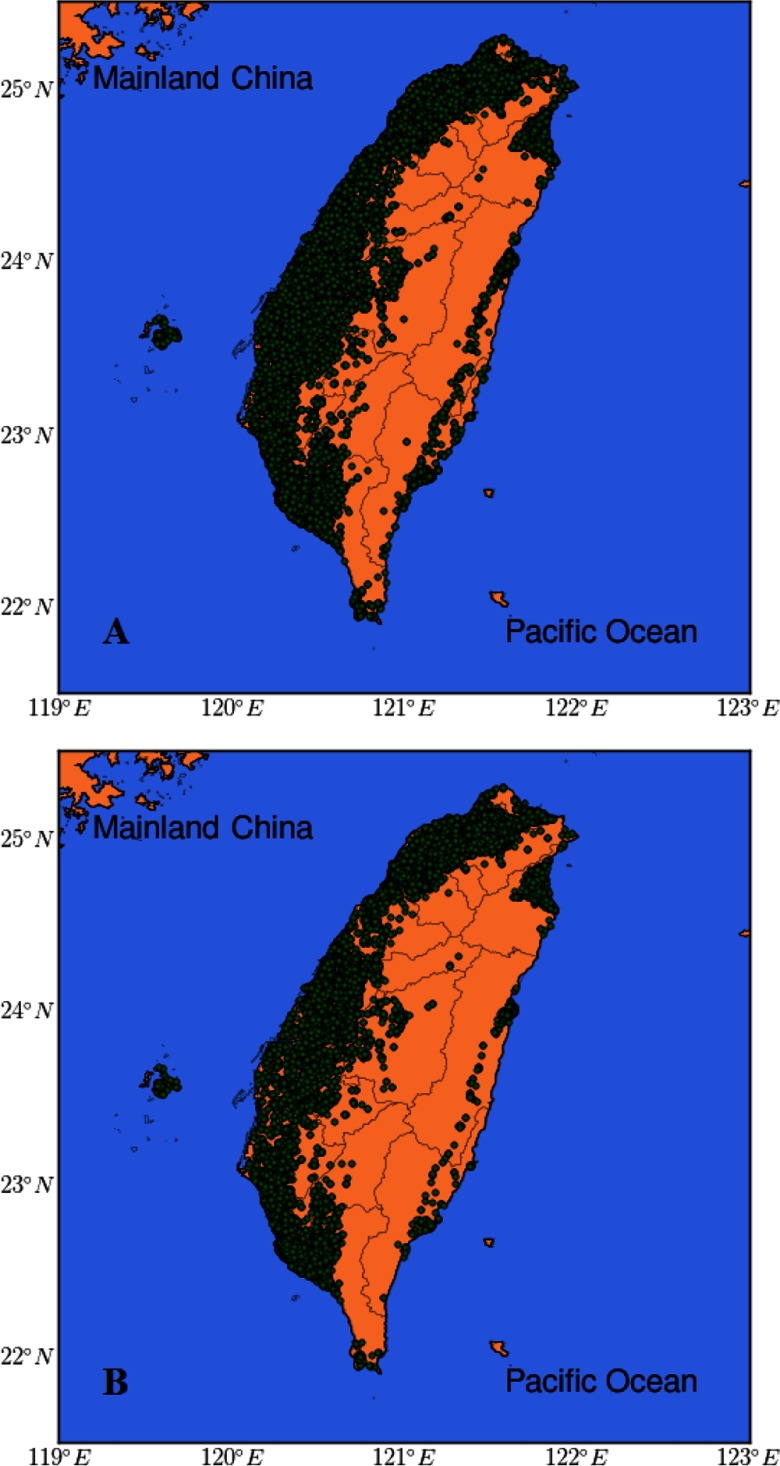
We studied 361,560 adults ≥18y old from a large cohort who participated in a standard medical examination program during 2001 to 2014. Among this group, 125,913 nonhypertensive participants were followed up. A satellite-based spatiotemporal model was used to estimate the 2-y average PM concentrations at each participant's address. Multivariable linear regression was used in the cross-sectional data analysis with the 361,560 participants to investigate the associations between PM and systolic blood pressure (SBP), diastolic blood pressure (DBP), and pulse pressure (PP), and Cox proportional hazard regression was used in the cohort data analysis with the 125,913 participants to investigate the associations between PM and incident hypertension.
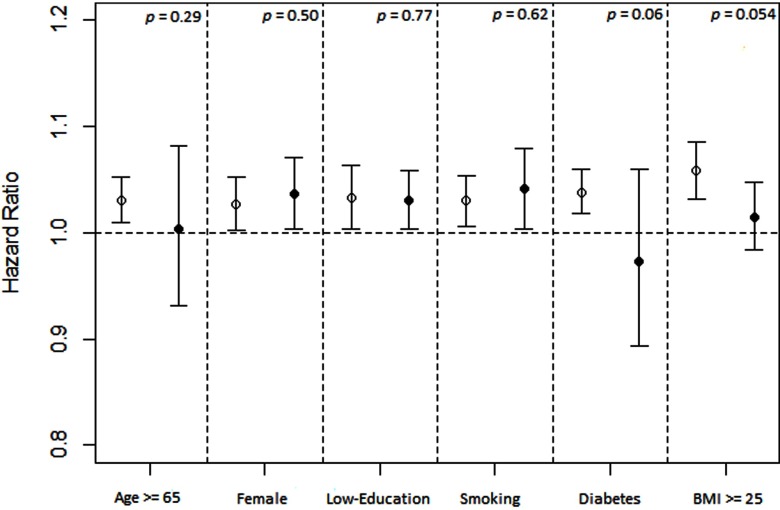
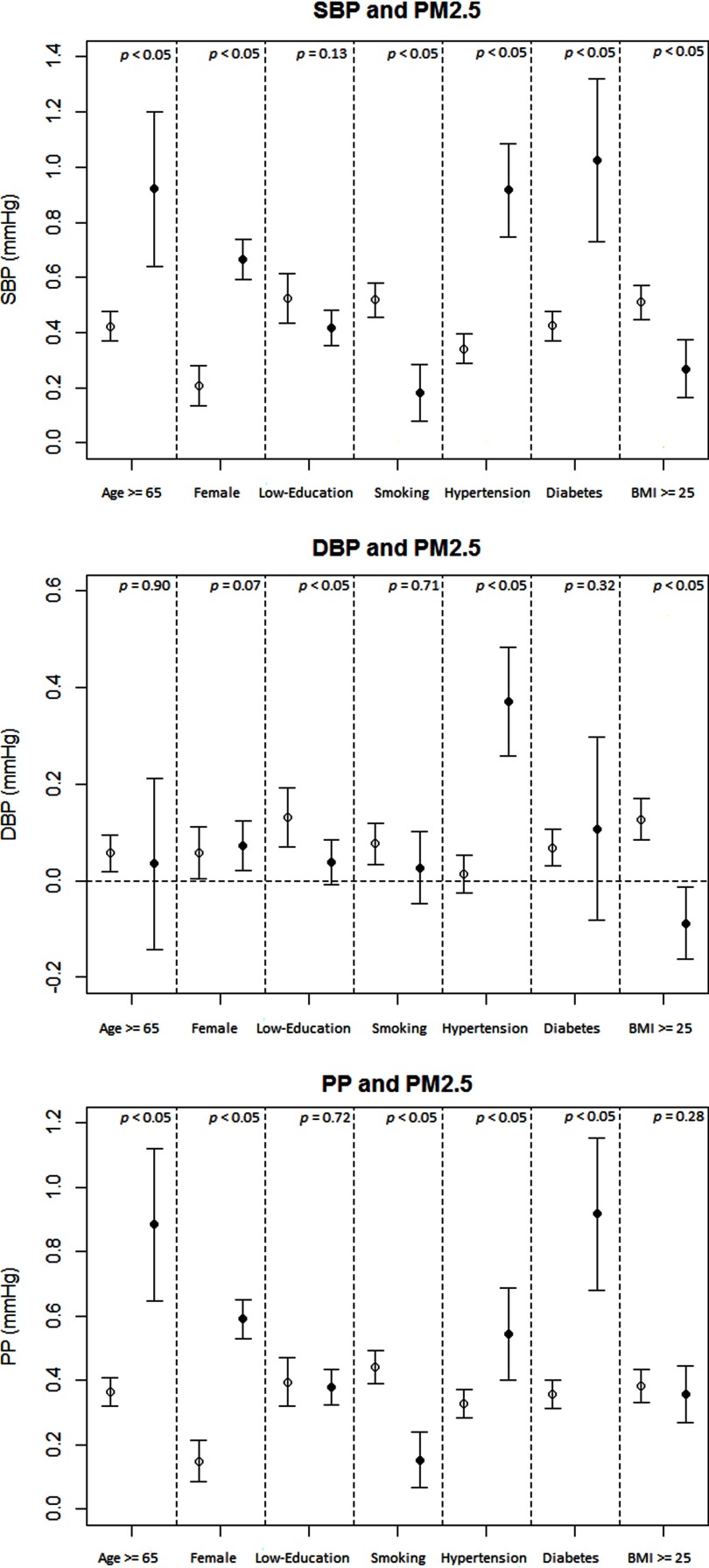
Each 10-μg/m increment in the 2-y average PM concentration was associated with increases of 0.45 mmHg [95% confidence interval (CI): 0.40, 0.50], 0.07 mmHg (95% CI: 0.04, 0.11), and 0.38 mmHg (95% CI: 0.33, 0.42) in SBP, DBP, and PP, respectively, after adjusting for a wide range of covariates and possible confounders. Each 10-μg/m increment in the 2-y average PM concentration was associated with an increase of 3% in the risk of developing hypertension [hazard ratio=1.03 (95% CI: 1.01, 1.05)]. Stratified and sensitivity analyses yielded similar results.
Long-term exposure to PM air pollution is associated with higher blood pressure and an increased risk of hypertension. These findings reinforce the importance of air pollution mitigation strategies to reduce the risk of cardiovascular disease. https://doi.org/10.1289/EHP2466.
长期暴露于颗粒物(PM)空气污染可能会导致血压升高和高血压风险增加。然而,流行病学证据有限且不一致。
我们在一个大型的台湾队列中研究了长期暴露于 PM2.5 与血压和高血压事件之间的关系。
我们研究了参加 2001 年至 2014 年标准体检计划的 361560 名成年人,年龄均≥18 岁。其中,有 125913 名非高血压参与者进行了随访。使用基于卫星的时空模型来估计每个参与者住址的 2 年平均 PM 浓度。使用多变量线性回归对 361560 名参与者的横断面数据进行分析,以研究 PM 与收缩压(SBP)、舒张压(DBP)和脉压(PP)之间的关系,使用 Cox 比例风险回归对 125913 名参与者的队列数据进行分析,以研究 PM 与高血压事件之间的关系。
在调整了广泛的协变量和可能的混杂因素后,每增加 10μg/m 的 2 年平均 PM 浓度与 SBP、DBP 和 PP 分别增加 0.45mmHg(95%CI:0.40,0.50)、0.07mmHg(95%CI:0.04,0.11)和 0.38mmHg(95%CI:0.33,0.42)相关。每增加 10μg/m 的 2 年平均 PM 浓度与高血压风险增加 3%相关[风险比=1.03(95%CI:1.01,1.05)]。分层和敏感性分析得出了相似的结果。
长期暴露于 PM 空气污染与血压升高和高血压风险增加有关。这些发现强调了采取空气污染缓解策略来降低心血管疾病风险的重要性。