Center for Innovations in Quality, Effectiveness, and Safety (IQuESt) (152), Michael E. DeBakey Veterans Affairs Medical Center, 2002 Holcombe Boulevard, Houston, TX, 77030, USA.
Baylor College of Medicine in Houston, Houston, TX, USA.
Implement Sci. 2018 Jan 19;13(1):16. doi: 10.1186/s13012-018-0709-x.
Antimicrobial stewardship to combat the spread of antibiotic-resistant bacteria has become a national priority. This project focuses on reducing inappropriate use of antimicrobials for asymptomatic bacteriuria (ASB), a very common condition that leads to antimicrobial overuse in acute and long-term care. We previously conducted a successful intervention, entitled "Kicking Catheter Associated Urinary Tract Infection (CAUTI): the No Knee-Jerk Antibiotics Campaign," to decrease guideline-discordant ordering of urine cultures and antibiotics for ASB. The current objective is to facilitate implementation of a scalable version of the Kicking CAUTI campaign across four geographically diverse Veterans Health Administration facilities while assessing what aspects of an antimicrobial stewardship intervention are essential to success and sustainability.
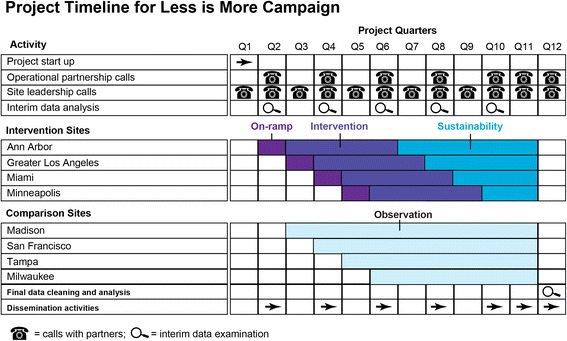
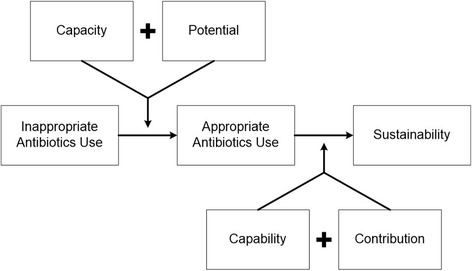
This project uses an interrupted time series design with four control sites. The two main intervention tools are (1) an evidence-based algorithm that distills the guidelines into a streamlined clinical pathway and (2) case-based audit and feedback to train clinicians to use the algorithm. Our conceptual framework for the development and implementation of this intervention draws on May's General Theory of Implementation. The intervention is directed at providers in acute and long-term care, and the goal is to reduce inappropriate screening for and treatment of ASB in all patients and residents, not just those with urinary catheters. The start-up for each facility consists of centrally-led phone calls with local site champions and baseline surveys. Case-based audit and feedback will begin at a given site after the start-up period and continue for 12 months, followed by a sustainability assessment. In addition to the clinical outcomes, we will explore the relationship between the dose of the intervention and clinical outcomes.
This project moves from a proof-of-concept effectiveness study to implementation involving significantly more sites, and uses the General Theory of Implementation to embed the intervention into normal processes of care with usual care providers. Aspects of implementation that will be explored include dissemination, internal and external facilitation, and organizational partnerships. "Less is More" is the natural next step from our prior successful Kicking CAUTI intervention, and has the potential to improve patient care while advancing the science of implementation.
为了对抗抗生素耐药菌的传播,抗菌药物管理已成为国家重点。本项目专注于减少无症状菌尿症(ASB)的抗生素不合理使用,这是一种非常常见的情况,会导致急性和长期护理中抗生素过度使用。我们之前成功开展了一项名为“踢走导管相关性尿路感染(CAUTI):无直觉抗生素运动”的干预措施,以减少不符合指南的 ASB 尿液培养和抗生素的开具。目前的目标是在四个地理位置不同的退伍军人健康管理局设施中推广可扩展版本的 Kicking CAUTI 运动,同时评估抗菌药物管理干预措施的哪些方面对成功和可持续性至关重要。
本项目采用具有四个对照点的中断时间序列设计。两个主要的干预工具是(1)一种将指南提炼为简化临床路径的基于证据的算法,以及(2)基于病例的审核和反馈,以培训临床医生使用算法。我们为开发和实施这项干预措施制定的概念框架借鉴了 May 的一般实施理论。该干预措施针对急性和长期护理中的提供者,目标是减少所有患者和居民(不仅仅是那些使用导尿管的患者)中对 ASB 的不适当筛查和治疗。每个设施的启动包括与当地现场冠军的集中电话会议和基线调查。在启动期后,将在特定地点开始进行基于病例的审核和反馈,并持续 12 个月,然后进行可持续性评估。除了临床结果外,我们还将探讨干预剂量与临床结果之间的关系。
本项目从一项概念验证有效性研究进展到涉及更多站点的实施,并且使用一般实施理论将干预措施嵌入到常规护理过程中,涉及常规护理提供者。将探索的实施方面包括传播、内部和外部促进以及组织合作。“少即是多”是我们之前成功的 Kicking CAUTI 干预措施的自然下一步,有可能在提高患者护理水平的同时推进实施科学。