Department of Systems Medicine, Keio University School of Medicine, Tokyo, 160, Japan.
Sci Rep. 2018 Jan 19;8(1):1189. doi: 10.1038/s41598-017-19114-y.
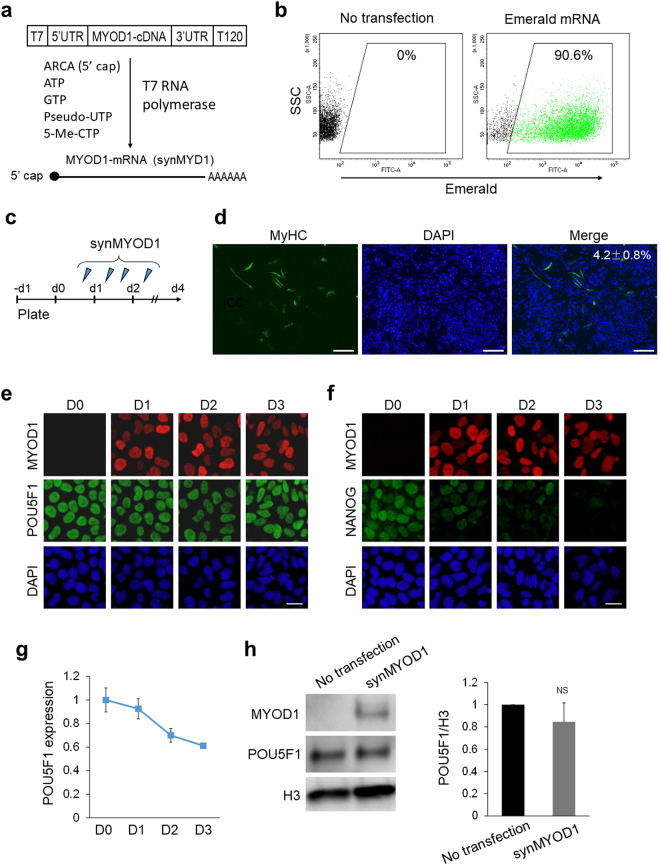
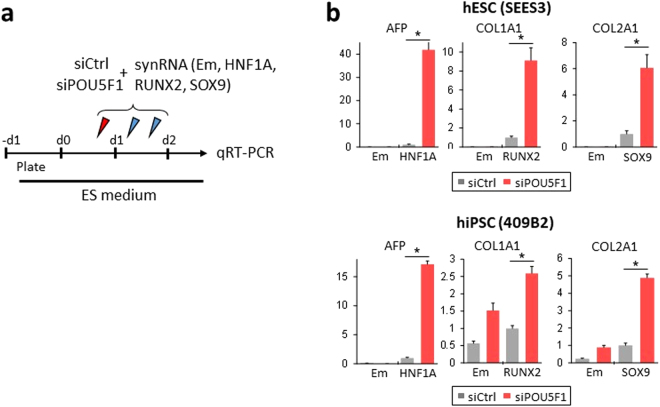
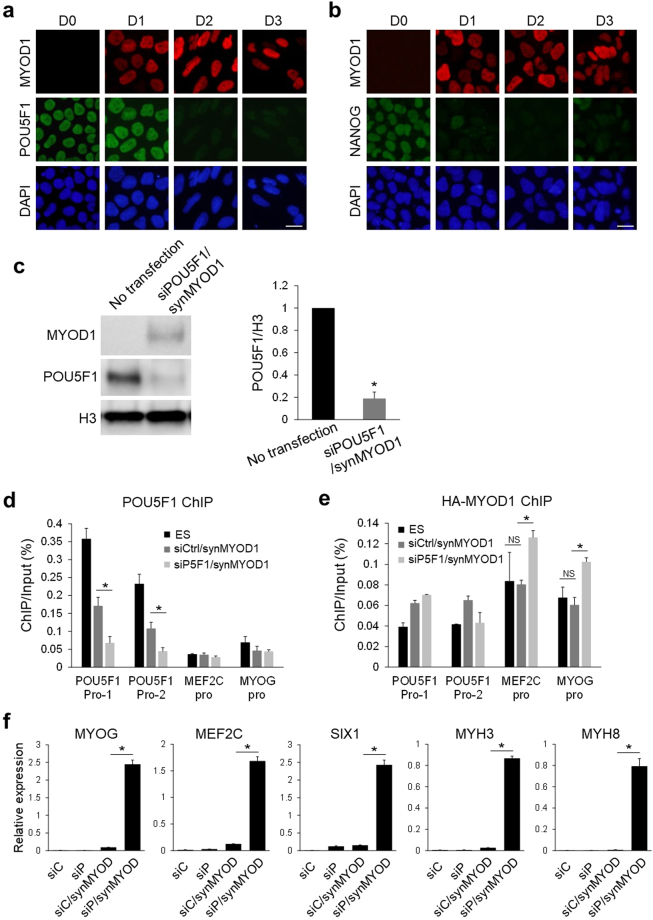
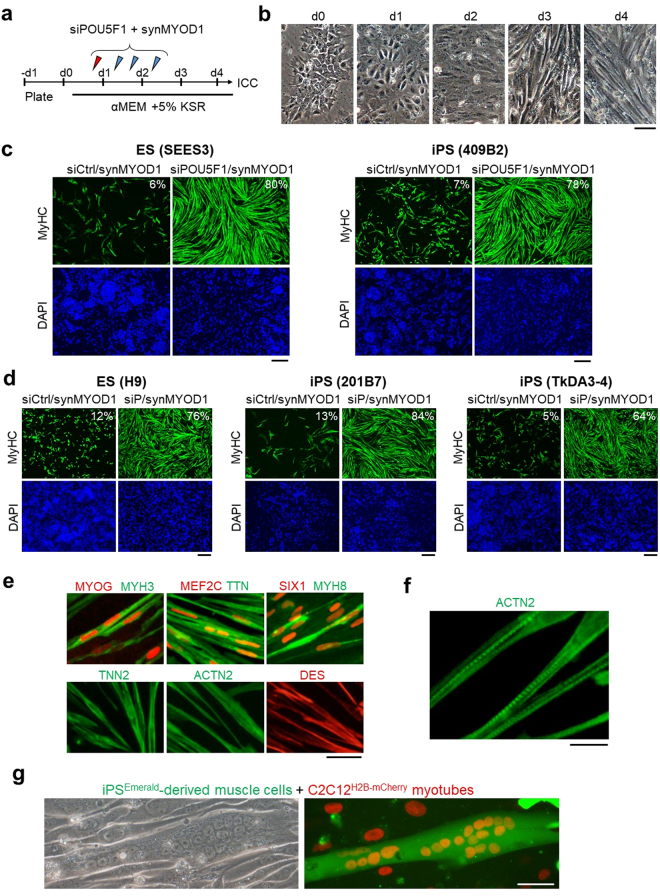
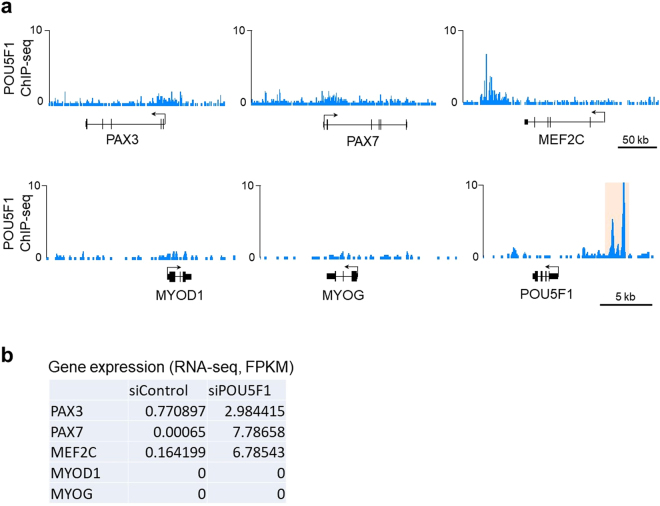
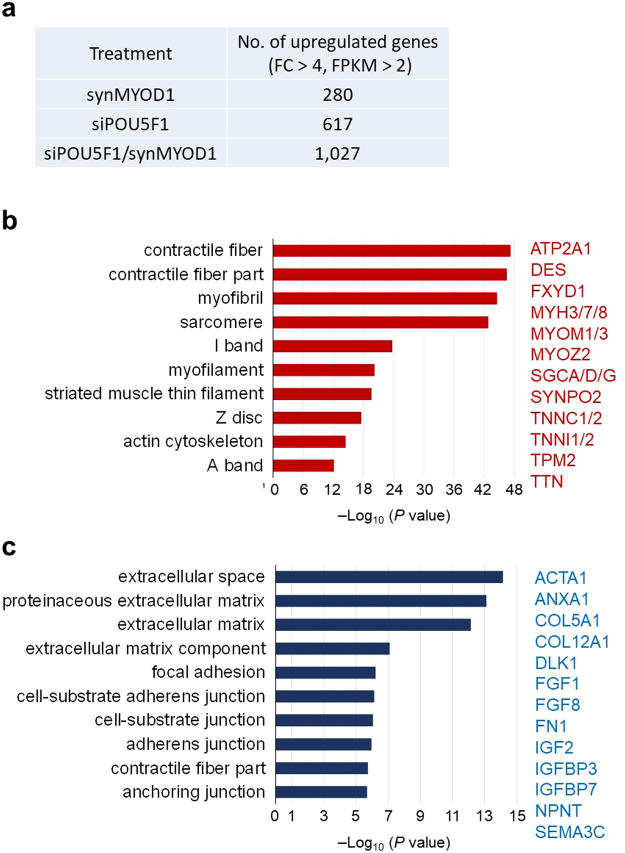
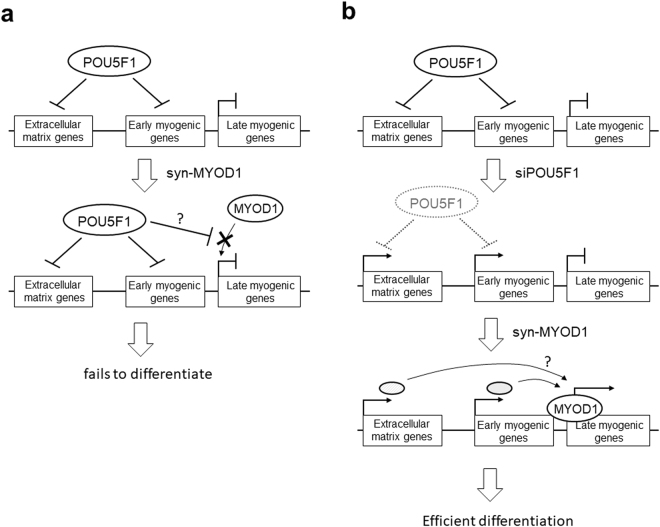
Direct generation of skeletal muscle cells from human pluripotent stem cells (hPSCs) would be beneficial for drug testing, drug discovery, and disease modelling in vitro. Here we show a rapid and robust method to induce myogenic differentiation of hPSCs by introducing mRNA encoding MYOD1 together with siRNA-mediated knockdown of POU5F1 (also known as OCT4 or OCT3/4). This integration-free approach generates functional skeletal myotubes with sarcomere-like structure and a fusion capacity in several days. The POU5F1 silencing facilitates MYOD1 recruitment to the target promoters, which results in the significant activation of myogenic genes in hPSCs. Furthermore, deep sequencing transcriptome analyses demonstrated that POU5F1-knockdown upregulates the genes associated with IGF- and FGF-signaling and extracellular matrix that may also support myogenic differentiation. This rapid and direct differentiation method may have potential applications in regenerative medicine and disease therapeutics for muscle disorders such as muscular dystrophy.
直接将人类多能干细胞(hPSCs)分化为骨骼肌细胞,将有益于药物测试、药物研发和体外疾病建模。在此,我们展示了一种快速且稳健的方法,通过引入编码 MYOD1 的 mRNA 并结合 siRNA 介导的 POU5F1(也称为 OCT4 或 OCT3/4)敲低,来诱导 hPSC 的成肌分化。这种无整合方法可在几天内产生具有类似肌节结构和融合能力的功能性骨骼肌肌管。POU5F1 的沉默有助于 MYOD1 募集到靶启动子,从而导致 hPSC 中的成肌基因显著激活。此外,深度测序转录组分析表明,POU5F1 敲低上调了与 IGF 和 FGF 信号以及细胞外基质相关的基因,这些基因也可能支持成肌分化。这种快速且直接的分化方法可能在再生医学和肌肉疾病(如肌肉营养不良症)的疾病治疗中有潜在的应用。